We love answering questions about skates, and this month we wanted to share two of the most frequently asked questions at The Skater’s Edge: How often should I get my skates sharpened? When do I know it’s time for a sharpening? The short answer? It requires a bit of trial and error. The long answer? Keep reading!
All of us, young or old, will benefit from regularly sharpening our skates. Feeling connected to the ice bolsters confidence. Feeling uncertain creates tentativeness.
The answer varies depending on several factors, including the frequency and intensity of use, ice conditions, weight, blades, and personal preference. So keep on skating and be sure to... OK, that’s the worst answer when it comes to almost anything.
Generally skates should be sharpened every 20-40 skating hours. The biggest factor is how often you skate, hence the rule of thumb based on ice time. It’s not unheard of for some players to sharpen their blades before every game, and others once or twice a year.
This depends on a few different factors such as how many times a week a skater is on the ice, which elements the skater is working on, and the build of the skater. Each of these factors puts wear on the edges and should be considered when thinking about sharpening preferences.
Read also: How to Select Ski Length
A small skater around age 8 skating once per week working on crossovers will have a different sharpening frequency than a more muscular skater at age 14 skating three days per week working on Lutz and Axel.
Here's a summary of factors affecting sharpening frequency:
- Frequency of skating: More frequent skating requires more frequent sharpening.
- Intensity of use: Working on advanced elements puts more wear on the edges.
- Skater's build: More muscular skaters may need more frequent sharpening.
- Ice conditions: Outdoor ice can be harder and more abrasive.
- Steel quality: Higher quality steel may hold an edge longer.
Difficulty stopping or turning: If you are having trouble stopping or turning, it may be a sign that your skates need sharpening.
So how do you know when to get them done? Skaters should feel out the edges and get used to knowing what it feels like when the edges start to lose their bite. Most skaters will get a feel for this when they’re between the ages of 9 and 12, depending on how often they skate. The dull edge feeling is described most often as a slipping feeling when you try to turn or hook a spin.
If you go too long after dullness sets in you’re not getting the best performance for your practice time. Also, getting a set of fresh edges will feel weird and you’ll lose additional training time re-adjusting. This could be part of the reason a lot of skaters don’t like getting their skates sharpened-- they aren’t getting them sharpened often enough, and that dull feeling is becoming normal, so fresh edges are a shock to their skating.
Read also: Field Hockey Stick Guide
Here are some telltale signs that your skates need sharpening:
- Difficulty stopping or turning
- Slipping feeling when turning or hooking a spin
- Uneven edges
- Reduced speed
Occasionally inspect your blades for signs of wear on the edges so you’ll have an idea of when to get them sharpened. Nicks, or small chips in the edges, can build up over weeks of wear-and-tear or from the blades hitting each other.
If you use your skates for both lessons and for outdoor fun, think about getting them sharpened after you skate outside so your next lesson will go smoothly. Outdoor rinks can have grit and salt blown onto the ice from the surrounding roads, and then the zamboni cements the little particles into the ice surface. When your edges come along and run over something rough, it’ll damage the sharpening. This applies to ponds and backyard rinks as well. Losing an edge is when you step on something not friendly to skate blades and an entire section of the edge is flattened and impossible to skate on.
Other factors to consider include: Indoors or out? Outdoor ice is typically colder and harder, thus wearing out edges faster. Further, debris on outdoor ice (sticks, leaves, dirt) inflicts more damage on blades.
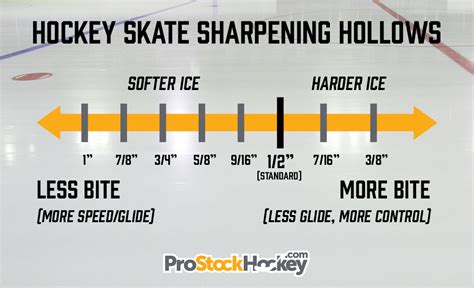
Care habits? A skate isn’t a knife, which is to say it isn’t sharpened to produce one edge. Rather, skate blades are sharpened to produce an inside edge and an outside edge on either side of a “hollow.” The sharpening process grinds the steel of the blade between the two edges. The depth of the hollow can be adjusted based on your skating ability or style. The most common hollow, at least for beginning skaters, is ½ inch. A deeper hollow lets the blade sink farther into the ice, slowing the skater but providing more control. Another factor is weight. Heavier skaters will need a shallower hollow - say 5/8 inch or ¾ inch - to prevent getting “stuck” in the ice.
Read also: Comprehensive Guide to Sharpening Snowboard Edges
Let’s face it. Kids don’t know their skills well enough to reliably inform you when their skates need sharpening. If your youth player is suddenly gliding less often and always seems to be churning, inspect those blades.
If you get them sharpened regularly and still dread that first session, talk to your skate tech about your experiences and ask about adjusting your hollow. Not all sharpenings have the same level of “sharpness,” or the feeling of grip in your edges. As you can see in this photo from Mark Ladwig’s technician instruction, edges can be fairly flat, or very deep. With some feedback from the skater, we can customize that grip to your preference. If you don’t know your hollow, ask us next time you’re in the store!
No matter your hollow preference, all sharpenings should end with smooth, level edges, and a clean finish on the blade. That’s what we at Skater’s Edge strive for every time!
The last thing to think about when getting your skates sharpened is if you have any special events coming up so that you can time your sharpening accordingly. When you look at the calendar and see a competition, test session, or show that month, you should call for a sharpening appointment a bit of time in advance so you can have fresh edges for the event. You want your edges ready to perform when it counts, but getting them sharpened right before the event can be hazardous if you’re not used to it. Some skaters need a week or so to re-adjust after having their skates done, others need less time or more.
Show your skates some love this month and talk to us about making a plan so that your edges are always at their best. We’d love to review which hollow your skates are sharpened at, how it feels and if it’s working well for you, and how often your skates are sharpened and whether you should be sharpening more or less frequently.
Skate Blade Sharpening (Before & After)