Perhaps you've heard the saying about learning to snowboard: It's harder to learn than skiing, but easier to master. How much truth there is to that depends on you. Whatever reason you decide to pick up the sport, it's an awesome way to experience the sensation of floating on snow while exploring the beauty of the mountains in winter.
In this article, beginners will learn how to balance on a board as well as how to cross a slope and make those first turns. Here are the steps you'll learn:
- Proper Snowboard Stance
- How to Skate
- How to Glide
- How to Make a J-Turn
- How to Traverse
- How to Traverse into a Turn
- Linking Turns
Before you start, get to know your gear and how your bindings work.
Remember: Safety is your responsibility. No internet article or video can replace proper instruction and experience-this article is intended solely as supplemental information. Be sure you're practiced in proper techniques and safety requirements before you engage in any outdoors activity.
Teaching Complete Beginners How To Snowboard
Learn the Proper Snowboard Stance
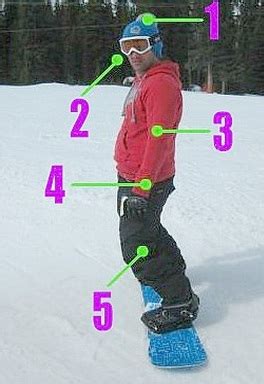
Learning the proper, relaxed body position on a snowboard will help you balance and control your board better and ride more efficiently.
Read also: Is the Gnu Antigravity Snowboard Worth It?
Here's how to get into a basic snowboard stance:
- Flex your knees and ankles, keeping your knees tracked over your toes.
- Your shoulders and hips should all be in line with your board.
- Relax your arms by your side and keep a calm upper body.
How to Skate
Once you've strapped into the front binding, you'll learn how to skate, or move around on flat ground with the front foot strapped in and the back foot pushing you along. You'll use this skill to get around on flat terrain and also to get on a chairlift.
- With your front foot strapped into the binding, place your back foot on the heel-side of your snowboard, slightly behind your other foot.
- Use your back foot to push yourself around. Take small steps.
- Don't let your free foot go past your back bindings or you may start to do a split.
How to Glide
Gliding lets you move around gentle hills on the mountain with one foot strapped in and the free foot resting on the board. Gliding is an essential skill for getting off a chairlift.
- As you get comfortable skating around on flat terrain, bring your free foot onto the middle of your board and rest it against the back binding for extra stability.
- Practice straight gliding on a flatter surface. Then try gliding on a gentler slope with an easy runout.
How to Make a J-turn
One of the first skills you'll learn when riding a snowboard is the J-turn, which is how you start shaping a turn. When learning the J-turn, you will glide straight and turn slightly uphill in the shape of the letter J. Practice first with the front foot strapped into your binding and your rear foot resting on top of the board.
Toe-side J-turn
- Point your snowboard straight down a gentle slope and glide forward.
- Shift your weight to the front foot and over your toes. Move your hips over the toe-side edge as you flex your ankles and knees.
- Getting your weight over that toe-side edge should start to turn the board across the hill.
- Repeat the process while you practice on a gentle slope with a flat runout.
Heel-side J-turn
- Point your snowboard straight down a gentle slope and glide forward.
- Shift your weight toward the front foot and over your heels. You should feel your calf and boot hitting the front highback. Move your hips over your heel-side edge as you flex your ankles and knees.
- Getting your weight over that heel-side edge should start to turn the board uphill.
- Again, repeat the process while you practice turning across a gentle slope.
Tip for J-turns: Don't stand up tall. For your heel-side turn, keep your knees bent like you're sitting in a chair.
Read also: Battle Bindings: Performance and Value
How to Traverse
When you traverse, you're learning to balance and hold an edge to travel across a slope.
Toe-side traverse
- Keep your board across the slope and on the uphill edge when you stand up so you don't slide down the hill.
- Flex your knees and keep your weight evenly distributed over the toe-side edge while you find the balance point.
- Shift your weight toward your front foot and then let that front foot flatten a bit. You'll start to move in the direction of the nose of your board.
- To slow down, center your weight between both feet and lean more over the edge you are standing on. Increasing the edge angle will slow you down and eventually bring you to a stop.
Tip: Your shins move toward your toes. Don't try to balance on tiptoes.
Heel-side traverse
- Keep your board across the slope and on the uphill edge when you stand up so you don't slide down the hill.
- Your hips should be over the heel-side edge as you find the balance point.
- Bend your knees, as if you're sitting down in a chair. You should feel the highback of your binding against your calves.
- Slowly shift weight toward the front foot and let that front foot flatten a bit. You'll start to move in the direction of the nose of your board.
- To slow down, center your weight between both feet and lean more over the edge you are standing on. Increasing the edge angle will slow you down and eventually bring you to a stop.
Tip: Make small tilting adjustments to control the board. Avoid standing too tall or making larger movements.
How to Traverse Into a Turn
Now that you've practiced riding across the slope, you'll learn to make your first full turn. First try this on a gentle slope with a flat runout so if you run into trouble, the terrain will naturally stop you.
- Just as you did while traversing, start shifting your weight over the front foot.
- But this time let the board flatten so you head straight downhill (into the fall line, the most direct route downhill).
- As you flatten the board, get into a centered, athletic stance while still keeping more weight on your front foot.
- Once you're on a flat board and in the fall line, start moving onto your new edge in a J-turn (either heel-side or toe-side).
- Aim for good body position with your arms relaxed at your sides and knees tracked over your toes. Your legs and ankles are doing the work while your upper body is calm.
- Come to a stop and practice on the other side.
Tip: If you flatten the board too quickly, you may catch an edge. Don't rush this part. If you're nervous, try this at the bottom of the run so you don't gain too much speed.
Read also: Renting Snowboards in Whistler Blackcomb: What You Need to Know
Linking Turns
When you're comfortable with the above steps, you can start moving from one turn continuously into another.
Once you've turned in one direction, rather than coming to a stop, continue traversing across the slope and start to make another turn in the opposite direction.
Tip: Common mistakes include leaning too far toward the tail of the board or getting on an edge too soon.
Tips to correct common mistakes
Here are some common problems and solutions.
Problem: Lack of commitment
If you can’t bring yourself to point the snowboard downhill and abort every turn attempt mid-way through, chances are you’re scared of commitment.
Solution: Make it easier by focusing on just one thing. Get a friend or instructor to start you out pointing downhill. This makes it easier to focus just on turning - not standing up, pointing downhill and what not. Focus on using your feet and knees.
Problem: Sitting back
When your snowboard points downhill, the quick increase of speed can be startling. Often beginners instinctively shift their weight over their back leg.
Solution: Exaggerate leaning over your front leg to maintain the nice isosceles triangle. While you may feel overly forward, chances are you are centered.
Problem: Rushing the turn
If you keep catching your edge when you try turning, chances are you’re going up on edge too soon.
Solution: Be patient and wait for the snowboard to point downhill and begin turning before engaging your back foot.
Problem: Ape Arms
If you’re one of those people who thinks it’s easier to turn by rotating your shoulders, you need help. Like we said earlier, upper body movement causes you to work twice as hard, be off balance and look like a weirdo.
Solution: Stop arm movement by grabbing onto your pants while riding. This will help remind you to keep your arms down. If that doesn’t work you need the snowball drill. Take 2 snowballs (firm, icy ones), and place them between your hip and your wrist. Try to make turns without dropping them.
Consider Taking a Lesson
We invite you to invest in yourself and take a lesson. It’s the safer, faster, more efficient, and more fun way to not just learn to ski or ride but to become a skier or snowboarder. Even pros have coaches, and videos can’t give you real-time feedback, teach you how to read the mountain, provide personalized gear coaching, and take you to the best spots. A snow pro can. Elevate your experience with a group lesson or personalized one-on-one coaching.