Many riders are exploring the possibility of converting the throttle on their snowmobiles or e-bikes to the left hand side. This modification can offer several benefits, particularly for those who are left-handed or have specific riding needs. This article delves into the various aspects of left hand throttle conversion, including potential advantages, challenges, and considerations.
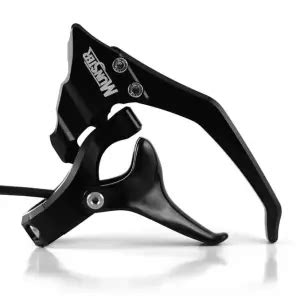
Why Consider a Left Hand Throttle?
For some riders, the standard right-hand throttle configuration isn't ideal. Here are a few reasons why someone might consider a left-hand conversion:
- Left-Handedness: Left-handed individuals may find it more natural and comfortable to control the throttle with their dominant hand.
- Load Balancing: Switching the throttle to the left hand can help distribute the workload more evenly between both hands, reducing fatigue on the right hand, which is often responsible for shifting and braking.
- Specific Use Cases: In snowmobiling, a left-hand throttle can be beneficial for mountain riding, allowing the rider to counterbalance the sled while leaning to the left.
Potential Challenges and Considerations
Before diving into a left-hand throttle conversion, it's essential to be aware of potential challenges and considerations:
- Re-Routing the Throttle Cable: One of the primary challenges is re-routing the throttle cable to the left side of the vehicle.
- Twist Direction: On an ebike, the direction of twist is reversed on the left.
- Throttle Type: You might need to switch from a twist-type throttle to a thumb-actuated throttle because the direction of twist is reversed on the left.
- Muscle Fatigue: Some users have reported muscle fatigue in their left hand, particularly when using a thumb throttle for extended periods.
- Safety Concerns: There are concerns about the tendency to accidentally roll on the throttle when reaching for the brake with a left-hand twist throttle.
Types of Throttles and Conversion
Right now, the two main types of throttles are twist and push-button (thumb) throttles. The conversion's difficulty is very dependent on the bike, but it is usually simple. The presence of additional functions connected to the throttle wiring is the main factor.Twist Throttles: Some riders find twist throttles dangerous. Converting twist throttles to push-button throttles is generally easy, but it depends on the bike's wiring complexity.
Push-Button Throttles: Push-button throttles, also known as thumb throttles, may require some time to get used to due to the shorter travel distance from "zero to sixty." However, they offer similar sensitivity to twist throttles.
Read also: G-Force One: First Impressions
Many ebikes come with left side throttles of different styles, so even if you wanted to swap out the twist for a thumb, it might be as simple as determining the type of plug used in the cable, and finding a compatible one. More expensive bikes may integrate components with two way communications and/or lights and display functions requiring proprietary plugs and cabling, but most economical bikes can be swapped out pretty easily with a 3-wire throttle.
Electronic Disconnect Brake Levers: Thanks to electronic disconnect brake levers, that would be much more of an issue with a motorcycle or a lazy DIY build.
Left Hand Throttles on Snowmobiles
Left-handed throttles on snowmobiles were originally designed for a specific use case in mountain riding on older sleds. They allowed riders to counterbalance the sled while leaning to the left, making it easier to control in deep powder and mountainous terrain.
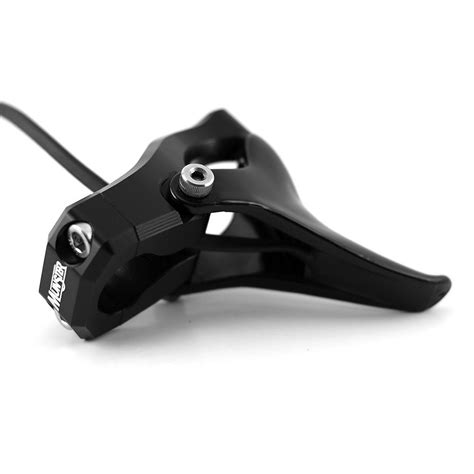
The Munster Finger Throttle
The Munster Finger Throttle is designed to replace the standard thumb throttle lever.
More Control: The benefit comes from the grip. It’s just way more secure to have your thumb wrapped around the bar than it is to be dangling out in space on a lever.
Read also: Register Your Snowmobile in IL
Family or Shared Sled: If your sled is used by a number of different people, say, a family sled or a shared work sled, it might be best to stick with the stock, traditional thumb lever. The sled will probably be set up in a way that is pretty generic, and not fine-tuned for any specific rider in the family.
Ride More Than One Sled Regularly: If you get used to the benefits of a finger throttle, you’re probably going to want to ride with one all the time. But if you ride different sleds on a regular basis, the necessity-painless though it may be-of mentally going from a finger throttle back to a thumb and back again might make you want to keep things simple, stupid, and stick with one way of doing things.
#3 You Don’t Want to Spend Extra Dough Just to Get to the CabinIf your sled’s primary purpose is to get you to the cabin, where you spend the rest of the day standing around smoking darts and hacking up a lung, then no, you don’t need one of these.
Beyond those very specific situations, I think anyone who is riding near their limits in challenging terrain can benefit from the extra control granted by the use of a finger throttle. It’s pretty clear that the Munster Finger Throttle is a big hit with elite level riders. But “average” riders are pushing their own limits to try to hang with better riders every day as well.
The Goldfinger: The Goldfinger is the perfect accessory for the rider who wants to high-mark friends and enemies on the hill, or for the trail-rider who needs to relieve right-hand fatigue. Our throttle kit only takes 20-30 minutes to install, and then you will be shredding slopes with the pros in no time.
Read also: Snowmobile Tunnel Bag Comparison
Models that are compatible with the Goldfinger
Here is a list of snowmobile models that are compatible with the Goldfinger left hand throttle:
| Year | Make | Model |
|---|---|---|
| 1998 | Arctic Cat | Cougar 550 Mtn. |
| 1997 | Arctic Cat | Cougar 550 Mtn. |
| 2009 | Arctic Cat | M 1000 Sno Pro w/153in. |
| 2008 | Arctic Cat | M 1000 Sno Pro w/153in. |
| 2007 | Arctic Cat | M 1000 Sno Pro w/153in. |
| 2011 | Arctic Cat | M 1000 Sno Pro w/162in. |
| 2010 | Arctic Cat | M 1000 Sno Pro w/162in. |
| 2009 | Arctic Cat | M 1000 Sno Pro w/162in. |
| 2008 | Arctic Cat | M 1000 Sno Pro w/162in. |
| 2007 | Arctic Cat | M 1000 Sno Pro w/162in. |
Personal Experiences and Considerations
Switching to a left-hand throttle is a personal choice, and experiences can vary. Some riders adapt quickly and find it more comfortable, while others struggle with the change. It's essential to consider your own riding style, physical limitations, and the type of terrain you typically ride on.
One user shared their experience of switching to a left-hand throttle on an e-bike, noting that they initially felt good about the change. However, they eventually switched back to the right-hand throttle due to discomfort and cramping in their left thumb caused by arthritis.
Another user mentioned having hand eczema and dry, cracking skin, which could also impact the comfort and control of a left-hand throttle.
Lefty's left hand throttle control for a Skidoo Renegade 600 snowmobile [ side hill gold finger ]
Conclusion
Converting to a left-hand throttle can be a beneficial modification for some riders, offering improved comfort, control, and load balancing. However, it's crucial to carefully consider the potential challenges, safety concerns, and personal factors before making the switch. By weighing the pros and cons and understanding the specific requirements of your vehicle, you can make an informed decision that enhances your riding experience.
tags: #lefty #throttle #snowmobile