Bravo! Vail is an annual classical music festival held in Vail, Colorado. The six-week-long festival begins in late June and ends in early August.
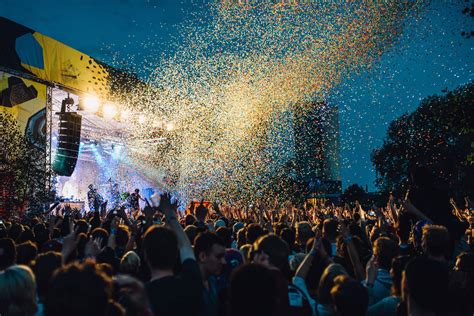
Since its inception in 1987, Bravo! Vail Music Festival has evolved from a small chamber music series to an international music festival with more than 80 performances and events throughout the Vail Valley community.
The Early Years
In 1987, founding executive director John Giovando and founding artistic director Ida Kavafian established Bravo! Vail as public 501 (c) 3 Colorado non-profit corporation. Bravo! Vail began as a small chamber music series.
1989 is a seminal year for the Gerald R. Ford Amphitheater. The Cold War was in its dying days, lending the tour political significance.
In 1989, the legendary Bolshoi Ballet Academy dancers of the Soviet Union were on a performance tour in the United States. When a performance date scheduled for Houston was cancelled, the president of Beaver Creek Resort, Jerry Jones, took the idea of hosting the Bolshoi Tour to a group that included Vail Valley Foundation President and CEO Bob Knous, Vail Valley Foundation Vice President Lissa Macintosh Tyler, Vail Valley Foundation Director of the Gerald R. Ford Amphitheater Melody Kenninton and soon-to-be Vail Valley Foundation President and CEO John Garnsey.
Read also: The Legacy of Vail-Leavitt
At the time, the nonprofit Vail Valley Foundation had just completed its first of three Alpine World Ski Championships, and was known primarily as an ‘athletics’ organization. Many credit Knous and Tyler with being the first to understand the long-term value of hosting the famous Bolshoi Academy, but who would fund it?
With support from President and Mrs. Gerald R. Ford, and VVF Board Chairman Harry Frampton, Knous rallied a host of patrons that included Oscar Tang, Red & Carolyn Blount, Henry Kravis, and Dick Swig, who ensured the Bolshoi Academy could perform that summer in Vail.
Also in 1989, the Bravo! Vail Music Festival welcomes the Rochester Philharmonic Orchestra to a residency at the Gerald R. Ford Amphitheater, bringing national recognition to Bravo! Vail with a summer residency that lasted for 19 years.
Growth and Evolution
The first orchestras to be added to Bravo! Vail's music series were the National Repertory Orchestra and the Colorado Springs Philharmonic Orchestra.
Eugenia Zukerman joined Bravo! Vail as artistic director in 1998. The following year, the Dallas Symphony Orchestra was added to the orchestral line-up.
Read also: Your Visit to the Gerald R. Ford Amphitheater
With a clear vision to become the most renowned orchestral festival in the country, Bravo! Since then, Bravo! Vail has evolved from a small chamber music series to an international music festival with dozens of performances throughout the Vail Valley, and summer home to the world's greatest musicians and orchestras.
In 2011, pianist Anne-Marie McDermott became the third artistic director in Bravo! Vail's history. Ms. McDermott brings fresh perspective and a return to Bravo!
London's acclaimed Academy of St Martin in the Fields was added to the orchestral roster in 2016, making Bravo! Vail a four-orchestra festival. The addition of the Academy signified a new era for Bravo!
Bravo! Vail is proud to be the summer home to four of the world’s most acclaimed orchestras, each with its own unique history and approach, including the New York Philharmonic, The Philadelphia Orchestra, the Dallas Symphony Orchestra, and a guest chamber orchestra, such as Academy of St Martin in the Fields and Chamber Orchestra Vienna-Berlin.
In 2018, Bravo! Vail welcomed the return of Caitlin Murray as Executive Director. Ms. Murray brings comprehensive experience to Bravo! Vail after working for the organization in various roles from 2009, most recently serving as the Vice President of Development. Ms. Murray is committed to the artistic excellence and mission of Bravo!
Read also: Comprehensive Vail Resorts Overview
In 2019, the Chamber Orchestra Vienna - Berlin filled the guest chamber orchestra slot, opening the Bravo! Vail season in their North American debut. Bravo!
Responding to Challenges and Embracing Innovation
In response to the global pandemic in 2020, Bravo! Vail created the Music Box, a mobile performance stage, which we took to neighborhoods and parks from East Vail to Gypsum to present 41 outdoor concerts to the community throughout the summer.
A group of 14 musicians performed in various configurations on the Music Box and in eight amphitheater concerts for limited capacity, socially distanced audiences, which were live streamed and viewed more than 6,500 times by people from 28 countries and all 50 states. Bravo!
In 2021, Bravo! Vail returned to a full season and in 2022, deepened its commitment to supporting living composers and their work by launching the Symphonic Commissioning Project.
As part of this bold initiative, Bravo! Vail will commission three new works each year for the next five years.
In 2023, Anne-Marie McDermott extended her contract to stay with Bravo! Vail through the 2026 Festival, leading the way for the return of opera to Bravo! Vail in 2024, with two evenings of The Philadelphia Orchestra performing Puccini’s La bohème, lead by Music and Artistic Director Yannick Nézet-Séguin.
A Commitment to New Music
The festival’s Symphonic Commissioning Project, inaugurated in 2022, made This Moment and the upcoming Nina Shekhar premiere possible; on July 2 the project also presented the Colorado premiere of Arquitecta, by Angélica Negrón, performed by the Dallas Symphony Orchestra during its residency.
Overall, 16 pieces by living composers are being performed this year. McDermott emphasized, when she spoke to my group, the festival’s commitment to new music, which can attract newer, younger audiences, and ensembles that specialize in contemporary music. “It’s very important that we not only look back but that we look forward,” she said.
Anne-Marie McDermott, a renowned pianist and the festival’s artistic director since 2011, told my group that the goal is for each new piece to have a life after its premiere. “It’s very important to contribute to the future canon of classical music, whether it’s chamber music, solo piano, or orchestral,” she said.
Diverse Programming and Unique Experiences
During the summer months, Bravo! Vail offers a wide array of musical experiences.
Each summer Bravo! Vail brings together four highly renowned orchestras, as well as multiple acclaimed chamber ensembles, and dozens of talented solo artists to perform for six weeks in the beauty of the Colorado Rockies.
These concerts are performed at the Vilar Performing Arts Center in Beaver Creek. Bravo! Vail’s Chamber Music Series offers something for every music lover, featuring chamber music as it was meant to be heard - in a beautiful, intimate environment, with acclaimed artists, and among friends.
Bravo! Vail’s Immersive Experiences study a specific theme or body of work in depth through performances, lectures, and other avenues of exploration. This is a unique way to experience classical music up close with the musicians at the Donovan Pavilion.
Classically Uncorked explores remarkable juxtapositions of music by cutting-edge composers, familiar favorites, and brand-new voices. This innovative series offers an exceptional chamber music experience, with handcrafted wines and cabaret-style seating in the gorgeous Donovan Pavilion.
Each evening begins with a cocktail hour at a magnificent private residence, followed by a performance by some of the world’s most extraordinary musicians, topped off with an intimate post-concert dinner. These stylish soirées are truly one-of-a-kind social and musical experiences in the Linda & Mitch Hart Soirée Series.
The 30th season includes five world premieres and seven different string quartets performing in chamber music programs.
Bravo! Vail welcomes seven string quartets - its largest lineup ever! The quartets include the Emerson String Quartet, the newly formed New York Philharmonic String Quartet (debut season and Bravo! Vail debut), and the Calder Quartet, Aeolus Quartet, Lyris Quartet, Danish String Quartet (Bravo! Vail debut), and Zorá String Quartet (Bravo!
In honor of its 30th season, Bravo! Vail also launched a brand new initiative in 2017, the New Works Project, marking the next step in the festival’s dedication to celebrating creativity in classical music. The initiative signals a new level of commitment to commissioning and supporting the artists who are the voices of classical music today.
Each season, Bravo will premiere original works written by established and emerging composers from around the world.
On June 22, the Academy of St Martin in the Fields, led from the concertmaster’s chair by Music Director Joshua Bell, performs the season’s first world premiere, a new work by American composer and bassist Edgar Meyer, co-commissioned by Bravo! Vail and the Academy and featuring Bell as soloist.
The three other orchestral premieres include Dos piezas para orquesta by Puerto Rican composer Roberto Sierra, performed on June 30 by Jaap van Zweden and the Dallas Symphony Orchestra; a new work by French composer Guillaume Connesson, performed on July 9 by Principal Guest Conductor Stéphane Denève and The Philadelphia Orchestra; and a new work by American composer Julia Adolphe, performed by Alan Gilbert and the New York Philharmonic.
Performances and Residencies
After its history-making debut last season, the Academy of St Martin in the Fields - the first chamber orchestra and the first internationally based ensemble to perform at Bravo! Vail - returns for a three-concert residency June 22-25, 2017.
On June 22, the Academy begins its residency with Mendelssohn’s Symphony No. 3 (“Scottish”) and Mozart’s Violin Concerto No. 1, featuring Bell as soloist. The program also features Bell in a world premiere of a new work by Edgar Meyer co- commissioned by Bravo!
For the orchestra’s second concert, on June 24, Bell performs a rarely heard arrangement of the second movement of Schumann’s Violin Concerto and also partners with longtime collaborator Steven Isserlis, in his Bravo! Vail debut, for Brahms’s last orchestral composition, the Double Concerto for Violin and Cello.
Isserlis performs Dvorák’s Silent Woods, the fifth movement of the evocative suite From the Bohemian Forest, originally written for piano four-hands. The concert also includes one of Beethoven’s final pieces from his early period, Symphony No. To conclude its residency on June 25, the Academy performs Tchaikovsky’s Serenade for Strings, and Bell again solos in J. S. Bach’s Violin Concerto in A minor. Isserlis returns to perform the Cello Concerto in B major by C. P. E.
From June 28 through July 5, the Dallas Symphony Orchestra returns for a six- concert residency. The Dallas Symphony begins its residency on June 28 with an all-Tchaikovsky program, led by van Zweden, which features pianist Garrick Ohlsson performing Piano Concerto No. 1. The concert also includes Symphony No.
For the orchestra’s second program, on June 30, van Zweden conducts Prokofiev’s Symphony No. 5 as well as the world premiere of a newly commissioned work from Puerto Rican composer Roberto Sierra, Dos piezas para orquesta, which Sierra described as a diptych “containing two contrasting pieces that are generated by the same musical material and creative impulse.
On July 1, van Zweden, in his last appearance at Bravo! Jeff Tyzik, the Dallas Symphony’s principal pops conductor, leads the next concert on July 2, John Williams: Music from the Movies.
Under the leadership of Music Director Yannick Nézet-Séguin, The Philadelphia Orchestra returns for a six-concert residency July 7-15. Principal Guest Conductor Stéphane Denève kicks off the residency on July 7 performing Sibelius’s Symphony No. 2 and Tchaikovsky’s folk-song-infused Andante Cantabile from the String Quartet No. 1, Op.
For its second program, on July 8, the orchestra presents a screening of the 1982 Steven Spielberg-directed film E. T. On July 9, Denève leads the world premiere of Les Regrets, a newly commissioned work by French composer Guillaume Connesson whom Denève regularly champions. The program also includes Beethoven’s Symphony No. 7 and Rachmaninoff’s Piano Concerto No. 4, featuring Haochen Zhang in his Bravo!
Music Director Yannick Nézet-Séguin leads the July 13 concert, which features Brahms’s Eleven Chorale Preludes, beautifully transcribed from their original organ setting by contemporary German composer Detlev Glanert and commissioned by The Philadelphia Orchestra.
Next are famous and popular orchestrations by Stokowski of organ works by Bach: the Passacaglia and Fugue in C minor and the Toccata and Fugue in D minor. The program concludes with Brahms’s Symphony No. For the concert on July 14, violinist Gil Shaham joins Nézet-Séguin and the orchestra for a performance of Mozart’s Violin Concerto No. 3.
The orchestra’s residency concludes on July 15 with Nézet-Séguin conducting selections from Beethoven’s only ballet, The Creatures of Prometheus, Tchaikovsky’s 1812 Overture and Mason Bates’s 2012 symphony for orchestra and electronica, Alternative Energy. The program also includes Prokofiev’s Piano Concerto No.
Returning to Bravo! Vail for its fifteenth annual residency, the New York Philharmonic presents six concerts July 21-28 that spotlight its illustrious history during its 175th anniversary season.
The concerts also feature the world premiere of a work by American composer Julia Adolphe and performances by the Philharmonic’s Mary and James G. Wallach Artist-in-Residence Leonidas Kavakos (who appears as both conductor and violin soloist) and its Artist-in-Association, pianist Inon Barnatan.
On July 21, guest conductor Bramwell Tovey leads the orchestra from both the podium and the piano in an all-American celebration. The program begins with Charles Ives’s Variations on America (orchestrated by William Schuman), followed by Porgy and Bess: A Symphonic Picture performed by American mezzo-soprano J’Nai Bridges in her festival debut.