The National Hockey League (NHL), founded in 1917, is a professional ice hockey league composed of 32 teams. Each team is entitled to one head coach who handles the directing of games and team practices, while providing direction and strategy for their players and deciding which players will play in games and the lines they will play on. In some cases, a coach will only serve on an interim basis, while some teams may have more than one coach who serve as co-coaches.
NHL coaches are responsible for everything from game strategy to player development. In today’s NHL the idea of a player-coach is completely far-fetched. Both sides of the bench have become highly specialized and have demanding such responsibilities that you rarely find the player who can “do it all” on the ice and likewise for coaches in the locker room. In fact, we’re at a point where each team might have a head coach, two or more assistant coaches, a goaltending coach, and a support staff (such as video coaches and scouts). Likewise, players are expected to not only train physically, but also practice, and learn systems for all sorts of situations.
Let's delve into the history and explore some of the most influential figures who have shaped the game from behind the bench.
Early Player-Coaches in the NHL
Player-coaches in the early NHL were somewhat common because coaching was not as complex as it is today and because teams had tighter budgets than they do now.
Newsy Lalonde
Despite playing much of his early career before the NHL was formed in 1917, Newsy Lalonde was one of the league’s first star players. He scored 125 goals in only 99 career games and would have been both the Art Ross Trophy and Rocket Richard Trophy winner in 1918-19 if those awards had existed. Lalonde was an early captain of the Montreal Canadiens and was on their first Stanley Cup winning team in 1916 (in the National Hockey Association). He coached the Habs for 88 games from 1917-22, which included an NHL Championship win in 1918 (but not a Stanley Cup as the Cup was not necessarily tied to the league until 1926). After this he played for the Western Canadian Hockey League before returning to the NHL to coach for the New York Americans in 1926-27. In November 1926 he substituted into the game for an injured player, marking his final game as a professional hockey player in any league. He would return to coaching in 1929 with the Ottawa Senators before returning to coach the Canadiens from 1932 to 1935. Lalonde finished with a 144-167-28 record as an NHL coach.
Read also: Features of Custom Hockey Gloves
Lester Patrick
Known as one of the league’s most influential coaches of all time (he introduced the blue line, forward pass, and the playoff system to the NHL to list just a few of his laurels), Lester Patrick only played a single game in the NHL and he did so as a player-coach. The 44-year old, who was in his first year as New York Rangers head coach, substituted himself into a Stanley Cup Final game after starting netminder Lorne Chabot suffered an eye injury from a high shot. Back then, teams did not have backup goaltenders. The opposing coach, Eddie Gerard of the Montreal Maroons, refused to allow either of the two professional goalies in the crowd (Alec Connell, star goalie for the Ottawa Senators, and minor-leaguer Hugh McCormick) substitute for the Rangers, leading Patrick to get in front of the net himself. Odie Cleghorn, who was coach of the Pittsburgh Pirates at the time, was in the stands and allowed to substitute for Patrick on the bench. Cleghorn told the Rangers to play a hard checking game the rest of the night, which kept the Maroons from getting shots close on net. Patrick made 18 saves on 19 shots, leading to the Rangers’ victory. The Rangers were able to get a league-approved replacement goalie for the remaining three games of the series, which they won to bring home the club’s first Stanley Cup championship. Patrick went on to win six Stanley Cups as a player, coach, and manager.
Cy Denneny
Perhaps the most prolific player-coach of the early days was Hall of Famer Cy Denneny. Denneny was signed by the Boston Bruins in 1928 as a player, coach, and assistant manager. He led the team to their first Stanley Cup championship, his fifth and final one of his career, in 1929. Denneny was one of the most prolific goal scorers of the early NHL and at the time of his retirement in 1929 he held the career records in goals and points in the NHL. Denneny would round out his NHL career with two years as a referee from 1929-31 and a year as the coach and manager of the Ottawa Senators in 1932-33.
Frank Boucher
Frank Boucher became a player-coach for the New York Rangers in 1943-44 under very odd circumstances. At the time, Boucher had already been retired for six years. He is one of the Rangers’ greatest players of all-time as he had won two Stanley Cups as a player (1928, 1933) and another as a coach for the team (1940). However by 1943 the Rangers were the worst team of the league. The Rangers were actually so bad that Boucher came out of retirement to become a player-coach. At the age of 42, Boucher played 15 games and scored 14 points. The Rangers still finished with a 6-39-5 record, one of the worst in history by a non-expansion team. This was mostly due to their 6.20 GAA, which is the worst the league has ever seen. Boucher would continue coaching the basement dwelling Rangers through 1949, when he was let go after a 6-11-6 start on that season. He would return again in 1953-54, but after a 14-20-6 record his coaching days would come end.
Sid Abel
Hall of Famer Sid Abel is best known for his time in Detroit, both as a player (for 12 years) and as a coach (for another 12 years), but sandwiched between those spans was a two year stint as player-coach for the Chicago Black Hawks. Abel was part of the famed “Production Line” in Detroit with Ted Lindsay and Gordie Howe. In 1950 the three of them would take the 1-2-3 spots as the league’s leading scorers, the only time three teammates have done such in NHL history. After winning his third Stanley Cup in 1952, Detroit traded Abel to Chicago for cash. Abel coached the full 1952-53 and 1953-54 seasons for the Black Hawks while also skating in 42 out of 140 possible games. Abel was released by Chicago after only amassing 9 points and a 39-79-22 record. He would be picked up by the Red Wings in 1958 and spend the next 811 games on the bench for Detroit before finishing his coaching career with 13 games split between the St.
Doug Harvey
With seven Norris Trophies, Doug Harvey is one of the most accomplished defensemen in the league’s history. He was a pivotal part of the 1950’s Canadiens team that appeared in ten consecutive Stanley Cup Finals (1951-1960), winning one in 1953 and five consecutive Cups from 1956-60. It was after missing the SCF in 1961 that Harvey was traded to the Rangers for tough guy Lou Fontinato. In Harvey’s first season with the Rangers, he served as player-coach, skating in 69 games and coaching for 70 of them. He led the team to a 26-32-12 record while winning his final Norris and finishing second in Hart voting behind Jacques Plante. Harvey did not like the pressure created by the position and so he stepped down as coach before the 1962-63 season. This was the last time the NHL saw a player-coach fill both responsibilities for a full season. He would play another 154 games in the NHL, but he never coached again.
Read also: The story of Craig Needham
Charlie Burns
Charlie Burns was the most recent player-coach the NHL has seen. On December 28th, 1969, he was named the head coach after Wren Blair was fired for leading the Minnesota North Stars to a 48-65-34 record in their first 2.5 years in team history. Burns coached the team for 44 games while also skating in 50 that year. Because I don’t have game logs to know when he skated, the best I can do is determine that he must have been a player-coach for a minimum of 18 games that season. The 1969-70 season was not Burns’s first time as a player-coach. He served that role twice with the San Francisco Seals of the Western Hockey League (which is actually completely unrelated to the WHL we know today) in 1965-66 and again in 1966-67. His time as player-coach for the North Stars would neither end his playing or coaching career. He played with the North Stars through 1972-73.
NHL Network Countdown: Top 30 Coaches of All-Time
The Top NHL Coaches of All Time
The top 15 NHL coaches of all time are a diverse group, with a wide range of coaching styles and philosophies. Here's a look at some of the most influential figures in NHL coaching history:
-
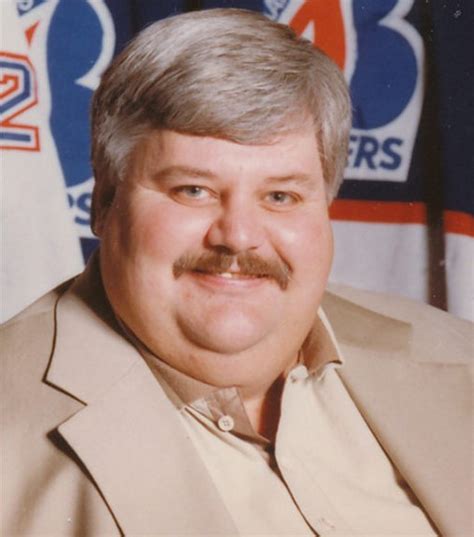
Scotty Bowman
Scotty Bowman. Source: Wikipedia Scotty Bowman was born in Verdun, Quebec, Canada, on Sept. 18, 1933. Bowman was the first coach of the expansion St. Louis Blues. He became coach of the Montreal Canadiens in 1971 and won the Stanley Cup in his second season. He then coached the Canadiens to four consecutive Stanley Cup championships from 1976-79. After seven seasons with the Buffalo Sabres, he again won the Stanley Cup with the Pittsburgh Penguins in 1992.
-
Joel Quenneville
Joel Quenneville. Source: Wikipedia Joel Quenneville was born in Windsor, Ontario, Canada, on Sept. Quenneville began his head coaching career with the St. Louis Blues in 1997. Then, after three seasons as coach of the Colorado Avalanche, he took over the Chicago Blackhawks for the 2008 season. Quenneville coached the Blackhawks to three Stanley Cup championships (2010, 2013, 2015) before he was fired during the 2018 season.
Read also: Inside Aaron Ness's Career
-
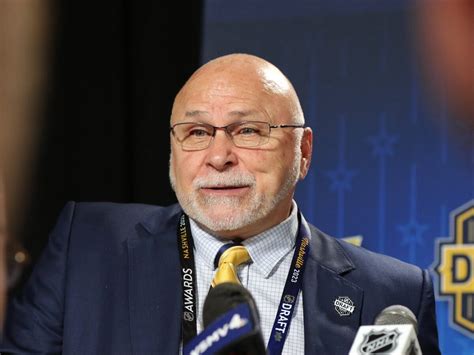
Barry Trotz
Barry Trotz. Source: Wikipedia Trotz coached the Nashville Predators from 1998-2014. He took over the Washington Capitals in 2015 and won the Stanley Cup in 2018.
-
Ken Hitchcock
Ken Hitchcock. Source: Wikipedia Ken Hitchcock was born in Edmonton, Alberta, Canada, on Dec. He became an NHL head coach in 1996 with the Dallas Stars and won the Stanley Cup in 1999. He moved on to the Philadelphia Flyers from 2002-06. After coaching the Columbus Blue Jackets from 2006-10, he coached the St. Louis Blues from 2011-2017, finishing first or second in the division in five of his first six seasons.
-
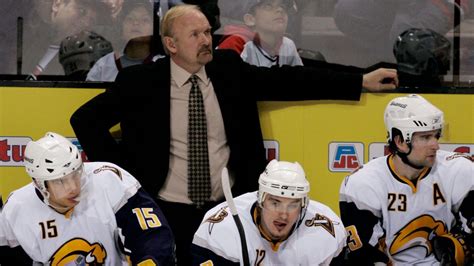
Lindy Ruff
Lindy Ruff. Source: Wikipedia Lindy Ruff was born in Warburg, Alberta, Canada, on Feb. Ruff coached the Buffalo Sabres for 15 seasons, from 1997-2013, and reached the Stanley Cup Final in 1999.
-
Jacques Lemaire
Jacques Lemaire. Source: Wikipedia Jacques Lemaire was born in LaSalle, Quebec, Canada, on Sept. Lemaire became coach of the Montreal Canadiens in 1984, less than five years after playing for them. He took over the New Jersey Devils in 1993 and won their first Stanley Cup championship in 1995.
-
Al Arbour
Al Arbour was born in Sudbury, Ontario, Canada, on Nov. Arbour coached the St. Louis Blues for 107 games from 1970-72 before becoming coach of the New York islanders for the 1973 season. There he won the Stanley Cup four consecutive times (1980, 1981, 1982, 1983) before losing the Final in 1984. Arbour was inducted into the Hockey Hall of Fame in 1996. He died on Aug.
-
Toe Blake
Toe Blake was born in Victoria Mines, Ontario, Canada, on Aug. His playing career was ended by an injury, and he became coach of the Canadiens in 1955. He won the Stanley Cup in each of his first five seasons, and in three of his last four, including his final season of 1968. Blake was inducted into the Hockey Hall of Fame in 1966.
-
Mike Keenan
Mike Keenan was born in Bowmanville, Ontario, Canada, on Oct. He became coach of the Philadelphia Flyers in 1984 and reached the Stanley Cup Final in two of his first three seasons. He then coached the Chicago Blackhawks for four seasons and reached the Cup Final in the final season of 1992. He coached the New York Rangers for one season, 1994, and won their first Stanley Cup championship in 54 years, and only one in the past 83 years.
-
Dick Irvin
Irvin began his head coaching career with 12 games with the Chicago Black Hawks in 1929. After one more full season with them, he took over the Toronto Maple Leafs in 1931 and won the Stanley Cup that season. He left the Maple Leafs after eight more seasons and became coach of the Montreal Canadiens in 1940. Irvin was inducted into the Hockey Hall of Fame in 1958.
-
Darryl Sutter
Darryl Sutter was born in Viking, Alberta, Canada, on Aug. After injuries forced him to retire as a player at age 28, he became coach of the Chicago Blackhawks in 1992 at age 34. Following time as coach of the San Jose Sharks and Calgary Flames, he became coach of the Los Angeles Kings for the 2011 season and won the Stanley Cup in his first and third season with them.
-
Glen Sather
Glen Sather was born in High River, Alberta, Canada, on Sept. Sather had coached the Edmonton Oilers for three seasons in the World Hockey Association before they joined the NHL for the 1979 season. They went on to win the Stanley Cup four times in five seasons from 1984-88.
-
Pat Quinn
Pat Quinn was born in Hamilton, Ontario, Canada on Jan. He became coach of the Philadelphia Flyers in 1979 and was there for three more seasons. He joined the Los Angeles Kings for three seasons before taking over the Vancouver Canucks. There he made his only coaching appearance in the Stanley Cup Final, in 1994. Quinn was inducted into the Hockey Hall of Fame in 2016. He died on Nov.
-
Alain Vigneault
After coaching the Montreal Canadiens for four seasons, beginning in 1997, he reached the Stanley Cup Final once in seven seasons with the Vancouver Canucks (2011) and in his first of five seasons with the New York Rangers (2014).
-
Paul Maurice
Paul Maurice was born in Sault Ste. Marie, Ontario, Canada, on Jan. Maurice became an NHL coach at 29 years old, with the Hartford Whalers in 1995. He coached seven seasons after the team moved to become the Carolina Hurricanes and made his only coaching appearance in the Stanley Cup Final in 2002. He later returned to Carolina for four more seasons after two seasons with the Toronto Maple Leafs.



Other Notable Coaches
Besides the coaches mentioned above, there are other notable figures who have made significant contributions to the NHL:
- Jon Cooper has been the head coach of the Tampa Bay Lightning since 2013.
- While serving as the goalie coach for the Buffalo Sabres, Irbe was signed to a tryout contract on November 18th, 2014, to serve as an emergency backup goalie for the Sabres after Jhonas Enroth was injured in the first period while playing the San Jose Sharks. Irbe, who hadn’t played in an NHL game since April 4, 2004, suited up but did not play that night. Irbe had had a 13-year career that spanned 568 games. While his career 0.899 Sv% is terrible by today’s standards, he had a balance of seasons where his Sv% was above and below the league average. He was at times a rel workhorse, having lead the league with 70+ games started on three separate occasions.
- McLellan only played 5 career NHL games and found himself overseas in the top Dutch hockey league by the age of 25. It was there with the team SIJ Utrecht that he served as a player-coach in 1992-93, sparking his interest for behind the bench. The next year he was a head coach for the North Battleford North Stars of the Saskatchewan Junior Hockey League. Over the next two decades McLellan worked his way up through the WHL and the AHL to become an assistant coach in Detroit, where he won the Stanley Cup in 2008. That next year marked the start of his first NHL head coaching assignment with the San Jose Sharks.
- Quenneville served as an assistant coach to Marc Crawford in 1991 while he was still a player for the St. John’s Maple Leafs in the AHL. Quenneville had enjoyed an 803-game NHL career, but St. John’s general manager Cliff Fletcher was looking to transition him into a coaching role. Quenneville quickly worked his way up the ladder, joining the Quebec Nordiques in 1994-95 as an assistant coach and becoming a head coach of the St. Louis Blues in 1996-97.
| Coach | Stanley Cups |
|---|---|
| Scotty Bowman | 9 |
| Toe Blake | 8 |
| Al Arbour | 4 |
| Glen Sather | 4 |
| Joel Quenneville | 3 |