Rhode Island is one of the traditional centers of ice hockey in the United States.
When ice hockey began to be introduced to the United States in the 1890s, there were no artificial ice rinks in the state. First Brown University hockey team in 1897-98. When nearby colleges Yale, Penn and Columbia began fielding teams of their own, their traditional rival Brown followed in short order.
Brown played its first game on January 19, 1898, and defeated Harvard 6-0. The team, led by Irving O. Hunt, would go on to win the intercollegiate championship that season, the first time a collegiate ice hockey championship was ever awarded. Despite its early success, Brown was hamstrung by the lack of a local rink and the team was forced to construct a temporary surface atop the school's baseball diamond, Aldrich Field.
This situation was untenable for the Bears and caused the team to plummet in the college hockey rankings. Very little happened in the sport over the next 20 years but that was changed in February 1926 when the Rhode Island Auditorium opened its doors. The arena was located in downtown Providence and was the first indoor ice rink in the state.
Almost immediately after opening, it served as the home venue for a host of teams. First a foremost was the Providence Reds, one of the founding members of the Canadian-American Hockey League, a precursor to the American Hockey League, both minor professional leagues that send many players into the National Hockey League. Other tenants that first season also included two college teams. Brown returned after a 20-year absence and used the building as its home until 1962 while Providence also inaugurated its ice hockey program.
Read also: The Origins of Hockey in North America
While Brown saw little success after their return, the Reds became one of the top minor teams in the country. Providence won three league titles in both the 1930s and 40s to establish the bonafides of ice hockey in Rhode Island. During this time the grassroots of hockey were beginning to take hold and several home-grown players would go on to achieve notoriety.
In 1972 the Reds moved out of the old Auditorium and into the Providence Civic Center but the change of venue did not help their ailing finances. The team had been mired in mediocrity for most of the previous decade and attendance numbers had fallen. A resurgence in their new venue was unable to get enough interest back into the team and in 1977, the team moved to Binghamton, New York.
The state was left without a professional team for 15 years until the Boston Bruins relocated their AHL affiliate from Maine. The Providence Bruins played their first season in 1992-93 and shot out of the gate by winning a division title in their first year. In the meantime, Rhode Island was one of the early adopters of women's ice hockey. Brown was the first school to field a varsity women's team, playing its first games in 1967.
Due to the state's low population (approximately 1.1 million as of 2020), fewer players from Rhode Island are seen at high levels of the sport. Ralph Warburton was a 4-year player at Dartmouth in the mid-40s and joined the national team for the 1948 Winter Olympics. Robert Gaudreau was a 2-time All-American at Brown in the mid-60s. He was also named as the ECAC Hockey Best Defensive Defenseman in 1966. Two years later he was a member of the national team at the 1968 Winter Olympics. His son, Rob followed in his footsteps, playing college hockey at rival Providence. He was also an All-American and later played four years in the NHL.
Brian Lawton, though born in New Jersey, was raised in Cumberland and became a star player at Mount Saint Charles Academy. He was so well regarded as a junior player that he became the first US-born player chosen with the 1st selection in the NHL Entry Draft. Sara DeCosta-Hayes played college hockey for Providence and helped the US national team win the inaugural gold medal for women's hockey at the Nagano Olympics. Brian Boucher was a long-time goaltender in the NHL, playing mostly for the Philadelphia Flyers. Though he was a backup for much of his career, Boucher had several outstanding periods in his career. In 2004, while playing for Phoenix, Boucher set the modern-day record for consecutive shutout streak at 332, not allowing a goal for over 5 games. Bryan Berard was the second player from Rhode Island taken first at the NHL Draft. He performed well in 5 seasons but had his career derailed by a severe injury. In a game against the Ottawa Senators, Berard was hit in the eye by a stick and was told that he may lose the eye. Berard underwent several surgeries and was able to regain limited use of the eye (20/600 vision).
Read also: Winter in North Conway
The story of the North Providence Arena recalls a time when hockey’s popularity exploded in Rhode Island and all around New England. Ice was hard to come by as indoor rinks were relatively scarce. In the late 1960s and early 1970s, Providence had the Rhode Island Auditorium and Meehan Auditorium. The Ice Bowl was on the Providence/Cranston line. There was Levy Rink in Burrillville, Adelard Arena in Woonsocket and St. George’s School rink in Middletown. Iceland, an outdoor rink, was in Seekonk.
In North Providence, partners Ernest W. Audet, Joseph DeAngelis, Ronald DeBellis and Michael J. Scarpellino persuaded the Town Council to let them put up a building on municipal land on the main thoroughfare, Mineral Spring Avenue. The Town Council granted the partners a 30-year lease on the land.
In particular, the fortunes of the North Providence High School team would dramatically change. No longer would practices for the self-proclaimed “roving gypsies” take place in the early morning hours on school days. Coach Chuck Gaffney’s charges now took to the practice ice next door to classes and right after school. Student body support and local interest dramatically increased, as did the attendance of loyal followers no longer confronted with miles of travel to games. The rink’s opening also gave birth to a successful local youth hockey program.
On March 11, 1979, the final Rhode Island Interscholastic League games were played at the North Providence Arena. At a bank foreclosure auction in July, 1979, local businessman Joseph A. In February 1980, the building reopened for roller skating under the name Super Skates. It didn’t last long.
NORTH SMITHFIELD - You may know her as an advocate for seniors, or as a face in local government from her time leading North Smithfield as town administrator. But to those in the world of competitive figure skating, Linda Thibault is a gold medalist, preparing to perform before thousands of spectators for her second time at the age of 78 - a chance to match skills against skaters from across the globe.
Read also: Remembering Team North America
Thibault was raised in North Smithfield and notes she got her start on the ice at a young age. “I’ve always skated. I grew up as a pond skater,” said Thibault, noting she got her first nice pair of custom-fit ice skates around age 73, after decades of gliding on hand-me-downs. It’s a hobby she later passed down to her children, and when her daughter was 10-years-old, it was Thibault’s advocacy the led to the launch of the town’s first girls figure skating program.
In the late 1970s, she served as the first vice president of the North Smithfield Youth Hockey Association, while her husband volunteered as a hockey referee. Mike Lovett was the high school athletic director then, and the program served as a feeder for the North Smithfield High School team.
“That’s when I realized I was skating, but I wasn’t doing it properly,” Thibault said. Inevitably, of course, Thibault’s children grew up, and long hours once spent in the rink became free time. “We finally got warm again,” she said. The now grandmother joined an adult skating program. “We were back in the rinks again,” she said of the Thibault clan.
In 2018, she entered the Ice Sports Industry’s World Recreational Championships at the New England Sports Center in Marlborough, Mass., an international event that’s attracted some 10 million competitors over its 63 year history. “It was very emotional,” she said. “It was quite a lovely program, and the judges thought so too. Lily was a senior in high school at the time. And Thibault offered a second individual performance, competing with technical elements in ice dancing.
A professional nurse who graduated college in her mid-30s, Thibault had never been one to follow age conventions. Still, performing in a world competition for the first time at age 73 in front of thousands of people was a lot. “When it was time for me to be out there alone I did kind of freak out a little bit,” she said. “That was scary because I was all by myself out there. I’ve done a lot of things in my lifetime in front of people, but skating was a different thing.
Thibault now skates once a week at Sharper Edge Skating School in Concord, Mass., taking lessons with a coach every Wednesday morning, and sometimes a second session in the afternoon. After her lessons, she sticks around to help teach kids as young as two. “It’s a lot of fun,” she said. Her daughter Kimberly also still coaches and became national referee.
And next year, when the ISI championship returns to the region with an event in Boxborough, Mass. in August, Thibault plans to join the Dutch Waltz & the Canasta Tango competitions. “There’s people coming from everywhere,” she said. “It’s a pretty big deal. She’ll turn 79 before the event, putting her among the oldest competitors. The active resident, also a former town council president, still stays involved in local government, advocating on behalf of creation of a dedicated center to help keep other members of the town’s older population stay active as chairperson of the Senior Advisory Committee.
“She works me very hard,” she said of her coach. “I enjoy it. We call them “hockey” rinks because, well, we play hockey. Patricia and Betty Ann Farrell grew up on figure skates. Their father, the late Dr. Charles Farrell, was the founding President of the Providence Figure Skating Club, organized in 1938 and based at the RI Auditorium.
With the opening of Brown’s Meehan Auditorium in the early 60’s, the club began renting ice time at the new rink, gradually parting ways with the aging arena at 1111 North Main. By the mid-sixties, the club was advised that the needs of the university would severely reduce their available ice time. Bob, who never skated, along with Patricia devised a simple plan - build the club its own skating rink - right near their home in Rumford.
One of those investors was Rumford neighbor Ross Richards, brother of Dudley S. “Dud” Richards, the former US National Pairs Champion and 1960 Olympic figure skater. A year later, Ross established the skating club’s Dudley Shaw Richards Memorial Award for aspiring figure skating champions. While Dudley Richards Arena opened to the public in mid-February, 1969, Bob and Patricia Zeiser’s dream came to full fruition on April 25th.
That was the occasion of the Providence Skating Club’s annual “Ice Fantasy” show, which happened to be the club’s 30th annual spectacular. One month later, on May 28th, the Dudley S. Richards Memorial Ice Skating Rink was formally dedicated to an overflow SRO gathering at the 1,200-seat arena with an estimated 300 more clamoring outside. The keynote speaker was Senator Ted Kennedy, a childhood friend of the Richards family on the beaches of Hyannis and Dudley Richards’ roommate at Harvard.
According to the figure skaters who flocked there, the rink made excellent “figure skating ice”, not surprising since the rink was originally conceived as a surface for figure skating. It differed from hockey ice in that it was purposely “softer” so that it could hold the blade edges and figures better. It was announced during the dedication that the privately owned rink would be open to the public at certain hours according to arrangements made with the East Providence Board of Recreation.
East Providence and Pawtucket jumped on the bandwagon, each community purchasing skating time. According the Bob Zeiser, “Pawtucket came to us first with a big budget. While East Providence had been playing high school hockey uninterrupted since Rhode Island first organized a schoolboy league in 1902, there was never an organized youth hockey program in the town. If you wanted to learn how to skate or play organized hockey as a youngster, you went elsewhere. Now, for East Providence and a good chunk of the East Bay, there was a new rink nearby.
Tom’s three sons, Tom, Jr., Billy, and Tim, were mainstay talents in Cranston’s highly-regarded Edgewood Youth Hockey program. With the considerable help of others, Tom set out to establish the East Providence Hockey Association, starting with a nucleus of Townie talent drawn back home from other statewide programs. Soon thereafter, AHL Hall of Famer, Larry Wilson, was hired to coach the RI Reds and settled his family, including sons Ron, Brad, Randy and Dale, in Riverside.
Suddenly, what would become two of the most famous hockey families in Rhode Island and New England history were together in the same school. Townie hockey exploded. The big beneficiary, however, was the Townies. Instantly brimming with future pro talent on top of an already skilled and experience roster and with the new rink on their doorstep, they immediately challenged the state’s perennial powers for interscholastic supremacy.
High school hockey in East Providence became a statewide draw and crowds reported at over 1,400 were a common occurrence with the Army’s and Wilson’s in uniform. Meanwhile, the town’s youth hockey program was booming, boasting over 700 players over all divisions. The FRAM Invitationals were sponsored by the company’s engineering and research facility which was located a stone’s throw from the rink. The tourneys were championed by many on the company’s executive board and workforce, who lived nearby and whose family members played hockey or figure skated at Dudley Richards.
Rink manager, Ed Woodcock, a former star player-of-the-year at Hope High School, had long been involved with the Figure Skating Club. In addition to his considerable hockey talents, he was also a skilled figure skater. Along with his younger brother, Rollie, who he recruited to run the rink’s famous skate shop, the two had the arena humming. Both had learned their lessons well while working with older brother, Tom, at the RI Auditorium.
On the artistic and recreational side of the rink’s patronage, membership in the Providence Figure Skating Club was expanding and Friday nights turned into “Kid’s Nights”, with hundreds attending public skating sessions. The Reds would sometimes schedule a practice when shows like Ice Capades were in town, drawing the locals for a free glimpse at the pros.
The rink also gave birth to one of USA Hockey’s most influential nationwide figures. “When Jeffrey started to play, parents were expected to help,” recalls Reid, so help he did. Before long, Larry was running the house league, eventually becoming president of the EPHA. Not too many years later he was taking on high-profile responsibilities for USA Hockey and helping to set policy for all youth hockey across the country.
The bright lights that shone on the figure skating and hockey fortunes of the early to mid-seventies began to dim in 1976. Skyrocketing expenses brought on by an energy crisis put the rink’s future in peril. Ownership did not renew its arrangement with the high school and interscholastic league because it found it was losing money reserving too many discounted hours and nights for them. But expenses continued to rise.
The ownership was near default on its state-guaranteed mortgage and time had run out. The state took control of the rink in May of 1978. In November, the City of Pawtucket leased Dudley Richards while repairs were being made at their Lynch Arena, which had been damaged by fire. Attempts to sell the rink failed, including an offer to the City of East Providence to purchase it for $500,000 but no serious negotiations ever developed despite the pleas of residents at town council meetings.
In July of 1979, ten years after it opened and changed the hockey landscape on the east bay, the Dudley S. The Providence Figure Skating Club moved their sessions to Mid-State Arena in East Greenwich and then to the Smithfield and Cranston municipal rinks when Dudley Richards closed. Over the course of the turmoil, the East Providence Hockey Association, headed then by John W. “Jack” Kennedy, Jr., found a new home for the 1978-79 season.
The loss of Dudley Richards has had a more profound effect on the high school. After the rink closed, the Townies took up residence at Mid-State Arena in East Greenwich. That was short lived for both the high school and the skating club as Mid-State was soon to succumb to the energy crisis that doomed Dudley Richards. So on the Townies moved to Lynch Arena. How times have changed.
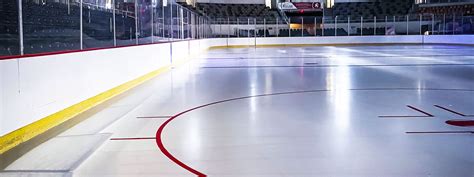
An example of an ice hockey arena
Rhode Island Hockey Hall of Fame
tags: #north #smithfield #ice #rink