The Phoenix Roadrunners hold a special place in the hearts of hockey fans in Arizona. From their humble beginnings in the Western Hockey League (WHL) to their time in the World Hockey Association (WHA) and beyond, the Roadrunners provided thrilling hockey action and created lasting memories for fans of all ages.
Early Years in the Western Hockey League (1967-1974)
The Phoenix Roadrunners began as a Western Hockey League (WHL) franchise in 1967, following the relocation of the Victoria Maple Leafs from Victoria, British Columbia, to Phoenix, Arizona. The team adopted blue and gold as its primary colors, which carried over into its later iterations.
Originally affiliated with and owned by the Toronto Maple Leafs organization, the team was sold to a group of local Phoenix investors, including principals Bill MacFarland and Karl Eller, who rebranded it as the Roadrunners to reflect the region's desert wildlife and the speedy cartoon bird from Warner Bros.
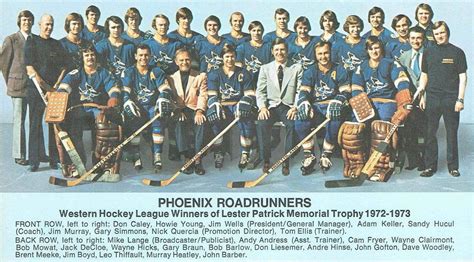
Under MacFarland and Eller's ownership, the Roadrunners established themselves in the WHL from 1967 to 1974, achieving notable success by capturing the league's Lester Patrick Cup championships in both the 1972-73 and 1973-74 seasons-the final two titles before the league's end.
The steady westward expansion of the National Hockey League (NHL) and its rivalry with the upstart World Hockey Association (WHA) for players and expansion markets led to the demise of the WHL in the spring of 1974. Phoenix’s owners, coming off back-to-back Western League titles, accepted an invitation to leap up into the Majors with the WHA for the 1974-75 season.
Read also: Features of Custom Hockey Gloves
the entire history of the arizona coyotes, i guess
Joining the World Hockey Association (1974-1977)
The WHL's dissolution in 1974 prompted the Roadrunners' seamless entry into the World Hockey Association (WHA) as an expansion team for the 1974-75 season, preserving organizational continuity without drawing from an existing WHA club's mid-season relocation. In 1974, the Roadrunners joined the WHA with their roster mostly intact when the WHL ceased operations.
The Phoenix Roadrunners entered the World Hockey Association (WHA) in 1974 with Sandy Hucul as head coach, a former player who had led the team's predecessor in the Western Hockey League to consecutive championships. The Roadrunners initially found success in the WHA under Hucul as well, posting winning records and advancing to the playoffs in 1974-75 and again in 1975-76.
Hucul guided the Roadrunners to a 39-31-8 record in their inaugural 1974-75 season, securing a playoff berth as the fourth seed in the Western Division, and followed with a 39-35-6 mark in 1975-76, again qualifying for the postseason where they lost in the preliminary round to the San Diego Mariners 3 games to 2.
Phoenix kept a core of players from its superb Western League clubs of the early 1970’s, including Jim Boyd, Michel Cormier, Murray Keogan, Bob Mowat and Howie Young. This group was supplemented by newly arrived young snipers Dennis Sobchuk and Robbie Ftorek for the 1974-75 season.
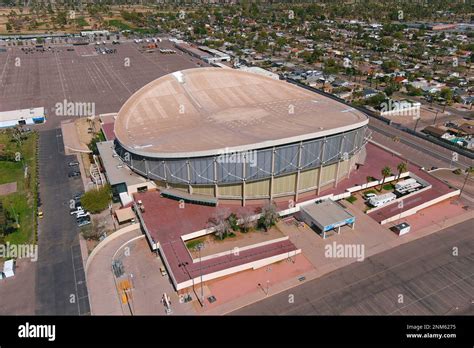
The Phoenix Roadrunners of the World Hockey Association (WHA) played their home games at the Arizona Veterans Memorial Coliseum, a multi-purpose indoor arena located in Phoenix, Arizona. The arena's multi-purpose design, which accommodated basketball for the NBA's Phoenix Suns starting in 1968, concerts, and other events like the Arizona State Fair, occasionally impacted scheduling and ice availability for the Roadrunners.
Read also: The story of Craig Needham
Media coverage included radio broadcasts on KOY-AM, with longtime Phoenix sports announcer Al McCoy handling play-by-play duties, and select games televised on KPHO-TV Channel 5. Operationally, the Roadrunners navigated the WHA's Western Division, which required extensive air travel logistics to opponents in distant locales such as Edmonton, Calgary, and Houston, contributing to higher costs in an era of rising fuel prices.
Challenges and Changes
The Roadrunners achieved relative success during their first two WHA seasons, but lack of financial success resulted in the removal of local favorite Sandy Hucul as coach and his replacement with Al Rollins, who was disliked by Phoenix hockey fans. Hucul's tenure ended after the 1975-76 season due to a combination of personality conflicts with management and financial pressures on the franchise, leading to his non-renewal despite his success in achieving back-to-back playoff appearances.
Al Rollins, a former NHL goaltender with over 300 games of experience from the 1940s and 1950s, was appointed as both general manager and head coach for the 1976-77 season, marking a shift toward cost-cutting measures amid ownership changes. Rollins did not succeed in improving the team's fortunes. At one point, the team was forced to sell players just to pay the bills.
After losing $5 million over the team’s first two seasons in the WHA, owner Karl Eller instituted major budget cuts. After two winning WHA campaigns under Hucul, the Roadrunners fell to last place in the six-team Western Division with a 28-48-4 mark under Al Rollins.
On the management side, Bill MacFarland served as the initial general manager in 1974-75, overseeing the transition from the WHL by acquiring veterans like goaltender Jack Norris from Edmonton via Indianapolis to bolster the netminding and stabilize the roster post-relocation to the WHA. Ownership began under a group led by Karl Eller, a Phoenix media executive who chaired PR Properties and committed to major-league status, but financial strains prompted a shift to Brian O'Neill as principal owner by the 1976-77 season.
Read also: Inside Aaron Ness's Career
The Roadrunners finally gave up and folded at the end of its third season. On April Fool’s Day 1977, with two games left on the home schedule, Eller announced that the Roadrunners would go out of business after the season ended.
Key Players and Moments
The Phoenix Roadrunners featured several standout players during their three seasons in the World Hockey Association, with Robbie Ftorek emerging as the franchise's most prominent figure. After leading the Roadrunners in scoring as a 20-year old in 1974-75, Sobchuk would leave town after just one season. But Ftorek would emerge as the Roadrunner’s top offensive threat of the WHA era.
During the 1976-77 season, the 25-year old Massachusetts native would score 117 points and become the first American-born player to win the Most Valuable Player award in a major professional league. The 1975-76 season marked a competitive follow-up for the Phoenix Roadrunners, who posted a record of 39 wins, 35 losses, and 6 ties for 84 points, securing second place in the Western Division.
Roster adjustments at the trade deadline bolstered depth amid minor injuries to defensemen such as Murray Keogan. Coach Sandy Hucul's system emphasized balanced play, leading to a solid mid-season stretch that kept Phoenix in contention for the division lead. Injuries to key forwards like Cam Connor hampered consistency, while trade deadline moves failed to stem the tide of losses against rivals, including repeated defeats to the Mariners that highlighted ongoing divisional tensions.
Management's scouting efforts focused on blending WHL holdovers with draft picks and selective acquisitions, such as forward Robbie Ftorek, though disciplinary challenges arose with high-penalty players contributing to on-ice inconsistencies; for instance, the team ranked among the league's most penalized units in 1975-76 with over 1,000 minor penalties.
Post-WHA, several alumni transitioned to the NHL following the 1979 merger. Ftorek continued his career with the Quebec Nordiques and New York Rangers, accumulating 227 points (77 goals and 150 assists) in 332 NHL games before retiring after the 1984-85 season, outlasting most former WHA players in major professional hockey. Forward Cam Connor, selected by Phoenix in the 1974 WHA Secret Amateur Draft (first round, fourth overall), joined the Winnipeg Jets and later played 80 NHL games with the Jets and Colorado Rockies.
Life After the WHA
Following the fold, the Roadrunners' players were dispersed to other WHA teams through direct sales and arrangements, including Ftorek, Del Hall, and Clay Hebenton joining Cincinnati, while assets like equipment were liquidated to settle debts. Unlike surviving WHA franchises such as Edmonton, Quebec, Winnipeg, and New England, which were absorbed into the NHL via the 1979 merger, the Roadrunners' early demise excluded them from any NHL integration, leaving Phoenix without a major-league hockey team until decades later.
After the original Western League/WHA Roadrunners closed up shop in April 1977, the Roadrunners branded was re-booted by minor league clubs three times over the decades that followed. After the original Western League/WHA Roadrunners closed up shop in April 1977, the Roadrunners branded was re-booted by minor league clubs three times over the decades that followed.
Phoenix Roadrunners: Later Reincarnations
- Central Hockey League (1977-1978): The team abandoned the NHL-affiliated CHL after just 27 games to make an abrupt midseason jump to a start-up independent circuit, the Pacific Hockey League (PHL).
- Pacific Hockey League (1978-1979): The PHL proved to be a shabby enterprise and the Roadrunners folded along with the rest of that league in the spring of 1979.
- International Hockey League (1989-1997): In 1989, a third version of the Roadrunners joined the International Hockey League (IHL). The IHL Roadrunners played from 1989 to 1997.
- East Coast Hockey League (2005-2009): The most recent revival of the Roadrunners came in 2005. The 21st century Roadrunners joined the ECHL and seemed to have potential, but This edition of the Roadrunners closed for business after four seasons in 2009.
Legacy
The Phoenix Roadrunners were a professional ice hockey team in the World Hockey Association (WHA) from 1974 to 1977. The organization folded for financial reasons before the remaining teams in the WHA merged with the NHL in 1979. In 1996 the Winnipeg Jets, a former WHA franchise, moved to Phoenix and became the Phoenix Coyotes. In 2016, the Coyotes purchased their AHL affiliate (the Springfield Falcons), and moved them to Tucson.
For the same reasons many of us love spring-training baseball, the Phoenix Mercury of the WNBA and the old Phoenix Firebirds, we feel a certain affection for the now-defunct Phoenix Roadrunners minor-league hockey team. Perhaps it's the intimate size of the crowds, fans' interaction with players or, in the case of the Roadrunners, the team's mascot, “Rocky the Roadrunner,” with his mad ice skating skills, spiky feathered crest and Woody the Woodpecker grin that delighted fans between periods. We just loved the Roadrunners experience.
“The fan base was very good and it was affordable family entertainment,” says Adam Keller, who played for the team in the early 1970s and served as its general manager from 1989-1997. “The kids especially liked Rocky.”
Games draw thousands. The team dropped the puck at the “Madhouse on McDowell,” Veterans Memorial Coliseum, along with the Phoenix Suns for nearly all of that time, but most say the team's heyday was during the stretch that Keller served as general manager from 1989-1997, when the Roadrunners drew about 6,300 fans per game. The team also amassed a respectable record at 655-264-315 and made the playoffs in 1991, 1994 and 1995, the last two led by coach Rob Laird.
Center and star player Yanic Perreault scored 51 goals during the 1994-95 campaign, and went on to play another 14 seasons at the National Hockey League level with the Los Angeles Kings, Toronto Maple Leafs and Montreal Canadiens, among others, including the newly formed Phoenix Coyotes in 2006.
Well, with the arrival of the then-Phoenix Coyotes for the 1996-97 season from Winnipeg, Manitoba, interest in the Roadrunners waned. “The market couldn't support two teams,” Keller says.
But then the team resurfaced for the 2005-06 season, playing in the East Coast Hockey League under owners Robert Sarver of the Suns and four-time Stanley Cup Champion Claude Lemieux, who played for the Coyotes for three seasons in the early 2000s. The team lasted four years, but again, there was too much competition for fan dollars.
The Roadrunners returned in 2016 when the Coyotes purchased an American Hockey League affiliate from Springfield, Illinois, and moved the team to Tucson. So now when the Coyotes call up a fresh player, he need only hop on Interstate 10 to make the commute. A naming contest for fans changed the team's moniker from Falcons to Roadrunners.
Today, Keller is still involved with pro hockey as a replay goal official for the NHL, working Coyotes games.
tags: #phoenix #roadrunners #hockey