The Polo Ralph Lauren Corporation was launched in 1967 by a 28-year-old Ralph Lauren, born to a family of Jewish immigrants in the Bronx.
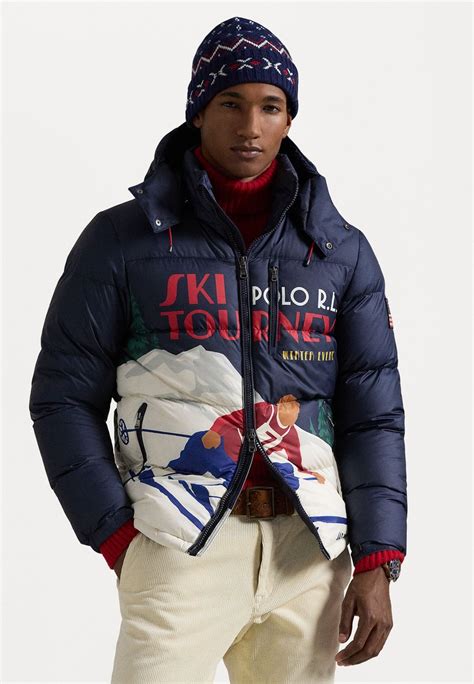
Ralph Lauren's vision for urban sportswear, inspired by the loose-fitting parkas worn by snowboarders, led to the creation of the "Snow Beach" collection in 1993.
The collection was a revelation with a riotous explosion of primary colors that brought to mind the Color Field work of artists Barnett Newman and Frank Stella.
For the first time, athletic wear had descended from the slopes to take center stage on the streets of New York.
The Rise of "Snow Beach"
In a downtown Brooklyn street in 1993, Raekwon (aka Corey Woods) from the Wu-Tang Clan rocked up to the set of the video shoot for the group’s single “Can It Be All So Simple” wearing a unique and distinctive yellow and blue parka emblazoned with the hot pink words “Snow Beach,” and one of the most seminal moments in hip-hop style was born.
Read also: Ski Wear for Plus-Size Skiers
Snow Beach exploded in popularity and gained such a cult following that even today vintage parkas from the 1993 collection or the re-edition version of these jackets launched in 2018 go for secondary prices five times their original cost, if you are lucky enough to find one.
But more than that, Snow Beach showed the world that there were no limits to style, that what you wear at play or during sports could be equally relevant at a work or even at a sophisticated dinner if you wore it with that signature brand of Ralph Lauren nonchalant cool.
Says The Rake’s editor-in-chief Tom Chamberlin, “Snow Beach brought a whole new generation and demographic to Ralph Lauren with its freshness and youthful energy. It was a wonderful example of how Lauren constantly invented all-new modes of dress.“Without Snow Beach, we would not have the popularization of athletic wear and streetwear and their dominance of runway styles today.”
Raekwon wore Polo Ralph Lauren "Snow Beach" jacket in Wu-Tang's 1994 rap video for 'Can It All Be So Simple.'
The Polo Bear Legacy
POLO CHRONICLES: THE HISTORY OF RALPH LAUREN POLO SPORT TO THE POLO BEAR 🐻 😲🤯
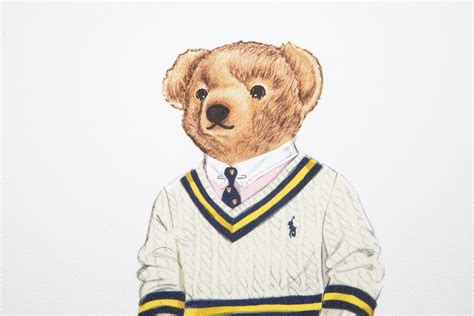
The roots of Ralph Lauren’s Polo Bear go back to the late 1980s, when his team presented Lauren and his wonderfully effusive and elegant brother Jerry with Steiff teddy bears modeled on them and dressed in outfits made by the Ralph Lauren factories that created their menswear.
Read also: Choosing the right snow pants
Lauren was so charmed by these bears he decided to offer them in a limited series of 200 in 1991.
Even before the age of the Internet, buzz about the bears spread through New York like wildfire, with every Ralph Lauren devotee making a beeline for the Rhinelander mansion flagship in Manhattan, where they sold out over the weekend.
From 1991 to 2001, the Polo Bear enjoyed a decade of sartorial dominance, and everything he graced became the object of cult collectibility.
The Polo Bear was depicted in everything, including a Western fringe jacket, a beret, striped T-shirt and espadrilles, collegiate preppy clothing under a camel Polo coat, RLX ski gear, and my favorite, a magnificent evening suit replete with monogrammed evening slippers and a martini.
In 2001, the partnership with Steiff came to an end, and with it the use of the Polo Bear on Ralph Lauren clothing.
Read also: Technology in Moncler Ski Wear
But by that time, Polo Bear clothing had taken on a life of its own, particularly in the hip-hop community and most notably with Kanye West, who almost exclusively wore the clothing throughout the launch of his seminal College Dropout album in 2004.
By 2013, the demand for all things Polo Bear inspired his return to the Ralph Lauren visual lexicon, where he remains more popular than ever.
Indeed, the Polo Bear collaborations, with brands such as Palace Skateboards, have become some of the most sought-after and desirable objects around.
Highsnobiety has affiliate marketing partnerships, which means we may receive a commission from your purchase.
Lo-Lifes and the Streetwear Culture
By the early ‘80s, Polo garments and the heavy price tags they carried were seen as an indicator of sophistication, and were worn largely by affluent upper-class white families.
Coming from a working-class background himself, Ralph Lauren’s clothing earned its status not only through the quality and timelessness of his designs, but through his own personal story.
Once Polo hit the streets, the brands that were already popular such as Kangol and Lacoste took an immediate backseat in their collective minds.
As Polo rose in popularity within the street culture, two boosting crews emerged in the city: Ralphie’s Kids from Crown Heights, and United Shoplifters Association in Brownsville.
The crews would go on boosting sprees hitting department stores across Manhattan, and flexing their outfits of head-to-toe Polo in hip-hop clubs, city streets, and train lines.
With greater numbers, the now-united crews became an unstoppable boosting force.
To the Lo-Lifes, wearing Polo head to toe was not only a way of dressing for the lifestyle they aspired towards, but a way to achieve it.
Through boosting Polo, they entered by force into the life of luxury marketed alongside the clothes, and elevated themselves from the financial constraints of low-paying jobs, budget-conscious wardrobes, and cyclical poverty.
Over a short few years, the Lo Lifes established themselves as a permanent part of the legacy of Ralph Lauren clothing and embedded Polo into hip-hop, graffiti culture, and the lifeblood of New York City as a whole.
As the ‘80s came to a close and the ‘90s rolled along, many of the Lo Lifes had either moved on, wound up dead or in jail, or left their youthful past of criminal exploits behind them in exchange for more legitimate hustles.
Considered by many to be the best year in the brand’s history, the year 1992 saw the releases of the first Polo Bear knit, the 92 Ski Polo Active goose and matching longsleeve, the Stadium collection and P-Wing logo, and the infamous ‘suicide’ ski jacket.
In 1993, Ralph Lauren released their Snow Beach capsule collection, which would be popularized and forever immortalized when Raekwon the Chef wore the “Snow Beach” pullover in Wu Tang Clan’s music video for “Can It Be All So Simple”.
To look back on the street styles and outfits present during this time is to look back on history written in fabric - the blueprints of a style now deeply ingrained into New York culture.
| Collection/Item | Year | Significance |
|---|---|---|
| Polo Bear Knit | 1992 | First Polo Bear knit, highly collectible |
| 92 Ski Polo Active Goose | 1992 | Part of the Ski Polo Active line |
| Stadium Collection | 1992 | Notable collection with P-Wing logo |
| 'Suicide' Ski Jacket | 1992 | Flashy design, highly sought-after |
| Snow Beach Collection | 1993 | Worn by Raekwon in Wu-Tang Clan's video |