Sharpening your ice hockey skates is an important part of skating well. Maintaining a sharp skate blade will determine a great deal about how well you’re able to turn and stop, as well as the speed and control you can achieve. Even if your boots are old, a freshly sharpened blade can breathe new life into your skates.
This guide breaks down the basics of blade maintenance so you can skate your best every time you step onto the ice. Here’s everything you need to know about maintaining your own equipment:
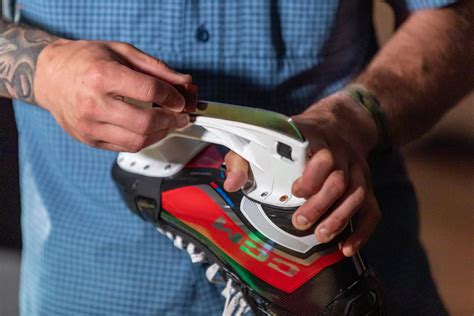
How Often Should You Sharpen Your Hockey Skates?
A good rule of thumb is to sharpen your steel every 20-30 hours on the ice, but other variables impact this frequency. Many players settle on once or twice a month, but it depends on how much you skate. If you’re on the ice every day, you should sharpen your skates more frequently than someone who is on the ice for only an hour each week. Eventually, this becomes second nature to hockey players. Most pros have sharpening routines that they adhere to religiously.
The trick is to not over- or under-sharpen your skates. Sharpen them too often, and the blades will wear out prematurely. Not frequently enough, and you’ll find yourself losing an edge when trying to turn or being unable to control your skates. Get a sense of how regularly your hockey skates need to be sharpened and create a routine. For example, if you skate twice a week, sharpen monthly and then adjust based on your schedule, ice factors, and what works for you.
Factors Affecting Sharpening Frequency
Several factors can influence how often you need to sharpen your skates:
Read also: Ice Skating in Central Park
- Ice Temperature: Colder ice is harder and will wear your edges faster.
- Ice Type: Outdoor ice wears down blades faster than indoor ice. Usually outdoor ice is harder, colder, and littered with debris, such as small stones, dirt, sticks, or leaves. Your skates will take more of a beating on outdoor ice and need more frequent touch-ups.
- Steel Quality: Better blades hold an edge longer and require fewer sharpenings. Elite-level hockey skates typically come with high-quality steel blades for this very reason.
How to Tell When Your Skates Need Sharpening
There are several ways to know when to sharpen skates. Over time, you’ll come to recognize when your skate is worn down. Blunt blades will chatter, pull to one side, wobble out of control, or prevent you from turning as tightly as you normally do. Here are other tips to identify dull steel:
- If you struggle with quick turns or your blades don’t bite into the ice as they should, you might need to get your skates sharpened.
- Carefully run your finger down the length of the blade, feeling for nicks or gouges. A light touch is all that is needed to detect defects. Also, the blade should feel sharp.
- Look at your blade under a bright light. If you see a reflection in the blade’s edge, you need to sharpen your skates.
Skate Blade Sharpening (Before & After)
The Skate Sharpening Process
Skate sharpening is the process of shaping the blade of an ice skate with a grinding machine to create two edges that are level, smooth and sharp.
There are a wide variety of methods and machines to sharpen skates, but results depend on the individual sharpener’s skill. For example, if a sharpener doesn’t perfectly center the hollow (more on those later), there is little recourse but to grind off the edges with the cross-grind machine and redo them. Poor work can be repaired, but it’s best to find a place that does the job well the first time.
Generally, a machine will make multiple passes on your blades. The first few passes are typically done on the cross-grind machine to remove major impediments like rust, nicks, and dings. Once these are cleared away, the skate is moved to the sharpening stone, which applies the desired hollow. The last few passes create the finer edge. Finally, a finishing stone deburrs the blade to remove imperfections left from the stone. The entire process takes between two and three minutes per skate.
Understanding the Blade Hollow
When skates are sharpened, a groove is cut into the center of the bottom of the blade. It is cut deep enough that what is left are the two edges on each side. The blade hollow is this carved portion between the edges. This matters because the hollow’s depth affects skate performance.
Read also: Ramsey County Skating
- A deeper hollow slows the skate yet increases the skater’s control.
- A shallower hollow increases the skater’s speed but requires more skill.
A standard hockey skate hollow falls between 3/4 and 5/8 of an inch. Experienced skaters often use a hollow they’ve played on for years, while beginners typically choose a ½-inch hollow.
Cost of Skate Sharpening
Sharpening your ice hockey skates is part of the game. Doing it well is complicated, but if you can find a skilled pro to do it for you, it’s nothing more than a quick errand. Most ice rinks and all Pure Hockey stores offer skate sharpening. You can plan to spend between $10 and $20, but pricing may vary. The price is often lower if you leave your skates overnight, and the cost increases if you need them back the same day. You may be limited to what’s available, but if you have options, ask experienced players where they recommend you get your skates sharpened.
At-Home Sharpening Tools
At-home skate sharpening tools range in price from $20 to $40. These stones and re-edgers are best used for touch-ups before or during a game. Some tools wear away more of the blade, which means your skates will need replacement runners more frequently. It’s best to take your skates to a trained skate sharpener who uses quality equipment.
| Service | Price |
|---|---|
| Per Sharpening | $8 |
| 10 Sharpenings (Punch Card) | $70 |
Sharpening vs. Profiling
The difference between hockey skate sharpening and profiling is that sharpening determines the depth of the blade hollow, while profiling changes the curvature from heel to toe. Sharpening helps the blade cut into the ice at your preferred depth for a smoother glide. Skate blade contouring enhances specific performance attributes, such as agility and stability.
Read also: Keystone Skates: A Historical Overview
tags: #skate #sharpening #corp