Whether your snowmobile is brand new or has a few years under its belt, your brakes are your primary safety guarantee. It is imperative to always be aware of their condition, as your life, and that of others, depends on it. By taking care of your brakes, you’re ensuring your safety on the trails. This maintenance task is simple and inexpensive, yet it yields numerous benefits. Your braking will be more precise and responsive, enhancing your overall riding experience.
Adopt a preventive approach rather than a reactive one to ensure your protection. Moreover, by performing regular inspections, you significantly reduce the risk of breakdowns, especially far from home. Considering that you often use your snowmobile in extreme conditions and store it in varying temperatures, proper maintenance becomes even more critical.
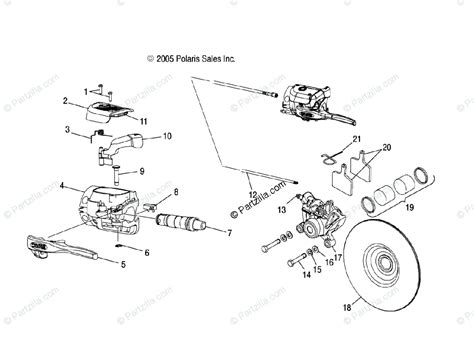
This article is based on a Polaris snowmobile, RMK model, equipped with hydraulic brakes. You can use this information for other brands or models, but the tools or specifications may differ.
Failure to maintain your brakes can lead to rust on the brake disc, corrosion on the moving parts of the brake pads, and even condensation in the brake fluid, which can degrade its performance and potentially cause freezing.
Dare to venture into your vehicle’s mechanics. You’ll become more confident and may even save money. Knowing your vehicle’s mechanics will make you more confident and able to prevent breakdowns when far from home.
Read also: Do Snowmobiles Have Brakes?
Initial Inspection and Preparation
Before starting the bleeding process, perform a thorough inspection of the brake system components:
- Remove the hood and locate the two security screws on each side of the light. Turn them ¼ turn counterclockwise.
- Using a flathead screwdriver, remove the plastic retaining pins on the side panels. Secure the right-hand panel closest to the handlebar with the starter rope.
- Use the flathead screwdriver to remove the clip that holds the brake pads in place.
- Check the Brake Fluid: Note the level and condition of the oil. The oil should be clear and clean. If the oil is clear, adjust the level as needed.
- Inspect the Brake Disc: The brake disc should be uniform and free of grooves. Replace it if necessary. Surface rust is acceptable after storing the snowmobile during the summer. You can clean it with brake cleaner or very fine sandpaper.
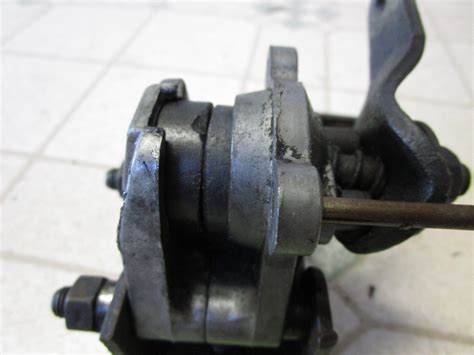
- Examine the Brake Pads: The pads must also be in good condition and have sufficient lining thickness.
- Start the snowmobile in a well-ventilated area, check that the brake light turns on when you apply the brakes. Replace it if the light does not turn on; it may be a sign that the brake switch is faulty. For Polaris models, there is a warning light on the dashboard indicating that the brake is applied.
If your brakes are noisy and you hear a “chirping” sound while riding after braking, it could be caused by the caliper piston sticking due to inactivity or lack of lubrication. To try to remedy this issue, you can perform a brake oil change.
Brake Bleeding Procedure
A quick and clean way to bleed brakes on a snowmobile is to slide a hose over the bleed screw on the caliper and route the other end into a container. As you pump the brake lever to flush the fluid, keep an eye on the brake fluid level in the master cylinder reservoir so it doesn’t drop too low and pull air into the brake line. Continue the process until you see clean brake fluid drain into the container.
On the handlebars, grip the brake lever. Apply tension three times and hold the last pressure. Then, move to the brake caliper.
Now raise the rear of the sled on a jackstand and test the brake system for proper operation before you hit the trail again. Inspect the snowmobile and area where you worked for brake fluid and promptly clean it up.
Read also: G-Force One: First Impressions
Sometimes, the normal bleeding method isn't effective. If you're experiencing issues with pressure after draining and refilling the brake system, consider the following alternative method:
- Fill the reservoir and install the cover.
- Remove the clamp from the master cylinder assembly holding it to the bar.
- Remove the brake lever.
- Rotate the assembly so the piston is pointed up.
- Remove the piston by pulling on it.
- Pour fluid into the cavity where the piston goes carefully.
- Gently re-install the spring, piston, and lever.
- Attach the assembly back on the handlebar.
This method helps to ensure that any trapped air bubbles are removed from the system.
Another effective technique is to pull the handle in and let it snap back a bunch of times with the cover off. The "snap" of the handle shakes the bubbles up the line.
Additional Tips and Considerations
- Reverse Bleeding: Some users suggest that the above method accomplishes the same thing as reverse bleeding, just in a different way.
- Caliper Replacement: If you've replaced the caliper, especially with a newer model, you might still need to lay the system out on the bench to get it to fully bleed.
- Locking the Brake: If you have to part the caliper, lock the brake to minimize problems during re-installation.
How to Bleed Snowmobile brake lines step-by-step guide, skidoo
Read also: Register Your Snowmobile in IL