The Ski-Doo Safari line offers a blend of reliability, simplicity, and value, making it a popular choice for snowmobilers. Here's a deeper look into the history and features of the Ski-Doo Safari models, particularly focusing on the Safari LC.
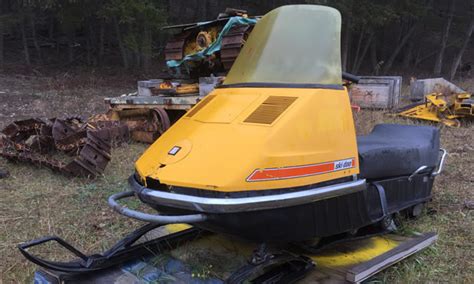
A vintage Ski-Doo Nordic 440, showcasing the evolution of Ski-Doo snowmobiles.
The Origins of Ski-Doo
The first ever Ski-Doo was launched in 1959 as a new invention created by Joseph-Armand Bombardier. The first Ski-Doos found customers with missionaries, trappers, prospectors, land surveyors and others who need to travel in snowy, remote areas.
Ski-Doo Safari LC: A Detailed Look
The Safari LC hasn't gotten a lot of ink mainly because it was a late season addition to the Safari line.
Skidoo Rev Top 10 mods for little to no cost! PowerModz!
It is similar to the two-up Safari GLX. It doesn't have reverse gear, the two-up seat, nor the added on-board storage boxes. It does have a single carb 462cc Rotax liquid-cooled twin with rotary valve. It does have the TRA clutch. It does have the new trail suspension, known as Transverse-A. And it does have lots of on-trail zip.
We also think that this is the nicest styled Safari. Tricked out in hot "Plus" red with nice trim attention, the LC stands out on the trail and parked in front of most pit stops.
Performance and Handling
Versus the Formula MX, you sit up higher and the engine isn't located as low in the engine bay. It also means that you don't have to use a fuel shut-off switch to keep gas from being pumped into the engine by bouncing slide valves in your carbs when trailering. We like the electric start that comes standard on the LC, since we found the 462cc twin has a long recoil travel when compared to other brands. We also found the primer easier to deal with on the electric start model.
Once running, we quickly learned to appreciate this engine- in either MX twin-carbed form or LC single-carbed form. As far as we are concerned, this is one of the most enjoyable powerplants in the industry. It is responsive from low end to top end. It has good torque, adequate top end, and very smooth trail manners.
Since the LC has a single carb there is no need for the two-step throttle control used on the MX. The LC throttle is light and easy to pull on a day's ride. The MX with the two-stage throttle is equally easy to use if you aren't moving up to the full open position where it becomes stiffer. Without thinking about it, we didn't realize how little you actually go beyond half throttle when enjoying a leisurely trail ride.
Trail Riding Experience
If you are a trail rider and not a trail racer, you will enjoy the LC more than the MX. The Formula suspension is stiffer and more suited for speed. The LC unit is extremely well designed for choppy trails where you take moguls at slower speeds and want more immediate cushion and perhaps care less about progressive reaction to hard bumps that you'd encounter at higher trail speeds.
In cornering we were delighted to discover that the Safari LC has MX cornering power and an ability to carve turns almost as smoothly as the sportier Formula model. The LC has a very thick sway bar that transfers lean extremely well without transferring excess steering harshness.
The Transverse-A on the Safari LC was light and precise. The MX front end carried more weight and while it carved the turns with greater precision, we were impressed with the Safari's sporty handling through the "twisties."
Across the lake, we found the LC was about as quick off the mark as the more powerful MX but down an easy five miles per hour on top end. The MX gets better mid-range performance from the twin-carb set-up too, but the LC is no slouch and playing catch up isn't like chasing a bullet with a 4x8 panel of plywood.
Minor Drawbacks
Well, we found that the little plastic gizmo used to hold up the center of the large LC windscreen was history within a hundred miles. It didn't seem necessary anyway. We would like an optional reverse gear on all sleds that weight more than 400 pounds, this one included. With studs and carbides, these sleds are brutal to drag off a trailer.
What else? We'd like to see the MX get a cushioned gas tank like that on the Plus, Mach I and Safari LC. It just looks cheap not to have it on a sporty sled like this.
Final Verdict
If we had to choose between one of these 462cc powered Ski-Doos, we'd opt for the Safari LC. Nothing against the MX, but we like the trail touring ride of the LC better. We also feel that when we want to get into the "spirit" of flogging the sled down the trail for sport, the LC will perform well at speed, too. The MX is bred for performance riding and is heavier and stiffer riding for plain, no hurry trail touring. For those of you who consider yourselves sport riders at least 75 percent of the time, go with the Formula series If you have the wherewithal to admit that you like comfort with a modicum of sport riding, opt for the Safari series- especially the Safari LC.
Both are fine sleds and will serve you well. But we have to admit that we found the Safari LC to be the most pleasant surprise of the year. It is a good all around performer with ample power, above average ride and handsome good looks.
Like we said, it would have been a loss not to have experienced the Safari LC. Consider it for the future. It is a good value and a delightful snowmobile on any trail.
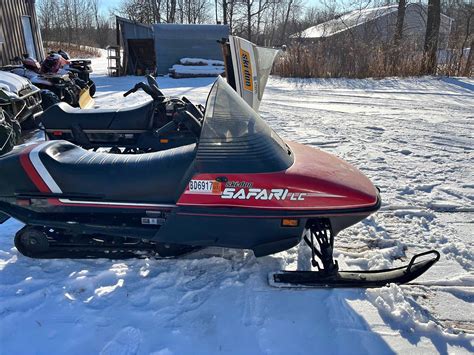
A Ski-Doo Safari LC, known for its trail touring capabilities.
Key Features of Ski-Doo Safari LC
Here's a summary of the key features that make the Ski-Doo Safari LC a great choice for trail riding:
- 462cc Rotax Liquid-Cooled Engine: Offers reliable power and smooth performance.
- TRA Clutch: Ensures efficient power transfer.
- Transverse-A Suspension: Provides a comfortable ride on choppy trails.
- Electric Start: Adds convenience, especially in cold conditions.
- Stylish Design: Stands out with its "Plus" red color and trim.