Hands are difficult to keep warm and dry, especially in harsh environments. While many gloves claim to be suitable for backcountry skiing, only a few truly excel in keeping hands toasty and comfortable in varied conditions. The Black Diamond Guide Gloves are designed to meet the demands of extreme winter conditions, offering durability, warmth, and weather protection.
Over the years of trying out and wearing out various gloves, I like to think I’ve found what works (at least for me). They’ve got to be durable. Tattered gloves suck, and backcountry skiing is especially tough on gloves. Hanging on ski poles while trudging along a skin track wears on gloves, not to mention the plant wrangling that usually precedes the skin track in the PNWet. I’ve had several gloves that promised warm and dry hands, only to have gaping holes by the third or fourth tour. Thick, quality leather, covering as much of the glove as possible, seems to be the only way to go.
Gloves are an expensive piece of gear and it hurts to lay down $150+ for a pair but when you are out backcountry skiing in -20 Rockies 'arctic conditions' or in +5 coastal 'slop day' you will be glad you made the investment. You need your hands and, if they are frozen solid or soaked to the bone then they are not happy. Enter the the Black Diamond Guide glove-beefy and warm in the coldest and wettest conditions. It's built for someone who asks a lot of their gloves and expects them to last.
Let's delve into the features and performance of these gloves, exploring why they are a top choice for skiers and mountaineers.
Key Features and Construction
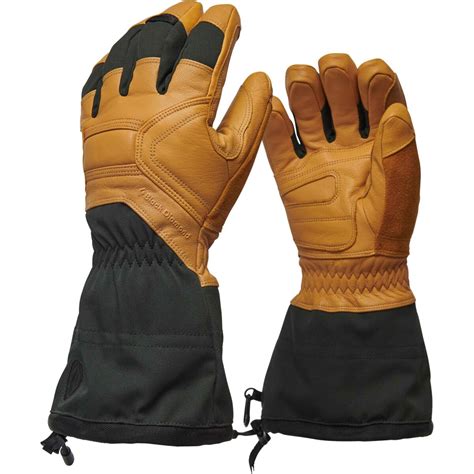
So let’s see: a durable, leather glove, with a big gauntlet, tons of warmth, and a removable liner. The Black Diamond Guide gloves fit the bill perfectly. I’ve been using and abusing a pair since last winter. The Black Diamond Guide Gloves have been field tested now for three seasons and they are showing no signs of wear.
Read also: Features of Custom Hockey Gloves
The BD Guide Gloves feature a robust construction designed for longevity and performance:
- Durable Shell: A burly shell made almost entirely of leather, with stretch nylon in key areas, including the gauntlet.
- Removable Liner: An inner liner combining fleece and wool, with a thin nylon shell, secured with Velcro.
- Kevlar Thread: The glove is sewn with Kevlar thread, enhancing its durability.
- Leather Reinforcements: Goat leather palms are double reinforced with a 'palm patch' in high-wear areas.
- EVA Foam Padding: Moulded EVA foam padding on knuckles offers added protection and warmth.
- Extended Gauntlet: A long gauntlet that keeps out snow and covers any bare skin.
Warmth and Weather Protection
Cold hands can be miserable and even dangerous. Besides losing dexterity, big, warm gloves have few disadvantages; the weight penalty is minimal. The Black Diamond Guide’s time-tested calling card is warmth, and deservedly so. This ski glove is designed for bitterly cold conditions, exposed belays, and individuals with cold hands (due to circulation issues, etc.), and it delivers.
The Guide’s leather and synthetic shell and the liner’s Gore-Tex insert combine to produce a glove that will withstand all but extended exposure in the wettest, sloppiest winter conditions. We’ve never had an issue with moisture seeping through, and the leather portion of the shell admirably resists wetting out.
- Insulation: The glove is designed with a waterproof and insulated removable liner that attaches to the leather and nylon shell via Velcro at the wrist. The multiple layers of insulation did their duty on a five-degree day at Copper Mountain in Colorado, when they kept one tester’s hands from becoming ice blocks as he lapped the notoriously slow Alpine chair in search of moguls.
- Gore-Tex Insert: A Gore-Tex insert ensures waterproof and breathable performance.
Comfort and Dexterity
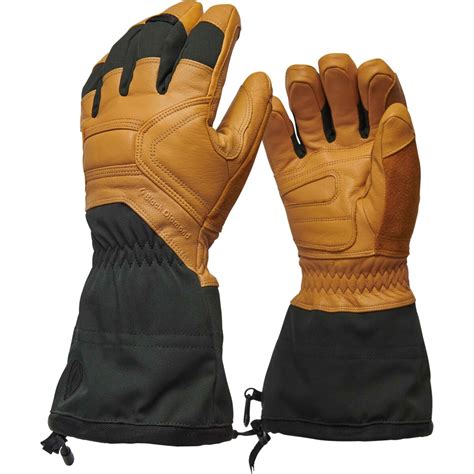
Black Diamond pays attention to the fit and detail of the gloves and it shows. Having a well-contoured glove makes them surprisingly dexterous, even with the bulky insulation. The guide glove offers good grip and surprisingly good dexterity for a glove of this type. Typically, warmth and dexterity are usually mutually exclusive qualities (you have to sacrifice dexterity to gain warmth) but this glove seems to do both quite well. The super-sticky leather palms/fingers allow you to grip better than a synthetic material and the clever articulation gives good dexterity.
The Black Diamond Guide's rugged exterior belies the cozy situation within. The liner’s interior wool (on the back of the hand and top of the fingers) and fleece (on the bottom) swaddle the hands in super-soft material, and the glove didn’t pinch in any one area or restrict movement. (The long gauntlet and tapered wrist help with the latter.) A generous amount of elastic on the wrist and the liner’s secure Velcro attachment also allowed us to take the glove on and off easily, which doesn’t seem like it should be an issue until you use a model that snags because of a tight wrist opening or liners that slide around. Finally, the Guide has a soft leather nose wipe on the thumb of each hand. (If you’re wearing this glove in the conditions it’s built for, it’s likely your nose will be running.)
Read also: Easton Gloves: Are they right for you?
However, if there’s one significant tradeoff we encountered with the Black Diamond Guide, it’s that the removable liner, bulky insulation, and burly shell combine to limit dexterity for fine-motor activities. One tester found zipping his shell difficult while wearing the glove, unless the zipper had an extra-large pull tab, and working the zippers on his ski pants was nearly impossible. Similarly, during transitions on backcountry ski days across Colorado’s Front Range, he was forced to put the glove on last, right before the descent, rather than wear it while he was fiddling with his equipment.
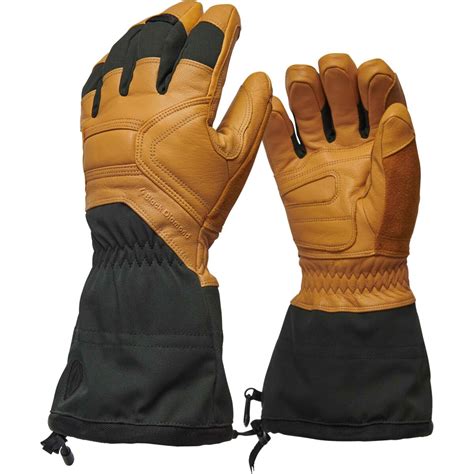
All in all, this is a great set-and-forget glove for the coldest ski days, but the need to periodically remove the Guide for many on-mountain functions affects its score in this category. (Plus, the lack of a wrist leash means that taking it off is even more of a hassle.) With its leather construction on the part of the glove that covers your hand, the Guide also takes approximately five days of use to break in.
Durability and Long-Term Use
Gloves are some of the most well-worn items in any skier or rider’s kit, and the Guide’s materials ensure that they won’t become a one-season wonder. The shell, made of woven nylon on the gauntlet and knuckles and thick goat leather everywhere else, has held up exceptionally well over one tester’s nine years of owning the glove. While the leather will soften a bit with use, increasing dexterity (somewhat) and comfort, its resiliency will stay the same when faced with sharp ski edges, less-than-careful storage, and the general rough treatment that ski gloves encounter.
Our tester, who’s worn the Guide for nearly a decade, reported that the insulated liner has packed out over time, compressing the wool that covers the back of the hand. However, he noted that his pair’s warmth has been only slightly impacted, as the liner’s synthetic fill has remained puffy. He also said that the packing out is significantly less than he has experienced with comparable gloves, such as the Hestra Fall Line.
I’ll start off by noting that I’m very hard on my ski gear-I spend a lot of days on the snow and use my equipment almost daily from December through March. Even so, my first pair of Guide Gloves handily withstood seven seasons of skiing, teaching avalanche courses, snow camping, ski mountaineering, and wrangling snowmobiles before I wore through the leather on the palms (it was very supple by then) and my fingers began poking through the outer shell. The insulation had also packed out a bit by that point, but the gloves were still impressively warm and comfortable.
Read also: High-Tech Winter Gloves
As we mentioned above, maintaining the leather with a waterproof wax or finish will prevent the Guide from becoming more easily wet out over time.
Fit and Sizing
The Black Diamond Guide is a large, hefty glove that fits slightly larger than average. One tester, whose gloves are pictured in this review’s photos and whose hands are seven inches long, measured from the wrist to the tip of the middle finger, usually wears women’s medium gloves. She tested the Guide in that size (Black Diamond now only offers the glove in men’s/unisex sizes XS-XXL), and found it to be a tad too long in the fingers. She noted that she could probably go a size smaller; even if the fit would perhaps be a bit snug at first, the removable liners pack out over time. Another member of our testing team, who usually wears larger smalls or smaller medium gloves from other brands, opted for a unisex/men’s small. While the size was correct for his hand (six and a quarter inches from wrist to fingertip), the Guide sometimes felt slightly too large and sloppy at his fingertips due to the space between the liner and the shell.
Many (but not all) people size up from their normal BD glove size when they buy these gloves. This is mainly due to all of the warmth and insulation; as a result, these gloves feel like they run just a little on the smaller side. Climbers who might be going to higher altitudes and would want to add a thin polypro or wool liner underneath should strongly consider going up one size.
Wrist Leash (or Lack Thereof)
Because this is a glove that stands out for its details, it’s a head-scratching oversight that Black Diamond doesn’t include a wrist leash with the Guide. As we noted above, the glove’s lack of dexterity means you’ll have to remove it to swap out your ski goggle lens, reach for your phone, and perform other everyday tasks, but make sure you have a good grip on your glove when you do (especially if you’re on a chairlift). We’ve seen some folks install a DIY leash, but at $190, you shouldn’t have to add any accouterments yourself.
Alternatives to the Black Diamond Guide Gloves
There are an overwhelming number of ski gloves on today’s market, and picking the right one for you is no easy task. Fortunately our ski glove guide has all the details you need thin the pack, and detailed looks at some of our favorites.
Several alternatives offer different balances of warmth, dexterity, and weather protection:
- Hestra Army Leather Heli: More Comfortable, Less Waterproof
- Swany X-Cell: Impressive Dexterity
- Oyuki Sencho GTX: Turn Down the Warmth Dial
Hestra Army Leather Heli ($185): More Comfortable, Less Waterproof. The Hestra Army Leather Heli Ski resembles the Guide and features an extended gauntlet design, protecting from precipitation, wind, and unintended wipeouts. The Heli isn’t fully waterproof, though: The gauntlet and back of the hand are lined with a membrane, but the leather palm is not (nor are any of the seams sealed). The lack of a waterproof liner and the Heli’s softer leather do grant it superior flexibility, and we give it the edge in comfort over the Guide thanks to an ultra-plush fleece interior. (Bonus: The Heli also comes with a wrist leash.) This glove is best suited for those who frequently ski in a relatively dry climate, such as the Colorado Rockies, and are willing to trade some protection and warmth for a soft hand feel. As for us, we’ll take the Guide and its superior waterproofing, warmth, and durability. For more, read our review of the Hestra Army Leather Heli Ski.
Swany X-Cell ($190): Impressive Dexterity. For the same price as the Guide, the Swany X-Cell touts an all-leather build. We’re big fans of this glove’s dexterity: The X-Cell’s Nubuck leather also requires very little break-in time, and the lack of a removable liner means you get better sensitivity while grasping objects. While the X-Cell is waterproof, we found Swany’s proprietary membrane to be a tad less reliable than the Gore-Tex found in the Guide’s liner (testers in wet, snowy conditions occasionally experienced mild seepage). Still, this glove matches the Guide in terms of warmth, making it another commendable choice for those who want to ward off the cold. If you prioritize tactility over a removable liner, this is the ski glove for you. To learn more, check out our Swany X-Cell review.
Oyuki Sencho GTX ($170): Turn Down the Warmth Dial. The Sencho GTX is also a fully leather glove, but with a low-profile, undercuff design and Oyuki’s classic styling. We like this glove for those who ski in milder conditions: With 133 grams of PrimaLoft Gold insulation on the back of the hand and 85 grams at the palm-plus a cozy wool liner-it offers more versatile warmth than the Arctic-ready Guide. And in the wet snow associated with milder temps, the Sencho’s Nikwax-treated goatskin shell and waterproof Gore-Tex insert keep hands dry. The goatskin leather shell does take time to break in, and the fixed liner limits drying flexibility, but for skiers who value sleek styling, reliable waterproofing, and just-right warmth for milder conditions, the Sencho is an excellent choice.
Here's a comparison table highlighting the key features of these alternatives:
| Glove | Price | Style | Shell | Insulation | Liner |
|---|---|---|---|---|---|
| Black Diamond Guide Glove | $180 | Gauntlet | Nylon/leather | PrimaLoft (170g), fleece, & wool | Yes |
| Hestra Army Leather Heli | $160 | Gauntlet | Polyamide/leather | G-Loft synthetic & fleece | Yes |
| Outdoor Research Carbide | $120 | Gauntlet | Nylon/leather | VerticalX (130 & 200g) | No |
| Flylow Gear Super D Glove | $125 | Gauntlet | Nylon/leather | Greenloft (120 & 280g) | No |
| Rab Khroma Freeride GTX | $180 | Gauntlet | Nylon/leather | PrimaLoft Gold (100 & 133g) | No |
Is the Black Diamond Guide for You?
Cold hands are a common concern among many skiers and snowboarders, and if you count yourself among that number-and don’t want to venture down the mitten path-the Black Diamond Guide is a great glove to consider. Even our most frozen-fingered testers praised this glove’s ability to keep their hands toasty. Add the liner’s waterproof Gore-Tex insert to the mix, and you have a glove that we wholeheartedly recommend for mid-winter comfort in cold, wet conditions.
With the weather outside, winter seems to be here, at least for now. I don’t mind it being a little early. I’m looking forward to proving the Guide Gloves’ durability, especially their resistance to high speed powder impacts.