Mount Snow, previously known as Mount Pisgah, is a mountain and ski resort nestled in the Green Mountains of southern Vermont. Since its founding, Mount Snow has distinguished itself from other Vermont ski mountains through innovation and a unique approach to the skiing experience. Discover the rich history of this iconic resort, from its humble beginnings to its current status as a premier destination for skiers and snowboarders.
Early Days and Founding
The mountain that now hosts Mount Snow's lifts and trails was once known as Mount Pisgah. Reuben Snow, a fifth-generation Vermont farmer and cattleman, owned the land. In May 1953, Snow sold the land to ski area developer Walt Schoenknecht.
Schoenknecht, who had previously established ski areas in Connecticut at Mohawk Mountain and Massachusetts at Brodie Mountain, recognized the potential of Mount Pisgah. According to New England Ski History, after traversing a foot of snow to reach the 3,556-foot summit in early October, Schoenknecht determined that the mountain would have a long ski season, making it an ideal location for a ski area. He purchased 500 acres from the Snow family for $15,000, invested over $4 million, and opened the ski area in late fall of 1954 with five trails, two chairlifts, and a rope tow.
Walter Schoenknecht's Innovations
Schoenknecht, a retired Marine Corps officer, was also an inventor and tinkerer. He designed one of his first single chairlifts using a mono-rail conveyor belt, which, according to Thad Quimby of the Burlington Free Press, allowed for five times the uphill capacity of similar single chairlifts. He blasted a hole near the base area to create Snow Lake and built the Snow Lake Lodge across from it. In 1965, he installed a geyser in the lake, which froze as the water shot skyward, creating Fountain Mountain. This steep dome, with 350 feet of vertical drop, was large enough to have its own rope tow and slalom runs.
Schoenknecht also considered other ways to increase the vertical drop and even reached out to the Atomic Energy Commission, inviting them to detonate a bomb. Fortunately, that never went anywhere, but it illustrates his innovative-if somewhat extreme-thinking.
Read also: Maximize Savings on Mount Snow Skiing
Mount Snow | Carinthia Parks | X Games Mode
Growth and Expansion
Schoenknecht expanded Mount Snow to 44 trails over three mountains and added a gondola. By the mid-1970s, however, the resort fell on hard times and went into bankruptcy in 1975.
In 1986, the Carinthia ski area was purchased and connected to the Mount Snow Trails. Five years later, nearby Haystack Mountain Ski Area was purchased and subsequently marketed as being part of Mount Snow.
The Rise of Terrain Parks
In 1992, Mount Snow established the first snowboard park in the East, named Un Blanco Gulch. This park featured jumps, a half-pipe, quarter hits, spines, wedges, banked turns, and a buried van. Chris Bluto's "The Gulch" remained a staple of Mount Snow's freestyle terrain until the 2008-2009 season when all terrain parks were moved to the Carinthia area of the mountain. A new park, also named "The Gulch," was established along with seven additional parks and a "Superpipe," collectively referred to as Carinthia Parks at Mount Snow.
Mount Snow hosted the 4th Annual Winter X-Games in 2000. In 2002, Mount Snow's Kelly Clark won the first American gold medal at the Winter Olympics in Salt Lake City in the women's half-pipe. Another Mount Snow Academy graduate, Devin Logan, won the silver medal at the 2014 Winter Olympics in Sochi in the Olympic debut of slopestyle.
Read also: MLine Pro Deck: Three-Season Performance
Recent Developments and Improvements
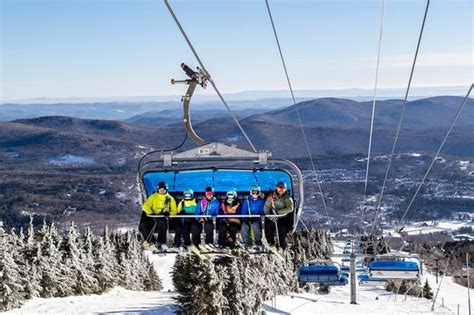
Mount Snow has continued to invest in improvements to enhance the skier and rider experience. In the summer of 2011, a brand new Leitner-Poma high-speed detachable six-pack bubble chair was installed. This lift transports skiers to the top of the mountain in just seven minutes, shielding them from wind and snow.
In the fall of 2017, Mount Snow completed a $30 million snowmaking expansion and upgrade project. This included replacing miles of snowmaking pipe across the mountain to maximize the 645 new low-energy fan guns and building a new 120 million gallon snowmaking pond, called West Lake.
On September 24, 2019, Vail Resorts acquired Mount Snow and the rest of Peak Resorts, marking a new chapter in the resort's history.
Mount Snow Today
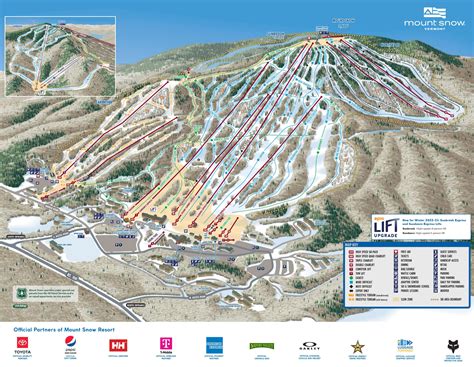
Today, Mount Snow is made up of four separate mountain areas: Main Face, North Face, Sunbrook, and Carinthia. Carinthia is home to the biggest terrain park in the east, with 11 terrain parks, over 125 features, a mini-pipe, and a superpipe with 18-foot walls.
Mount Snow is also one of the first ski resorts in the nation to offer lift service mountain biking, providing year-round recreational opportunities.
Read also: Summit County Ski Report
| Year | Event |
|---|---|
| 1953 | Walt Schoenknecht purchases land on Mount Pisgah. |
| 1954 | Mount Snow officially opens. |
| 1986 | Carinthia ski area is absorbed into Mount Snow. |
| 1992 | The first snowboard park in the East, Un Blanco Gulch, is established. |
| 2000 | Mount Snow hosts the Winter X Games. |
| 2002 | Kelly Clark wins the gold medal at the Winter Olympics. |
| 2017 | Snowmaking expansion project completed. |
| 2019 | Vail Resorts acquires Mount Snow. |
The Legacy Continues
Mount Snow is easily accessible from major population centers in the Northeast, making it a popular destination for skiers and riders. The mountain offers diverse terrain, well-maintained slopes, and a friendly atmosphere.
Whether you're a seasoned skier or a beginner, Mount Snow offers a memorable experience with its combination of history, innovation, and commitment to providing a top-notch mountain experience. If you're looking for a place to ski in southern Vermont, Mount Snow is an excellent choice.
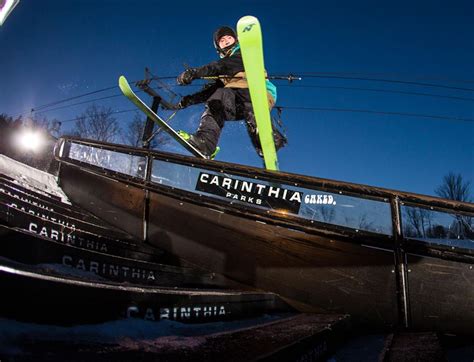
Head over to Mount Snow’s Carinthia Parks any day and you might see a skier or rider soaring into the air 20 or 30 feet and landing some 60 feet or more from takeoff. The same is even more true with ski jumpers, the skiers you see standing at the top of 90-meter jumps-usually in Olympic competitions-before they glide down a narrow track and then soar into the air. Humans have always wanted to fly and skis (and now snowboards) were some of the first contraptions that help them get airborne.
The History of Ski Jumping in Vermont
In the 1920s, even before there were ski lifts, ski jumps began popping up around Vermont. In 1924, a 40-meter jump went up on Chipman Hill, on the outskirts of the town of Middlebury. It was later replaced by a 50-meter jump at the Middlebury College Snow Bowl, which hosted the NCAAs for ski jumping in 1961 and 1973. The Lyndonville Outing Club had a 45-meter jump that operated from 1947 to 1972.
The hotbed in Vermont, however, was down south in Windham County, near Mount Snow. In 1925, Vermont Academy put in the first of several small jumps on its Saxton’s River campus, and the school became a training ground for ski jumpers. Not to be outdone, in 1936, the Putney School erected a small 36-meter jump. Ski jumper Fred Harris helped erect a small, 25-meter jump in Brattleboro’s Latchis Park that operated from 1952 to 1979.
There, a new generation of ski jumpers is now learning to fly. Kids enrolled in the Harris Hill Junior Ski Jumping Program practice twice weekly on the 10-meter and 18-meter jumps erected there in the early 2000s and as of 2022 at Vermont Academy’s 10-, 20- and 35-meter jumps. The best of them may then go on to compete at Harris Hill, just north.
One of the most historic ski jumping competitions in the country, the Harris Hill Ski Jump, is still going strong. In February 2022, the Harris Hill Ski Jump in Brattleboro celebrated its 100th year of hosting an annual competition.
In 1910, a 23-year-old local daredevil named Fred Harris strapped two planks to his feet and went off a homemade jump. But Harris, who also lays claim to being one of the first to ski Mount Washington’s Tuckerman Ravine, persevered, both in his skiing and in his efforts to build a ski jump. In 1922, he erected a handmade wooden trestle that cost him about $2200 to build and hosted his first jumping competition there.
During the event, a New England record was set. The competition grew and grew, attracting ski jumpers from all over the world and at its heyday in the 1950s drew crowds of nearly 10,000 to the Brattleboro area. In 2006, though, the aging jump was deemed unsafe. It sat idle for three years until $600,000 could be raised to rebuild the 90-meter jump to international specifications. The jump is still managed by volunteers and is only open for competition for one event a year: the Harris Hill Ski Jump on Sunday with a Pepsi Cup hosted on Saturday.