Many snowboarders feel confident once they can navigate red and black runs without crashing. However, they often don't realize that they're primarily turning by skidding with their back foot, resulting in inefficient edge usage and instability. Here's a guide to help you refine your carving technique and improve your overall riding experience.
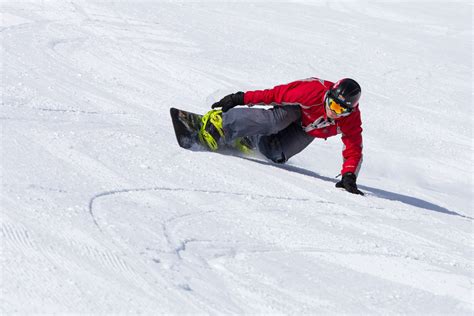
Initial Steps to Improve Carving
Slow Down and Practice Isolated Turns:Initially, engaging the edge for carved turns may feel unstable, almost as if you're on the verge of falling. Practice at a leisurely pace to build confidence and control.
Turn Your Board Passively:Another effective tip, closely related to patience, is learning to turn your board passively.
Be Conscious of Your Line of Sight:The head serves as the starting point for all upper body rotation, which ultimately affects the movement of the hips.
It’s great to take a step back and go back to a green run and carve it comfortably without speed checking, then step it up. Focus on technique, then get more comfortable with speed. Intentional practice on a Green (beginner/Easy) trail is essential because a carved turn produces minimal braking. The student rapidly builds speed until they learn how to tighten their turns.
Read also: In-Depth Sundance Snowboarding
Advanced Techniques for Carving
Drifting into the Turn:Drifting at the beginning of the turn is a great exercise, especially to carve on steep and narrow slopes or resetting your speed after a wrong turn. In snowboard slalom, it's the way to maintain speed and control. Until this year I’ve always tried to initiate a turn as a carve on edge. On the steeps that frequently resulted in a skid/speed-check at the end, before tucking the tail back in before the next turn. I’ve learned that drifting into the turn is actually very handy, getting the board going across the hill. It can be really smooth and fluid.
Counter Rotation on Toeside Carves:Counter-rotating the body in the toes is the correct technique. However, for mid-level carvers like myself, slightly rotating the upper body after the apex of the turn builds confidence and allows for easier pumping out and transitioning. Unless I’m laying out a long carve, this just feels more natural… but I’ve fought it because I thought it was wrong.
Proper Initiation to Avoid Chatter:Usually, when you experience chatter at the end of the turn, it's because the initiation wasn't proper, often due to a lack of body leaning. If you remain on top of the board rather than angling inside the turn, you build up too much speed in the first 90 degrees, making it almost impossible to carve through the 90-180 transition.
Understanding Different Carving Styles
Different instructors teach radically different styles, so you might get four different answers. Here are some styles to consider:
- Torso Facing Down the Fall Line (Maximum Downhill Twist): Styles that transform the energy of the board into speed.
- Torso Facing More Toward Bindings: So you don't have to worry as much about boot-out and absorb bumps well on varied terrain.
- Less Than a Complete Half-Circle on Each Turn: Styles that transform the energy of the board into G-force.
- Torso Facing More Toward the Nose: You have to worry about boot-out and bumps well on varied terrain.
- Circles: Allowing you to experience up to about 3 Gs of centripetal force.
Bomber-Style (Angulated Style): Emphasizes angulation.
Read also: Types of Snowboarding Jumps
Push-Pull Style (Inclination): Riders push or pull against the board to equalize the lateral forces.
Try different styles to see what works best for you.
The Importance of Instruction:It is important to spend more money on instruction than on gear when you are first learning. Unfortunately, it's hard to find instructors who can effectively teach carving.
Common Mistakes and How to Avoid Them
Counter Rotation:Avoid twisting the board longitudinally. Do not let your inside shoulder dip, no matter how tired you get. CERN has a web page on the evils of counter-rotation, which aims to eliminate counter rotation in order to carve perfect half-circles. The idea here is to get rid of counter rotation. Look slightly uphill, and face your body slightly uphill.
Over-Rotation:Avoid petting the dog - don't let your outer hand lag behind you. Avoid twisting your torso uphill. If you twist the board, the nose will want to carve a different radius than the tail. Board twist can happen if you bend your knees aggressively, rotate your body into the turn, and don't have enough lift on the rear binding.
Read also: In-Depth Review: Demon Snowboard Protection
Incorrect Weight Shift:Do not tense up your legs, otherwise the board will chatter. You might be exerting pressure on the board too late in the carve. Shift the time interval of pressure toward the early part of the turn. To avoid breaking at the waist, try to tilt the board using your lower leg, with your knees and ankles.
Body Positioning and Angulation
Maintaining Angulation:Angulate to keep your weight over the carving edge. Angulation has to do with angulation. To maintain the same rigid static pressure during the turn, angulate to keep your weight over the carving edge. If the entire board chatters or washes out, it means you are unbalanced.
Tilting the Board:Tilt the board higher on edge. To avoid skidding out, tilt up to become parallel to the slope. Another way to describe the approach is by using the terms "cantilevered angulation" or "progressive angulation," where the angulation, and the edge angle of the board, feed off of each other in a continuous cycle. More angulation results in more board tilt, which allows more angulation, in a symbiotic, yin/yang sort of way.
Using Your Hips:Think of cracking a walnut with your hip. Visualize moving your hips down the hill, out from under your torso. Try to tilt the board using your lower leg, with your knees and ankles.
Drills and Techniques to Improve Angulation
- Pole Drills: Hold a ski pole just under your neck, with both hands near its center. Keep your elbows outward, aligned with the pole, connecting your elbows and shoulders, parallel to the slope at all times.
- Arm Extension: As a drill, try fully extending your inside arm and point parallel to the slope. Near the end of a turn, you should be pointing straight up the slope.
- Elbow Positioning: Drive your outer hand across the board with your body. Raise your elbow so that it points up the slope. Feel your collar bone tilt.
Addressing Specific Scenarios
Starting on Steeps: To bleed off speed on the steeps, it is essential to crank your board as high on edge as possible at the beginning of the turn. The small joints on the lower part of the body are best for this, since they have less mass, are close to the board, and can move quickly.
Dealing with Moguls: For moguls, you can use the same cross-under technique used by skiers. Keep your center of gravity low and maximize your leg extension.
Carving on Ice: Techniques and drills that help with angulation are required. Steep ice calls for cross-through techniques.
Gear Considerations
Board Width: You don't want to drag your toes or your heels when you tilt the board on edge. For boot sizes up to a men's 10.5/women's 11.5, a standard-width board is okay; for bigger boots, look at wide boards.
Edge Grip: Different brands enhance grip differently-having a serrated edge, for example. If you see a buzzword that hints at added grip-and each brand seems to have its own word-that board should help you carve better.
Sidecut Radius: This spec is the radius of a circle formed by the sidecut arc on the board; a smaller value will let you turn more sharply.
Flex and Camber: You can carve with a stiffer board, but a softer flex and reverse camber will let you carve tighter turns.
Where to Practice
Find an Empty Run: Smaller, out-of-the way operations will be less crowded. And midweek days will be better anywhere. You'll spend less time focusing on traffic and more time on technique.
Find a Wide Run: Even though carving is faster than skidding, your board will be doing wider turns. So you need a wide run to practice.
Find a Blue Run: Go beyond the greens: You want enough slope to give your board some momentum and tilt.
Find a Groomed Run: You want a slope that's neither too icy nor too soft. Corn snow works pretty well, but fresh groomers are even better because the edge of your board has a uniform surface to engage.
Additional Tips for Improvement
- Visualization: Visualize what you are going to do.
- Video Analysis: Watching yourself on videotape is enormously helpful, if not humbling.
- Experiment with Gear: Try wider boards, and lower your boot angles; it will give you more stability, and will allow you to practice different techniques.
- Stay Flexible: Regularly stretch and do yoga to improve your flexibility, making it easier to reach down and grab your board during turns.
Carving Techniques
Carving is when you’re using your sidecut and eliminate the pivot/rotation movement in your snowboard and body. You’re balanced on your edge with no skid. Grabbing your board makes you more solid. Surfer Turns and Grab Carves start to get you bending and flexing to have better flow and rhythm.
You’ll want to go warm up by taking a run where you’re carving on every turn. Get into that flow of ripping carves down the mountain. After you’re feeling good start to reach down and grab your snowboard while you’re carving. Progress into multiple grabs and start adding some style by putting your hand in the air or in the snow while grabbing your snowboard. Lock in your carve at the end of your turn by pulling up your edge with your hand.
3 Snowboard Edge Tricks - Circle Carve | Spray | Revert Carve
The Benefits of Carving
- Increased Speed: Carving allows you to carry more speed through your turns.
- Reduced Fatigue: Finessing your board is easier than wrestling it, reducing strain on your muscles.
- Improved Control: The board will slice through bad patches, not pinball off of them.
Troubleshooting Common Issues
Board Chatter: If you twist the board, the nose will want to carve a different radius than the tail. Board twist can happen if you bend your knees aggressively, rotate your body into the turn, and don't have enough lift on the rear binding. Chatter can be caused by too much pressure on the tail ... the tail, causing it to skid out.
Skidding Out: If you are still pressuring the board beyond this point, it's going to skid. Shift the time interval of pressure toward the early part of the turn.
Table: Comparison of Carving Styles
| Style | Description | Emphasis | Terrain |
|---|---|---|---|
| Torso Downhill | Torso faces down the fall line. | Speed | Open slopes |
| Torso Toward Bindings | Torso faces more toward bindings. | Stability | Varied terrain |
| G-Force Style | Torso faces more toward the nose. | G-Force | Steep slopes |
| Bomber Style | Emphasizes angulation. | Edge Control | Icy conditions |
| Push-Pull Style | Emphasizes inclination. | Lateral Force | Variable snow |
Final Thoughts
Carving is a journey that requires patience, practice, and a willingness to adapt. By focusing on the fundamentals, experimenting with different techniques, and paying attention to your body's feedback, you can unlock a new level of performance and enjoyment on the slopes.
tags: #snowboarding #tips #for #carving