For many winter sports enthusiasts, having the right gear is essential for both comfort and performance. This article delves into the specifics of selecting snowmobile boots and exploring the world of custom ski equipment, ensuring you're well-prepared for your next adventure on the snow.
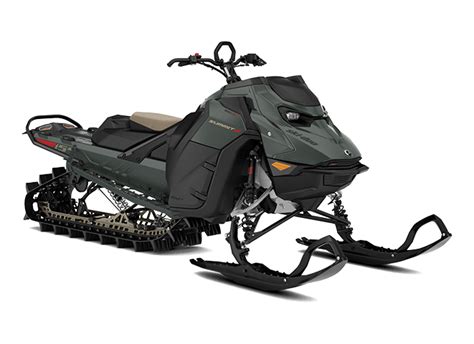
Snowmobile Boots: Keeping Your Feet Warm and Dry
Many trail riders suffer unnecessarily with cold feet after not purchasing the proper footwear for snowmobiling. When you’re snowmobiling, your extremities usually get cold first. Hands and feet are susceptible because our bodies are programmed to give priority to core warmth.
The best solution for cold feet is to pay careful attention to these snowmobile boots buying tips. Let’s start with the difference between a “winter” boot and a “snow” boot. Winter boots tend to be general usage, daily living boots. They are typically lighter weight, easier to walk in, ankle height and more stylish looking. Winter boots do not have snow gaiters to keep snow out.
On the other hand, snow boots are specifically designed for wearing in nasty snowy and wet conditions. Their insulation and height makes them somewhat heavier and bulkier than winter boots. And typically they keep water out with rubberized shells over the lower section (from the laces down), including the toe rand and outsoles. Snow boots do include snow gaiters.
Key Factors in Choosing Snowmobile Boots
- Warmth: Choose a snow boot with a low warmth rating.
- Water Repellency: Waterproof boots are essential to avoid getting wet from snow or perspiration.
- Proper Fit: Ensure boots aren't too tight or narrow, allowing toes to wiggle easily.
- Comfort: Consider boot weight, height, and ankle support.
- Ease of Use: Decide between lace or strap fastenings based on personal preference.
- Traction: Select boots that won’t slide uncontrollably on metal.
Tips for Buying Snowmobile Boots
- First and foremost, choose a good pair of snow boots that work best for snowmobiling.
- Be careful, because all boots sold for snowmobiling are not necessarily snow boots.
- If your feet are especially susceptible to cold, they may suddenly feel chilled when you stop into a restaurant for lunch.
- Always look for snow boots with removable liners.
- Don’t wear too many socks.
- Some snow boots may fit less well on the running boards of your sled. So you want to make sure your new boots fit your sled too.
- If you need to use a chemical toe warmer, place it on the outside bottom of the inner sock.
As with most products, you get what you pay for, so don’t cheap out. Generally, cheaper snow boots aren’t as warm because they are not as high tech. Or have less (or not as good) insulation. Or simply are not as well made.
Read also: G-Force One: First Impressions
Moisture Buying Tip #1: Always look for snow boots with removable liners. Take them out after every ride to dry overnight beside a radiator or heat vent. If necessary, put them in the hotel dryer for a cycle to dry them out. If your liners aren’t removable and you get a boot wet, how do you get it dry for tomorrow’s ride?
Proper Fit Buying Tip #1: Don’t wear too many socks. The same rule applies as for layering your upper body. Wear a light, moisture wicking inner sock covered by a heavier thermal sock.
Proper Fit Buying Tip #2: Some snow boots may fit less well on the running boards of your sled. So you want to make sure your new boots fit your sled too. This means not getting caught up on running board traction flanges.
Fashion or Function Buying Tip #1: Earlier I stated that you get the quality you pay for. But be careful when comparing the price of especially stylish snowmobile boots with snow boots. With the former, you may be paying a high price for fashion.
Exploring Custom Ski Equipment
Just as there are many different types of skiers, there are many different factors that add up together to make each custom ski. To find the right custom ski equipment for you, you’ll have to have a somewhat basic understanding of the components that make up a ski’s shape. The shape’s width is usually given in millimeters (mm) by measuring its shovel, waist, and tail. The measurement of the waist is perhaps the most important to consider when determining overall performance.
Read also: Register Your Snowmobile in IL
Another component of a ski’s shape to consider is the sidecut, or the curve along the edge of the ski. Skis with a more straight sidecut are better for wide turns with a large radius, providing a more stable base, while those with a deeper sidecut have a shorter radius for quicker and shorter turns. It is important to choose the right ski shape for your style of skiing.
The tip or shovel can also be extremely important. Generally, skis with a wider tip offer more stable flotation on light snow, while those with a more narrow tip are better for tight turns and terrain.
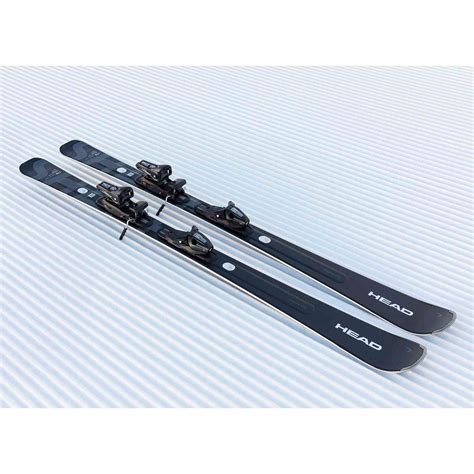
Camber vs. Rocker
The camber of a ski and whether or not it’s rockered determines how much of the ski makes contact with the snow while in use. Ideally, the more the ski is actually making contact with the snow, the more stable it will be, while less contact can make a ski more agile for quick turns and jumps.
The camber can be visualized as the slight arc made by the ski, where it would lift off a workbench if laid flat. Maintaining a decent camber offers the opportunity for predictable tracking on hard or rocky terrain, along with adding more energy and pop at the end of turns.
Most pairs of skis begin to upturn on the tip closest to the widest part of the shovel. However, Rockered skis have early-rise tips that start to curve up closer to the boot bindings. Rockered skis can offer better float on powdery conditions, making it easier to stay up for longer.
Read also: Snowmobile Tunnel Bag Comparison
Another thing to look out for is the overall flex or relative stiffness of each pair of skis. The last two measurements you’re going to want to keep an eye out for when selecting custom skis are the turn radius and the length of each pair of skis. They’re both usually printed on the packaging.
Materials
Finally, it goes without saying that the best custom skis are made from the best materials. Most manufacturers start from a base that combines an assortment of straight grained, laminated hardwoods such as sugar maple, aspen, poplar or birch.
Ski Boots
The right pair of ski boots will make all the difference to your day on the hill. Selecting a pair of boots that fit perfectly comes with a variety of benefits. First of all, they tend to be more comfortable, which we all know is super important when you’re planning to spend a full day out on the slopes. Secondly, a perfect fitting boot tends to give the skier more control, which you’ll notice especially when turning.
Next, you’re also going to want to make sure your boots come with a quality shell. Previously, ski boots were generally sold in one piece, meaning custom retailers had to remove the liner from the shell in order to customize them. Choose a quality shell to keep your foot protected on the slopes.
Finally, your boots will need a foam liner insert.
Cross-Country Skiing: Choosing the Right Gear
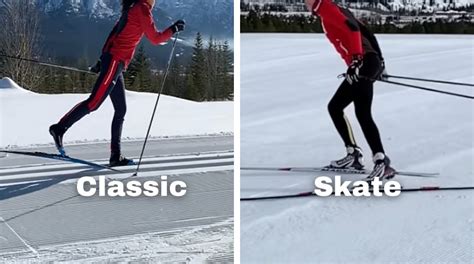
There are two main ways to enjoy cross-country skiing (also known by the umbrella term "Nordic skiing"): You can either classic ski or skate ski. With each one, your heel is always "free" (not connected to the ski as with downhill skiing) and you use your muscles and gear to move yourself forward.
Classic vs. Skate Skiing
Classic skiing uses a forward and back striding motion that resembles how you walk or run. The familiarity of the motion makes it a logical starting point for new cross-country skiers. Skate skiing technique resembles that of a speed skater on ice. As you push your skis out to the side, you use the edges of your skis to propel yourself forward.
The gear for classic skiing and skate skiing differs some, though not dramatically-to the untrained eye it can all appear the same. This article will help you understand the differences so you can get the type of skis, boots, bindings and poles you need to enjoy a day on the trails.
Choosing Cross-Country Skis
To choose the right cross-country skis, first think about where you want to go and what type of skiing you're looking to do, then choose the type of skis that align with that.
Classic Skis
At REI, three types of skis fall into the category of classic skiing:
- Cross-country touring skis: Designed for skiing on groomed trails with a forward and back striding motion.
- Race and performance classic skis: Built for faster, more aggressive skiing on groomed tracks.
- Metal-edge touring skis: Made for skiing out-of-track or on steeper terrain.
Skate Skis
Skate skis are used on groomed trails to ski along similar to how a speed skater moves on ice. The skis are light, skinny and stiff, and they are generally about 10cm shorter than skis for classic skiing. It's worth pointing out that skate skis are not designed for striding as you do while classic skiing.
Getting the Right Cross-Country Ski Size
When your body weight is appropriately matched to the ski length, the skis will support your weight and deliver the optimum combination of grip and glide. If you get skis that are too short, you won't glide like you should. Get skis that are too long and you'll struggle to get good grip.
Because flex, materials and other design characteristics vary, each pair of skis has a specific recommended weight range for each available ski length (ski size). You can find this info in the "recommended weight range" spec on REI.com product pages or in manufacturer size charts.
Cross-Country Ski Width and Sidecut
Ski width is typically measured at three locations-the tip (the widest point near the front of the ski), the waist (the narrowest point near the middle of the ski) and the tail (near the back of the ski). The resulting hourglass shape is called the sidecut.
If you plan to ski at Nordic ski areas and stay in the groomed tracks, then you will want to find skis no wider than 68mm (the maximum width of ski tracks). The sidecut of the skis should be minimal so the skis glide straight and efficiently.
The narrower a ski is, generally the faster it moves. Skating skis are thus quite narrow when compared to classic skis. Typically ranging from 41mm to 45mm wide, they glide swiftly over packed or groomed snow.
Cross-Country Ski Bases: Waxless vs. Waxable
Skis need to grip the snow so you can climb hills and maintain forward momentum on flat terrain. Classic skis achieve their grip in one of two ways: either the bottom of the ski has a manufactured texture pattern or grip wax (aka kick wax) is applied. Skate skis rely on their edges for traction.
Waxless Classic Skis
Waxless classic skis are the most popular choice because they are convenient and low maintenance, and they provide reliable grip in a variety of snow conditions. They are called waxless because rather than relying on grip wax for traction, they have a manufactured grip zone (aka kick zone) on the bottom.
Waxable Classic Skis
Waxable classic skis require a bit more work, but they can outperform waxless models if their grip wax is precisely matched to snow conditions. Waxable skis get their traction from rub-on grip wax that's applied to the middle third of each ski.
Cross-Country Ski Camber
Camber refers to the bow of the ski-you can see this easily when you put the ski down on a flat surface. Skate skis are designed with single camber whereas most classic cross-country skis have the more-pronounced double camber.
- Single Camber: Skis with single camber have a subtle, gradual arch in the middle.
- Double Camber: Classic skis with double camber incorporate a second camber that's important to achieving really good glide while classic skiing on groomed trails.
Cross-Country Ski Flex
Flex describes the stiffness of a ski's camber and can influence speed and turning. Generally, a soft-flexing ski grips better and turns more easily on soft snow and at slow speeds. A stiff flex works best on firm snow and at high speeds.
How to Choose Cross-Country Ski Boots
Finding comfortable boots is key to your enjoyment on the slopes. Blisters on your heels or toes that are scrunched can quickly end an otherwise great day. When trying on boots, wear a pair of wool or synthetic ski socks. A good fit means boots are comfortable and hold your feet solidly in place. You should have room to wiggle your toes to keep them warm.
When shopping for cross-country ski boots, it's important to choose boots that match the type of skiing you're doing.
- Boots for cross-country touring: Look for a combination of flexibility for striding and torsional rigidity for turning and stopping.
- Boots for race and performance classic skiing: These boots are typically lighter weight than touring boots, and sometimes have lower cuffs for a greater range of motion.
- Boots for metal-edge touring skis: These boots are stiffer to provide greater support for turning.
- Boots for skate skiing: Skating boots offer more ankle support than those for classic skiing to help protect against the twisting forces involved in the skating technique.
- Boots for skate skiing and classic skiing: There are some boots available that are designed for both skate skiing and classic skiing.
How to Choose Cross-Country Ski Bindings
Performance differences between bindings are subtle so let your choice in boots guide what type of bindings you purchase. Boots have different types of soles on them, making them only compatible with specific bindings.
For many years, New Nordic Norm (NNN) and Salomon Nordic System (SNS) were the two primary binding/boot systems available and they were not compatible with one another. With the release of the Turnamic system, featured on Rossignol and Fischer products, and the ProLink system, featured on Salomon products, there's much more crossover among boots and bindings. Turnamic, ProLink and NNN are all interchangeable with one another.
How to Choose a Cross Country Ski Package for Skate, Classic, Beginners, Backcountry, and More!
Hybrid Ski Boots: Blending Resort and Backcountry Performance
Backcountry freeride, hybrid, 50-50 boots-whatever you want to call them, skiers are increasingly looking for a crossover ski boot for resort and backcountry skiing. Boots like Fischer’s RC4 FREE and Armada’s AR ONE are two examples of this emerging category that’s prioritizing performance on the downhill while offering barebones touring capabilities.
With no walk mode or heel inserts, they’re compatible with hybrid-style touring bindings like the CAST system or Shift. Backcountry-eager downhill skiers are taking Armada’s new AR One into the sidecountry for short tours to access the fresh.
The goal is to prioritize performance for folks who are going to primarily use their boots for downhill skiing, while also introducing a zero-compromise option for folks who are willing to work a little harder to access backcountry terrain.
“All 50-50 touring boots currently on the market are built with lower wall thickness and/or lighter-weight plastics that result in reduced suspension, rebound, and stability,” says Fischer product manager Christoph Lentz. “The idea was to make a boot for ‘skiers’ first, and obviously something that works well for our athletes of all genres,” adds Briggs.
Fischer athlete and Freeride World Tour competitor Kendall Goodman notes that competition and film skiers have been modifying their alpine boots with tech inserts for years, and that the industry is finally catching up to it. The fully featured Armada AR One also sports a tech toe.
For long, flat approaches-where you actually utilize the rearward motion in your boots-a walk-mode-free boot would surely be a torture chamber for your poor feet. Short and steep laps, where your ankle is already flexing, is where these boots will shine.
“Fact of the matter is, you either have to work a little harder or go a little slower when touring,” says Goodman.
“If your goal is long tours or backcountry missions, this is of course, not the boot for you,” Briggs admits. “If your goal is to access nearby terrain, set up a backcountry booter, or hike a bit from heli or cat drops, this is the boot you want.
“I am convinced that the majority of freeride oriented skiers would be better served with an RC4 FREE boot versus a 50-50 or touring boot simply because weight and walkability are secondary characteristics in relation to the downhill performance,” adds Lentz.
| Boot Sole Type | Compatible Bindings |
|---|---|
| NNN | NNN, NNN Nordic Integrated System (NIS), Turnamic, ProLink |
| Turnamic | NNN, NNN NIS, Turnamic, ProLink |
| ProLink | NNN, NNN NIS, Turnamic, ProLink |
| SNS Profil | SNS Profil |
| SNS Pilot | SNS Pilot |
As you shop for bindings, you'll become aware of different features that may sway you one way or another. Here are a couple things to be on the lookout for:
- Manual versus automatic: Some cross-country bindings are manual, meaning you bend over to lock your boots to the bindings or to release them.
- Binding plates: Some skis come with binding plates installed on them. These offer several advantages, including quick and easy binding installation without drilling and the ability to reposition the bindings forward and back based on things like snow conditions and skiing ability.
tags: #snowmobile #ski #shoes