When it comes to ice hockey, the action on the rink gets all the glory. But behind every slick pass, graceful skate, and thrilling goal lies a critical component of the game-perfect ice. And the Zamboni is the unsung hero that makes it all possible. Known across arenas big and small, the Zamboni is more than just a machine-it’s a staple of the sport and a symbol of rink pride. This iconic machine has not only become a vital tool for ice maintenance but also a beloved symbol of the sport itself.
A Brief History of the Zamboni
Every great hockey play starts with one thing-perfect ice. And the unsung hero behind that flawless sheet? The Zamboni. The Zamboni is named for its inventor, Frank J. Zamboni, an inventor who came from Eureka, Utah.
The Zamboni ice resurfacing machine was invented by Frank J. Zamboni in 1949. Frank had moved to southern California where he was working on cars at his older brother George's auto repair business. His mechanical know-how led him to develop a machine that was used to pack ice blocks for shipment by rail across the country. With the development of refrigeration technology in the years that followed, however, the demand for ice blocks decreased.
Frank saw a way to repurpose his invention so that there would still be a demand for it. Ice skating was beginning to grow in popularity at that time, but there were very few rinks in southern California for skaters to choose from. Frank Zamboni built Iceland Skating Rink in Paramount, California and started using his Zambonis to create a smoother surface than skaters had ever experienced before. The prototype, known as the Model A, was built using repurposed parts, including the chassis of a Jeep. While it was bulky and rudimentary when compared to today’s sleek designs, it cut downtime significantly. By giving teams and fans more time to enjoy the sport, Frank Zamboni changed hockey forever. The invention caught on and is still in widespread use today.
How the Zamboni Works: A Detailed Look
While the Zamboni may look like a simple ride-on machine, the technology behind it is surprisingly sophisticated. The Zamboni is a specialized ice resurfacing machine that smooths the ice between periods and sessions. Named after its inventor, Frank J. Zamboni, this iconic machine has been keeping rinks sharp since 1949. With its rotating augers, water sprayers, and precision blades, the Zamboni doesn’t just clean the ice-it rejuvenates it.
Read also: Behind the Scenes at the Rink
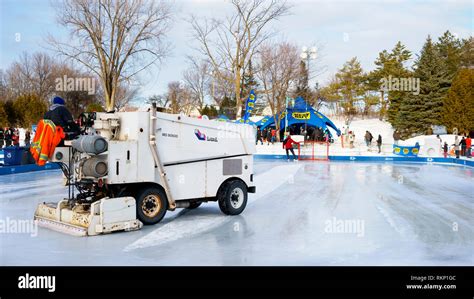
There are several components within the Zamboni that the machine uses to make ice perfect for skating. First, a pipe delivers wash water to clean the surface of the ice to prepare it for the resurfacing process. A separate pipe gathers this wash water back up as the next step. To apply the resurfaced finish to the ice, a third pipe pumps out ice-making water that quickly freezes to the surface of the rink, spread evenly by a trowel. Blades then shave the ice down to a smooth finish, while the Zamboni gathers up excess shaved ice to give the rink a clean look, creating the ideal conditions for skating.
Most of the actual resurfacing components are contained in a heavy device at the rear of the machine, known as the "conditioner". The conditioner is hydraulically lowered to the ice surface, its weight providing the friction necessary for a large, sharp blade (similar to those used in industrial paper cutters) to shave off the top layer of ice. The height of the blade can be adjusted by the driver, allowing deeper or shallower cuts.
Here's a breakdown of the key steps:
- Scraping the Ice: The Zamboni’s sharp blade shaves a thin layer of the ice’s surface to remove scratches, grooves, and imperfections left behind by skates.
- Collecting Ice Shavings: As the blade scrapes the ice, the machine picks up the resulting shavings and stores them in a large snow tank.
- Water Application: What truly sets the Zamboni apart is its ability to lay down a fresh layer of ice. Using a system of nozzles, the machine spreads warm water over the scraped surface.
- Squeegeeing and Towel Dragging: To ensure the water is evenly distributed, a squeegee and towel mounted on the back of the machine smooth the surface.
Wash water can be used to further improve the quality of the ice by removing debris and snow from deep skate-blade cuts. Located directly in front of the blade, nozzles forcefully spray water into the ice surface, loosening deep debris. Runners on either side of the conditioner contain the spray, while a rubber squeegee at the rear of the conditioner allows a vacuum nozzle to pick up excess water.
Finally, a layer of water is laid down to fill in the remaining grooves in the ice. The ice-making water is released through a sprinkler pipe at the rear of the conditioner, which wets the cloth towel that is dragged behind the resurfacer. Traditionally, hot water has been used because it slightly melts the layer of ice below it, leading some operators to believe it forms a stronger bond during the freezing process because heating the water releases dissolved gases thus allowing the ice to freeze in a clearer state. It is also sometimes believed that warm water reduces the freezing time of the water due to the unproven Mpemba effect. The water used in some rinks is also filtered and treated before being used in the ice resurfacer to remove any minerals or chemicals in the water.
Read also: Winter Fun at Hamilton Ice Arena
Many ice resurfacers are fitted with a "board brush", a rotary brush powered by a hydraulic motor. The board brush is extended and retracted on the left side of the machine by a hydraulic arm. This allows the operator to collect ice shavings and debris that accumulate along the edge of the rink (along the kick plates below the dasher boards of the rink) where the conditioner cannot easily reach. The brush sweeps the accumulations into the path of the conditioner, which removes them from the ice. The use of a board brush can dramatically reduce the need for edging of the rink.
After resurfacing the entire sheet, also known as an "ice cut" or "flood", the snow container must be emptied.
| Component | Function |
|---|---|
| Snow Container | Holds ice shavings collected during resurfacing. |
| Hot Water Tanks | Supply warm water for laying down a fresh ice layer. |
| Wash Water Tank | Provides water to clean the ice surface before resurfacing. |
| Conditioner | Contains the blade, augers, and water distribution system. |
| Board Brush | Cleans ice shavings and debris from the edges of the rink. |
Smaller, cheaper machines have also been designed to provide a smooth ice surface in a manner similar to a traditional resurfacer. These can be either self-propelled or pushed/pulled by the operator. Self-propelled vehicles typically incorporate the main components of full-size ice resurfacer, including a blade and water tank, but on a smaller scale. The ice around the edges of a rink has a tendency to build up because the conditioner blade does not extend all the way to the outer edges of the conditioner and it is unwise to "ride" (drive with the conditioner touching) the dasher boards.
The Zamboni's Impact on Hockey and Skating
For hockey players, the quality of the ice can make or break their performance. Performance starts at ice level. A freshly resurfaced sheet can make or break a player’s stride, puck control, and overall gameplay. Smooth ice allows for faster skating, better puck control, and cleaner passes. The Zamboni’s role in maintaining the ice is often underappreciated by fans, but for players, it’s the foundation of every game. A Zamboni run removes snow buildup, fills ruts, and lays a thin layer of hot water that freezes into a smooth surface. Without the Zamboni doing its job, ice conditions would deteriorate quickly, increasing the risk of injury and affecting the integrity of the game.
A high-performing rink depends on consistent resurfacing. Without a Zamboni, crews would have to manually scrape, shovel, and flood the ice-a time-consuming and less effective process. For rinks that host tournaments, practices, public skates, and league play all in one day, the Zamboni keeps the ice fresh across multiple uses.
Read also: Ice Skating in Great Neck
Keeping Your Ice Rink Smooth As a critical part of maintaining any rink, Zambonis are still used today to resurface ice and ensure that it is smooth and even. That drastically reduces the risk of injuries resulting from falls caused by irregularities in the ice.
How Zamboni Ice Resurfacers Work | San Diego Union-Tribune
The Zamboni in Pop Culture
Beyond its practical purpose, the Zamboni has become a cherished part of hockey culture. There’s something oddly satisfying about watching a Zamboni glide across the rink. Between periods, fans often stay glued to their seats, mesmerized by the machine’s rhythmic loops. It’s more than maintenance-it’s a ritual, a moment of calm before the storm of the next puck drop. Fans cheer when it rolls out onto the ice, and kids (and adults) marvel at its methodical movements. The Zamboni’s iconic status has even made its way into pop culture.
This ritual speaks to the Zamboni’s deep roots in hockey culture. It symbolizes the preparation, precision, and pride that defines the sport. From cameos in movies to features in commercials, the Zamboni has carved out a spot in pop culture. It’s instantly recognizable and often associated with the magic of hockey nights. The Zamboni has been featured in movies, TV shows, and video games. Hockey fans wear it on T-shirts, and some even give it a nickname, as if it were a member of the team.
Jurisdictions differ over whether operating an ice resurfacer while drunk counts as illegal driving under the influence. In the sitcom Cheers, the character Eddie LeBec (Jay Thomas) is killed by a Zamboni in the episode "Death Takes a Holiday on Ice" (1989). The 2009 video game Plants vs. On January 16, 2013, in honor of Frank Zamboni's 112th birthday, Google published a Google Doodle dedicated to him. On February 22, 2020, David Ayres, the operations manager at the Mattamy Athletic Centre, entered the game as the emergency backup goalie for the NHL's Carolina Hurricanes, leading them to a 6-3 victory over the Toronto Maple Leafs and consequently becoming the first and only emergency backup goaltender (EBUG) to record a win in National Hockey League history.
Modern Zambonis: Innovation and Efficiency
Today’s Zambonis are high-tech marvels. From battery-powered models to GPS-guided resurfacing systems, the modern Zamboni has come a long way from its original design. What hasn’t changed is the Zamboni’s mission: deliver the best possible ice. Innovations have made them faster, quieter, and more efficient, but the core purpose remains the same.
Just like your gear, the Zamboni needs care. Regular maintenance ensures it runs smoothly and safely. This includes blade sharpening, water system checks, and tire inspections. The Zamboni isn’t just a machine; it’s part of the rink’s team. For over 70 years, the Zamboni has been an icon of the sport. It’s reliable, efficient, and central to every ice rink operation. The Zamboni isn’t just background noise between periods-it’s a vital part of the hockey experience. From performance to presentation, it ensures the ice is always ready for action.
So next time you’re cheering for the Wilkes-Barre/Scranton Penguins, take a moment to appreciate the humble Zamboni-a true MVP in the game of hockey. So next time that you're out skating at CDA On Ice and you see the trusty Zamboni riding by, thank whoever's driving it, and thank Frank J.