Spout Springs Ski Area, a historically significant and cool destination for skiing and snowboarding, is nestled in the heart of the Blue Mountains of northeastern Oregon, within the Umatilla National Forest. Situated adjacent to Oregon Route 204, it lies roughly midway between the towns of Weston and Elgin.
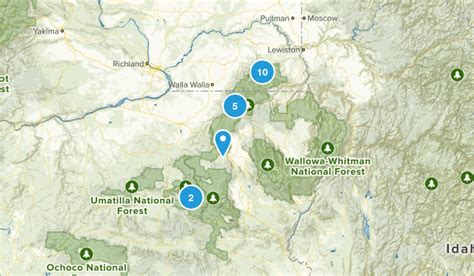
Map of Umatilla National Forest
Early Days of Skiing in the Blue Mountains
Skiing gained popularity in the Blue Mountains many years ago. In 1938, the Blue Mountain Ski Club was established, drawing members from nearby areas of Washington and Oregon. Initially, the club's activities were centered in Tollgate, but they later relocated to Spout Springs.
The Blue Mountain Ski Club was a non-profit organization. As the 1940s progressed, skiing's popularity surged, and the original ski locations became inadequate. Spout Springs was recognized as the premier skiing destination due to its favorable terrain and consistent snow conditions. The Blue Mountain Ski Club collaborated with the Forest Service to transport ski equipment to Spout Springs. By 1948, three rope tows were in operation, and a small warming hut was constructed, though it often proved too small for the growing number of visitors.
Growth and Challenges in the 1950s
The Spout Springs Ski Area experienced a surge in popularity. In 1956, approximately 1,500 people visited each weekend! An incident occurred in January 1956 when two skiers became lost at night. They were found the following morning by searchers, having survived by digging into a snow bank for warmth and preventing each other's feet from freezing!
Read also: Steamboat Springs Vacation Guide
Despite a lack of snow in 1958, people still flocked to ski. In 1959, Spout Springs underwent further improvements. One of the old rope tows was relocated, and a new T-bar lift was installed. A T-bar is a type of lift that pulls skiers up the hill while they stand on their skis.
The ski business had expanded beyond the capacity of a volunteer club to manage it effectively. The ski area continued to grow in popularity in the 1960s. More people were learning to ski, and they had more free time to enjoy winter sports.
Return to Winter - Exploring an Abandoned Ski Area
Spout Springs Ski Area: Facts and Figures
Spout Springs Ski Area is located at an elevation of approximately 4,920 feet and has a long history as a destination location. The ski area permit boundary includes 1,413 acres and 13 downhill runs that are accessed via two fixed-grip double chairlifts. A portion of these runs are illuminated for night skiing. The nordic system within the permit area includes more than 20 miles of trails that range from beginner to advanced difficulty. The base area features two large chalet-style buildings that serve as the main lodge and rental shop.
The ski area features varied slopes suitable for beginners and advanced skiers alike.
| Feature | Details |
|---|---|
| Elevation | Approximately 4,920 feet |
| Permit Area | 1,413 acres |
| Downhill Runs | 13 |
| Lifts | Two fixed-grip double chairlifts |
| Night Skiing | Available on some runs |
| Nordic Trails | More than 20 miles, beginner to advanced |
| Base Area | Two chalet-style buildings (lodge and rental shop) |
Current Status and Future Prospects
Spout Springs Ski Area is closed for the 2024-2025 season.
UPDATE - January 2023: In July 2022, the Umatilla National Forest released a “Request for Expression of Interest” for someone to manage and operate Spout Springs. The purpose of that outreach was to gauge the level of interest from individuals or entities in operating the ski area including ideas for expanded recreation opportunities on the site. The Forest Service’s goal is to see Spout Springs once again serving our communities so the RFEI was also intended to help determine next steps based on community interest.
The Umatilla National Forest is working with property and realty staff within the federal government to determine potential steps to move forward, which could include a competitive process to advertise and select an operator to initially operate under a Special Use Permit for government owned facilities OR sell the infrastructure. If a sale occurred the business and improvements would belong to the owner of the ski area, but the land would remain in federal ownership.