When heading to the mountains for a snowboarding trip, keeping your gear organized and secure is essential. Many enthusiasts simply toss their snowboards and equipment into the truck bed, where they can slide around and potentially get damaged during the drive. Investing in a truck bed snowboard rack can solve this problem, providing a secure and organized way to transport your gear.
This guide explores the various factors to consider when purchasing a truck bed snowboard rack, ensuring your equipment arrives safely and in excellent condition. From understanding different rack types to evaluating capacity and security features, this comprehensive overview will help you make an informed decision.
TriRack Assembly
Why Use a Truck Bed Snowboard Rack?
Using a truck bed snowboard rack offers several advantages:
- Organization: Keeps your snowboards and skis neatly organized in the truck bed.
- Protection: Prevents boards from rubbing against each other, minimizing scratches and damage.
- Space-Saving: Frees up interior space in your vehicle for passengers and other gear.
- Security: Provides a secure way to transport valuable snowboards and skis.
Types of Racks for Hauling Skis and Snowboards
There are several types of racks for hauling skis and snowboards, each with its own benefits and drawbacks.
- Clamping Roof-Mounted Racks: These install on your vehicle's rooftop crossbars, spanning the gap between them with a clamping mechanism to secure your equipment. These tend to be very stable and easy to install but limit storage capacity and will leave your gear exposed to the elements.
- Hitch-Mounted Racks: As referenced by their name, this type of rack uses your hitch receiver and can typically carry a fair amount of gear. While they're much easier to load and unload, these can be more costly, and your rear visibility might be impacted, along with access to your trunk. A tilting or swinging hitch rack can solve this problem, though. Another negative is that your equipment will be subjected to road debris that's kicked up while driving.
- Rooftop Cargo Carriers: If you're tight on space inside the vehicle, this might be the way to go. Depending on the size you opt for, these can fit skis, snowboards, and most of your accessory gear, and keep it all protected. The downside is that these tend to be more expensive and could make garage use a bit tricky.
- Suction Cup Racks: This option is quite specific to the SeaSucker brand and represents a unique approach to mounting. Suction cup racks work best on smooth, flat surfaces for maximum compatibility and stability.
Key Considerations When Buying a Truck Bed Snowboard Rack
Before purchasing a truck bed snowboard rack, consider the following factors:
Read also: Snow Truck Features
- Capacity: Determine how many snowboards and skis you need to carry. Snowboards generally take up 1.5 times as much space as skis, so plan accordingly.
- Vehicle Compatibility: Ensure the rack is compatible with your vehicle. Most racks require rooftop crossbars or a hitch receiver. For suction cup options, ensure you have smooth, flat surfaces for mounting.
- Simplicity: Look for a rack that is easy to assemble, install, load, and unload. Units with ergonomic designs and quick-release mechanisms are the simplest to use.
- Security: Choose a rack with padding for protection and stability. Also, find a rack with a locking system for both the equipment and the rack itself, giving you peace of mind when leaving your stuff unattended.
- Versatility: Consider whether you can use the rack for other activities in the off-season, such as carrying fishing poles or camping gear.
Creating a truly universal product is no small feat, but the SeaSucker Classic Ski Rack comes remarkably close. For the uninitiated, SeaSucker's system relies on powerful suction cups instead of traditional roof bars-a concept that might make some drivers skeptical.
We were too, at first. But several Car and Driver editors have used a variety of SeaSucker products, and we can confidently vouch for their strength and longevity. After all, a company wouldn't stay in business if its suction cups tended to give out on the highway.
Still, for weekend skiers or anyone who doesn't want to keep a full-time roof setup, the Pallavicini is a brilliant, elegant solution that installs in minutes and comes off and stores just as easily when the trip is finished.
DIY Truck Bed Snowboard Rack
If you're the handy type, building your own truck bed snowboard rack can be a rewarding project. Here’s a step-by-step guide to creating a simple yet effective rack:
Design Criteria:
- Hold at least 3 boards between the wheel wells of your full-size pickup truck while leaving space for a large bin that I also need to store in the bed of the truck
- Hold the boards in such a way as to not damage them
- Leave enough space between the boards to allow for bindings
- Be arranged in such a way that it is not too difficult to place or remove the boards from the rear of the truck
- Rack should be easy to remove from the truck when not needed
I think this rack would also work in a wall mounted configuration for off-season storage and/or display.
Read also: Is the Gnu Antigravity Snowboard Worth It?
Step 1: Preparation
I designed the rack in Creo Parametric 3.0, and output .dxf files that I can open in Cut2D to generate the G-code I need to cut it on my home-built CNC router. There are essentially only two different parts: the slotted end-plate (x2), and the cross-bar (x3). I'm attaching .dxf files for cutting the parts by CNC, as well as .pdf files annotated with dimensions. The plywood I used (baltic birch, nominal 3/4" thick) has an actual thickness of 0.71", so I made the slots and tabs to account for a material thickness of 0.72". If you're using true 3/4" plywood you'll need to account for the discrepancy (you can always sand/file the parts until they fit). Also attached to this instructable are .dxf files sized for 0.75" thick material. I do not recommend any kind of particle board or MDF for this project since it is likely to get wet at some point during its use.
With the parts drawn, laid out in such a way to optimally fill the plywood pieces I had on hand, and toolpaths generated, the cutting can begin. For this project I used a 1/4" diameter upcut Spiral O-flute bit, which I run at 10,000 RPM and a feedrate of 100 inch/min. This cutter was used for all of the profiles of the parts, and a 90 degree V cutter was used for the lettered engraving.
The rounded corners in the slots are cut that way to account for the radius of the CNC router bit and make assembly easier. If you're making it by hand the corners of the slots could be squared up by hand, or one could also round over the corners of the crossbar tabs to achieve the same result. A jigsaw would be enough to cut out the parts (though a bandsaw would be better), and the assembly tabs/slots could be omitted and replaced with wood screws driven through the face of the end-plates into the ends of the cross-bars. The tolerances in the parts aren't super critical. As long as the rack isn't too twisted it should be able to hold the boards just fine, though it may not be as pretty.
Step 2: Assembly
Once cut, I sanded the pieces and used a hand router with a 1/8" quarter-round along the edges. This is not necessary for the function of the rack but does make for a nicer finished product. Assemble the parts without glue and make sure everything fits and looks right. Once you're happy with the fit then you should be ready for glue. I applied wood glue to the crossbar tabs and inserted them into the end-plates, making sure that the tabs were fully inserted into the slots. You may need to use a hammer to help set the cross-bars, especially when placing the second end-plate. Use a piece of scrap wood when hammering so that you don't dent your new snowboard rack.
At this point I just clamped across the two end-plates while the glue dried. I thought about using screws to secure the pieces as well, but in my case everything was tight enough that I wasn't worried about the parts slipping. If I were placing screws, it would have just been a single screw into the end of each crossbar, driven up through the bottom edge of the end-plates.
Read also: Battle Bindings: Performance and Value
Step 3: Paint & Final Touches
Once assembled, I sanded the whole rack once more before painting it. After priming and paint, the finishing touch was to place some strips of carpet into the slots. I used some carpet remnants I had from a remodeling project, cut into strips and then glued into place with contact cement (following the general use instructions for contact cement). The carpet will cushion the bottom edge of the snowboards and protect the base and top sheet from scuffs. I placed the carpet strips in short segments - from the top edge, down and back up one slot, and back along the top edge halfway to the next slot. Dividing up the strips this way means you don't run into timing problems during assembly as the contact cement on each surface has to dry, but you only have enough hands to apply the cement to one surface at a time (unless you have friends that can help, then go nuts).
I considered making the carpet strips wide enough to fold over the sides and then staple them, but decided that I'd try it with just the contact cement and see how well it holds up. You should avoid putting staples through the face of the carpet that touches the snowboard because the staples could cause damage. Contact cement is a convenient adhesive to use in this case, since a glue with a longer set time would require some custom blocks placed inside the slots to hold the carpet in place while it dries. Since you let contact cement "dry" before pressing the two surfaces together the adhesion is instant, though you do need to be careful when laying the strips down onto the edge of the rack so that the loose end of the strip doesn't accidentally make contact in a place where you don't want it to attach permanently.
Since I only made the slots 1" wide I did have to be mindful of the thickness of the carpet that I used to line the slots. Obviously if the carpet is too thick then the boards may not fit into the slots. One could also make the slots wider as necessary of course, so it helps to measure the thickness of the carpet you intend to use before cutting the end-plates.
Step 4: Materials & Tools
Materials:
- 3/4" Baltic-birch plywood, approx. 3ft x 5ft
- Carpet - cut into ~3/4" wide strips
- Wood glue
- Rustoleum grey primer
- Rustoleum "Painters Touch" Colonial Red Gloss paint
Tools:
- CNC router (bandsaw, jigsaw, or scroll saw would work, as discussed)
- Random-orbital sander
- Scissors or utility knife for cutting carpet strips
- Hand held router (just for rounding edges)
- Bar clamps (if needed for gluing)
Step 5: Improvements
I'll need to use this rack a bit to figure out its weaker points. I'm worried about the adhesion of the carpet strips over time, and how the rack will hold up to moisture and cold weather. I'm also assuming that the weight of the rack with boards on it will be enough to keep it relatively immobile in the truck bed, but I may find that some kind of tie-down is required.
One thing I know I would adjust would be the space between the slots. The board I have with Union bindings fits just fine, but my Rome bindings don't fold down as tightly to the board and interfere slightly with the adjacent board. If I place the board with the Rome bindings in the first slot then its not an issue, but an extra 1/2" separation between the slots would have solved this issue from the start.
This design is easily scaled for more boards, or for fewer boards and/or skis.
Ski and Snowboard Carrier Size Guide
The most popular carriers for day trips are the clamp style carriers because they are low profile and easy to use with a locking mechanism for security. They can be used with both skis and snowboards singularly or a combination of both depending on the size of the carrier. Split boards may be racked like skis although they are generally wider.
| Carrier Type | Capacity | Notes |
|---|---|---|
| Clamp Style | Varies | Low profile, easy to use with locking mechanism for security. |
| Multi Purpose Holder (RMPHU) | 1 pair of skis | Relatively inexpensive, suitable for carrying one pair of skis. |
| Rhino-Rack Roof Boxes | Varies | Weatherproof storage, perfect for overnight stays, allows keeping smelly boots out of the car. |
In addition to this, The Ski Carrier (572) can be fitted off the side of the Pioneer Systems using the Pioneer Ski Carrier Bracket (43159).
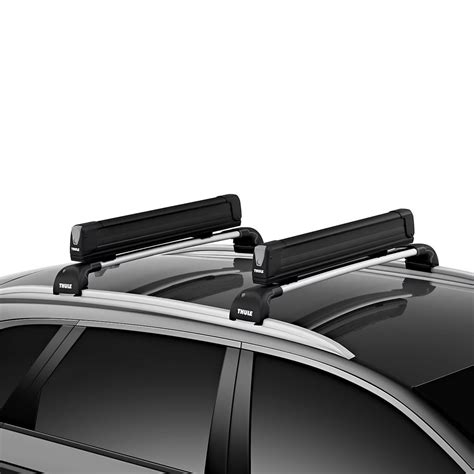
Thule Snowpack Extender
Individual Rack Reviews
Thule Snowpack Extender
The Snowpack Extender shines in almost every category. Assembly and installation were pretty straightforward, and there are multiple options for securing the arms to your vehicle. They can be strapped to most types of crossbars or hard-installed using roof rails.
The latter option does basically guarantee theft prevention, but you wouldn't really be able to remove them. Our main gripe was the wing-nut-like tightening mechanism, which some found to be a hassle during installation and removal. As far as ease of use goes ... yes. Being able to extend the arms makes for light work when loading and unloading gear, and the contoured latch release just takes a solid bump to open, which could surely be done with winter gloves on.
Thule incorporates rubber grips lining the inside of the arms, along with locks on the outside, ensuring your gear stays safe and secure during use. If you do need to remove it, it's light and easy to tuck away somewhere until next winter. We liked almost everything about this rack, making it the obvious choice for our top spot.
Pros:
- Easy to use
- Extendable arms
SeaSucker Classic Ski Rack
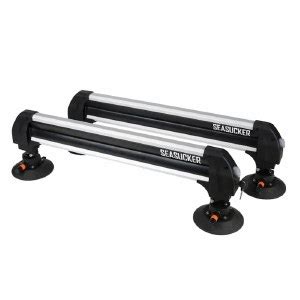
SeaSucker Classic Ski Rack
The Classic Ski Rack uses the familiar clamshell design, but what sets it apart is its straightforward mechanical simplicity. A lever-style latch securely fastens the top and bottom halves with a satisfying thunk. The dense, sticky rubber pad on the stationary clamp grips skis securely and resisted shifting and sliding when we mounted it on our Toyota Prius's steeply angled rear window.
Our only genuine concern is security. While there is a hole for a third-party lock, the suction mounts could, in theory, be lifted off, allowing someone to remove the entire rack-and your gear with it. That vulnerability, along with a price even greater than the top-pick Thule unit, keeps it from earning our top recommendation.
Still, the Classic Ski Rack takes a strong second place for its elegant simplicity, universal compatibility, and supersticky rubber pad. It's a refreshingly no-fuss solution that is compatible with most vehicles.
Pros:
- Doesn't require roof racks
- Can be installed on the rear window or on the roof
- Installation is incredibly simple
Rhino Rack
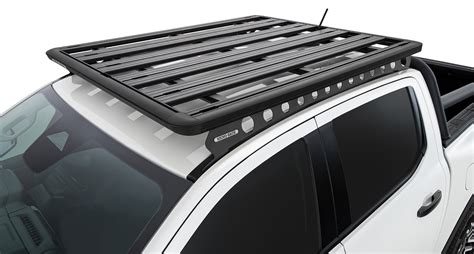
Rhino Rack
The Rhino Rack is the simplest rack we tested, and for that, it earns some admiration. Assembly was mostly complete at delivery, and installation is about as easy as it gets, assuming you have the required security hex key. The brackets screw together around your crossbars, securing the rack to the vehicle, though we found it to be a bit tricky with circular crossbars. Additionally, the clamping mechanism is satisfying to use, requiring only a firm press of a button to release the arms.
Closing them does take some precision, though, as they have to be aligned to latch correctly. The rubber grips inside the arms pin and protect your equipment, and because of the special tool needed and the integrated locks, the setup is pretty theft-resistant. Rhino-Rack embraces a rudimentary design, but it's by far the lowest-priced on this list, making it an appealing option for the value-minded.
Kuat Grip 6
Many highs and lows for this one. Assembly was mundane, requiring a hex key (included), and though it didn't take very long, affixing the brackets was not an intuitive process. The Grip 6 also did not score well for ease of installation. We found it impossible for one person, unless you look like Dex from Attack of the Clones. And again, these were tedious steps, with a specific order in which they had to be completed. If you're going to be removing and installing a rack frequently, we recommend you skip this one.
We let fly a rainbow of words attaching the bars, but once fitted, they worked extremely well. The opening latch is relatively easy to use, and loading equipment was a breeze. The Grip 6 lives up to its name, clamping down tightly to keep your gear secure, while also using rubber teeth to keep everything unmarred.
Kuat also takes theft prevention seriously, with six locks total: one on each bar and one on each bracket, so you can have peace of mind when leaving your gear unattended. Overall, the Kuat Grip 6 looks and works great. So if you're willing to power through the assembly and installation, and you'll keep it on your vehicle long-term, this is a solid, premium option.
Pros:
- Comes in three different colorways
- Very secure
SeaSucker Pallavicini Ski Rack
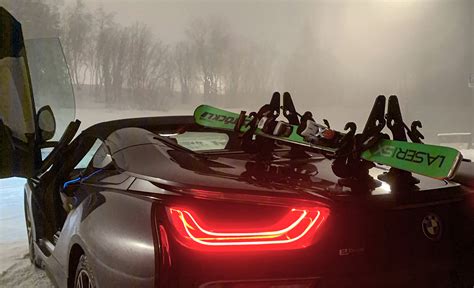
SeaSucker Pallavicini Ski Rack
Notably different than the classic ski rack, the Pallavicini rack uses a clever two-piece A-frame design. To load it up, you remove the top section, place your skis and snowboards into the designated slots, then drop the top frame back into place and secure it with SeaSucker's tactile lever-style clamps.
We liked that the Pallavicini aims for a compact design. When removed, it fit easily into our trunk and took up very little space. However, that compactness also means it's a bit less versatile-for example, these won't also store your fishing rod like the clamshell style could.
The main downside is the same as with all suction-based systems: security. The suction cups can technically be removed by hand, so there's some vulnerability to opportunistic theft. However, when empty, that is easily rectified by just removing the suction units and storing the racks in your vehicle.
Pros:
- No racks needed
- Stows easily in trunk
Skybox NX Skinny
One of two enclosed ski and snowboard racks on this list is the appropriately named Skybox NX Skinny. This is definitely more geared toward skis and snowboards than other enclosed options we tested, specifically the Thule Force 3, which has its advantages and drawbacks. Regarding installation, it doesn't get much easier than the SkyBox NX Skinny. The tightening mechanism features ergonomic knobs that click when the correct torque is reached. We think it looks better than the bulkier Thule, which is another bonus.
Perhaps our only complaint on this rack is the opening mechanism. To open, you press down a lever-which we found to be tougher to press compared to the squeeze-style of the Thule. Additionally, it's about $100 cheaper than the Force 3, though offering less capacity. If an enclosed ski and snowboard rack is what you're looking for, this is a good choice.
Pros:
- Geared toward transporting skis and snowboards specifically
- Easy Installation
Yakima EVO 6
Marketed as the "sleekest, quietest, and sweetest" ski and snowboard rack from Yakima, the EVO 6 definitely hits the mark on looks. We felt the design to open the racks was smart, and the racks felt robust overall. However, we ran into some hurdles during assembly and installation. The consensus was that the instructions were tricky to decipher at first, which translated to some frustration on our end.