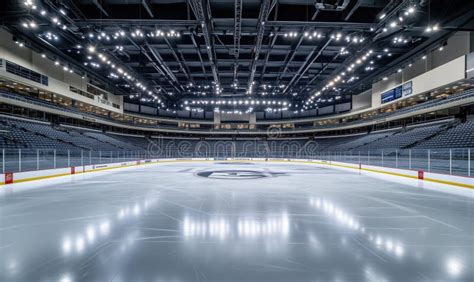
An ice rink, whether naturally formed or artificially created, serves as a hub for various winter sports and activities. From recreational ice skating to professional hockey games, the ice rink is a versatile venue that brings joy to many. Let's delve into the fascinating world of ice rinks, exploring the science behind their construction, the different types available, and their diverse uses.
Natural vs. Artificial Ice Rinks
There are two primary types of ice rinks in use today:
- Natural Ice Rinks: These rinks form when ambient temperatures drop low enough to freeze a body of water.
- Artificial Ice Rinks: These rinks use a coolant to produce cold temperatures beneath the water, causing it to freeze and remain frozen.
The technology used in indoor ice rinks is the same type found in refrigerators and air conditioners. Brine water, which is a salt and water solution, is pumped through a system of pipes under the ice. Brine water freezes at a lower temperature than plain water, thus allowing it to stay a liquid as it moves through the pipes but still cold enough to freeze the water poured onto the concrete floor.
The History of Artificial Ice Rinks
Early attempts at constructing artificial ice rinks occurred during the "rink mania" of 1841-44. The technology for maintaining natural ice did not exist, so these early rinks used a substitute made of hog's lard and various salts. By 1844, these venues fell out of fashion as customers grew tired of the 'smelly' ice substitute.
The world's first mechanically frozen ice rink was the Glaciarium, opened by John Gamgee in London in 1876. Gamgee used a concrete surface with layers of earth, cow hair, and timber planks. Oval copper pipes carrying a solution of glycerine with ether, nitrogen peroxide, and water were laid atop these layers. The pipes were covered by water, and the solution was pumped through, freezing the water into ice.
Read also: Guide to Water Ski Slalom
The Science of Building an Ice Rink
Making an ice rink isn't as simple as flooding the floor with gallons of water. The crew must apply the water carefully and slowly, in order to insure ideal thickness. An ice surface that is too thick requires more energy to keep frozen and is prone to getting soft on the top. It takes between 12,000 and 15,000 gallons (45,000 to 57,000 L) to form a Hockey rink surface.
The ice on the rink is built in layers. There can be as many as 12 or more layers, and those layers vary in thickness, somewhere between 1/32 and 1/16 of an inch. The entire process can take almost 48 hours. The ice is only about one inch thick when everything is finished.
Here's a breakdown of the layering process:
- The first layer is sprayed directly onto the concrete floor and freezes almost immediately.
- The second layer is then applied and painted white to contrast with the black puck.
- The third layer seals the lower two layers.
- Lines and logos are painted directly onto the fourth layer of ice.
- Eight to ten additional layers are applied after that to finish the rink.
At PNC Arena in Raleigh, where the Carolina Hurricanes play, the ice stays in place for the entire hockey season. Special flooring is laid on top of the ice for NC State basketball games and other events.
Как меняют лед на спортивной арене
Read also: Celebrating Water Skiing
Maintaining the Ice: The Zamboni's Role
Once the ice sheet is built, it’s the job of the ice technician to care for its surface. That’s when everyone’s favorite ice machine, the Zamboni, comes in. The Zamboni scrapes the ice surface and collects the snow that accumulates. The machine also puts down a thin layer of heated water (about 140-145 degrees Fahrenheit). It doesn’t melt the ice because it freezes quickly.

Temperature and Ice Quality
The temperature of the ice makes a big difference. Hockey players prefer what is known as “fast ice,” which is harder and colder with a smooth, slippery surface. “Slow ice” is softer and often has a rough surface.
MacMillan says he likes to "keep the skating surface at 24 to 26 F (about -4 C), the building temperature at about 63 F (17 C), and the indoor humidity at about 30 percent.
Here's a comparison of ice preferences:
| Skater Type | Preferred Ice Temperature | Ice Characteristics |
|---|---|---|
| Hockey Players | 24-26°F (-4 to -3°C) | Harder, colder, smooth, slippery ("fast ice") |
| Figure Skaters | 26-28°F (-3 to -2°C) | Softer, grips skate edges better, less likely to shatter |
Water Quality
Water purity plays a big part in making the perfect ice for hockey. Ice made with water that contains dissolved alkaline salts may have a sticky feel to it. Those salts also dull the blades of the players’ skates. That’s why many ice rinks now use water purifiers to filter the water used for the ice.
Read also: Surprising Nude Water Skiing
Rink Dimensions
While there is a great deal of variation in the dimensions of actual ice rinks, there are basically two rink sizes in use at the highest levels of ice hockey. Official National Hockey League rinks are 26 m × 61 m (85 ft × 200 ft). The official size of an NHL rink is 200 feet long and 85 feet wide. To make an ice sheet with this large surface area requires about 10,600 gallons of water.
Diverse Uses of Ice Rinks
Besides recreational ice skating, ice rinks are used for a variety of sports and activities, including:
- Ice hockey
- Sledge hockey
- Spongee
- Bandy
- Ringette
- Broomball
- Speed skating
- Figure skating
- Curling
- Crokicurl