Ice hockey, known as one of the 'Big Four' sports in the United States, is celebrated for its speed and physicality. A key element of the game is the hockey puck, a unique piece of equipment that distinguishes hockey from other sports. This article delves into the science behind how fast a hockey puck can travel, the factors influencing its speed, and its historical evolution.

The Basics of a Hockey Puck
A hockey puck is a small, flat, circular disc designed to glide across the ice. While its origins are somewhat mysterious, many believe the name "puck" comes from a character in Shakespeare’s ‘A Midsummer’s Night Dream’, known for moving quickly and unpredictably. The modern pucks are designed to travel faster and more smoothly across the ice.
Hockey Puck Dimensions and Materials
The National Hockey League (NHL) sets the regulation size for hockey pucks, specifying they must be 3 inches in diameter and 1 inch in thickness. The official NHL puck weight is between 5.5oz - 6oz (156g - 170g). Youth hockey pucks are the same size but slightly lighter at 4oz (113g). Regulation hockey pucks are made from vulcanized rubber, a process that transforms rubber into a hard, durable material through high pressures and temperatures.
Hockey Puck Maintenance
Proper maintenance is essential for reliable performance. It is recommended to clean your ice hockey puck and check for any damage after every game or training session. Avoid using any harsh chemicals or cleaning products to clean your hockey puck, and instead use a combination of water with mild dish soap. After cleaning and allowing it to fully dry, consider storing the ice hockey puck in a cooler.
The Science of Puck Speed
Hockey pucks are designed to move at great speed across the ice and can reach velocities as high as 100mph! The average shot speed for experienced ice hockey players is typically between 80mph and 90mph. But what factors contribute to these incredible speeds?
Read also: Features of Custom Hockey Gloves
The Slap Shot: A Key Technique
Slap Shot In Two Minutes
The slap shot is a fundamental technique for generating high puck speeds. “The trick in hitting the puck with great speed boils down to the ability of the player to convert as much potential energy as they can into the kinetic energy of the puck,” wrote Dr.
Here’s how a slap shot works:
- The player winds the stick, moving it backwards until it is parallel with the ground.
- Next, the shooter swings the club down and forward. The end of the stick contacts the ice where the puck is. The player now shift his weight to the stick as it moves past the puck. The stick end will bend backwards as it makes contact with the puck.
- The shooter then leads the stick forward while rotating the hips.
- Upon contact with the puck, the stick bends backwards, mimicing a tensioned bow.
With a slap shot, the blade hits the ice first, about a foot before the puck. That allows the momentum of the player, who is rotating at that moment, to be transferred to the stick in the form of potential energy. “The magic of the slap shot involved deploying another source of potential energy -- the potential energy store in a bent stick,” Bansil wrote.
“The limit now is not twice the speed, the limit now is the energy that the player carries,” Haché said. “In principle, all that energy could be transferred to the puck. The physical limit now is the energy. And energy has two components, it has the speed, you need velocity, and you need mass.
“So, heavier, better. Stronger, better.
Read also: The story of Craig Needham
The Physics Behind the Shot
“The basic physics is you have a rotating body, which is the player, and it collides with a stationary puck,” Haché said. “There’s basic physics there. So, math helps. If you have a bigger object colliding with a small object, the bigger the object, the faster the small object will go.
“That’s where the body strength and mass help,” he continued. “So you may have somebody who is bigger but not as fast, doesn’t have the muscle mass to accelerate to the speed that you would want to.
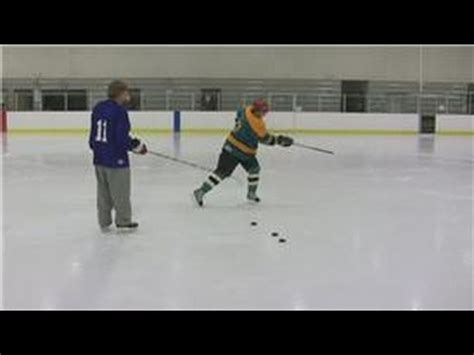
Factors Influencing Puck Speed
Several factors influence the speed of a hockey puck, including:
- Player Strength and Technique: Stronger players with refined techniques can transfer more energy to the puck.
- Stick Flexibility: The ability of the stick to bend and snap back can significantly impact the puck's velocity.
- Timing: The precise moment of contact between the stick and puck is crucial for maximizing energy transfer.
- Body Weight Transfer: Shifting weight during the shot can add power and momentum.
The Role of the Stick
The hockey stick plays a vital role in generating puck speed. Players like Chara believed that transitioning to composite sticks made a significant difference. “We went from wood sticks to composite sticks,” Chara said. “I think that’s when goalies saw the puck the first time it was coming out of their nets when I was shooting slap shots. It was crazy.
“The key elements that must work together involve the ability of the player to manipulate their arms, wrist, legs, feet, and the body weight, along with the extent to which the stick is bent and its timing before it hits the puck,” Bansil wrote.
Read also: Inside Aaron Ness's Career
“More a given stick is bent, the faster the speed with which it will snap back.
Historical Context and Records
The fastest shot ever recorded during a game of ice hockey was achieved by Alexander Riazantsev, who hit the puck at a staggering 114.1mph during a KHL (Kontinental Hockey League) All-Star game in 2012. Over the years, players like Al MacInnis, Al Iafrate, Shea Weber, and Zdeno Chara have been known for their powerful shots.
“I know that later on, in which I didn’t make it to the All-Star Game, I was able to shoot close to 110 miles per hour,” Chara said. “I wish I would be there, maybe toward the end of my career, with everything I was using, better sticks and all that.
Variations in Pucks
There are several variations on the standard black, 6-ounce (170 g) hockey puck. One of the most common is a blue, 4-ounce (110 g) puck that is used for training younger players who are not yet able to use a standard puck. Heavier 10-ounce (280 g) training pucks, typically reddish pink or reddish orange in colour, are also available for players looking to develop the strength of their shots or improve their stick handling skills. Players looking to increase wrist strength often practice with steel pucks that weigh 2 pounds (910 g); these pucks are not used for shooting, as they could seriously harm other players.
White pucks are used for technical handling and goaltender practice. These are regulation size and weight, but made from white rubber. The colour blend in with the ice and rink and requires higher focus on the puck, making handling of the black puck at later stage easier.
A hollow, light-weight fluorescent orange puck is available for road or floor hockey.
Here’s a table summarizing the different types of hockey pucks:
| Puck Type | Weight | Color | Use |
|---|---|---|---|
| Standard NHL Puck | 5.5 - 6 oz (156-170g) | Black | Official games and matches |
| Youth Hockey Puck | 4 oz (113g) | Blue | Training for younger players |
| Heavier Training Puck | 10 oz (280g) | Reddish Pink/Orange | Developing shot strength |
| Steel Puck | 2 pounds (910g) | Steel color | Wrist strength training (not for shooting) |
| White Puck | 5.5 - 6 oz (156-170g) | White | Technical handling and goaltender practice |
| Road/Floor Hockey Puck | Lightweight | Fluorescent Orange | Road or floor hockey |
Conclusion
The speed of a hockey puck is a result of a combination of factors, including player skill, equipment, and the physics of the shot. From the historical evolution of the puck to the science behind the slap shot, understanding these elements provides a deeper appreciation for the game of ice hockey.