While every member of a team has an important role to play, the team captain is an especially important part of any team. Everyone is familiar with captains and the status they have in their positions. Of course, like most team sports, hockey teams select a captain to take on extra responsibilities and help guide the team to success.
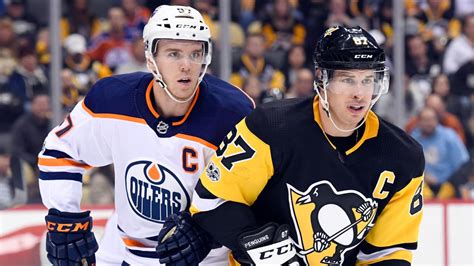
In the fast-paced, high-stakes world of hockey, skill and strategy are undoubtedly critical. However, beneath the surface of dazzling plays and powerful shots lies an even more fundamental component of team success: leadership. Beyond the coach’s directives, the on-ice presence of a strong captain can elevate a team’s performance, resilience, and overall cohesion. It’s not merely about wearing a letter on a jersey; it’s about embodying a set of qualities that inspire, motivate, and guide.
Defining the Role of a Hockey Captain
A true hockey leader doesn’t just call out plays; they cultivate an environment where every player feels valued, understood, and driven towards a common goal. This influence extends beyond game-day heroics, shaping practice intensity, locker room morale, and the team’s response to adversity. What exactly defines a true hockey captain? It’s a blend of character traits and practical abilities. At its core, a captain is a leader by example. They are the first on the ice for practice, the last to leave, and consistently demonstrate unwavering effort and dedication.
Captains can have a range of responsibilities and expectations within a team, including ceremonial and social responsibilities. While team captains are typically seen as representatives of the team, they have one official distinction from the rest of their teammates.
In ice hockey, the captain is the player designated by a team as the only person authorized to speak with the game officials regarding rule interpretations when the captain is on the ice. At most levels of play each team must designate one captain and a number of alternate captains (usually two or three) who speak to the officials when the captain is on the bench. Officially captains have no other responsibility or authority, although they may, depending on the league or individual team, have various informal duties, such as participation in pre-game ceremonies or other events outside the game.
Read also: Features of Custom Hockey Gloves
Key Responsibilities and Qualities
- Communication: Effective captains are excellent communicators.
- On the ice, a hockey captain’s influence is immediate and visible.
- They are often the most reliable players, performing consistently in all zones.
- This doesn’t necessarily mean being the top scorer, but rather demonstrating unwavering effort, smart decision-making, and disciplined play.
- Beyond individual effort, a captain often possesses strong tactical acumen.
- They understand the game plan intimately and can make real-time adjustments.
- They’re capable of organizing defensive zone breakouts, directing forechecks, and ensuring proper positioning during special teams play.
- This tactical awareness allows them to guide teammates, offering quick advice or subtle cues that can turn the tide of a shift or a game.
The captain’s role extends far beyond the rink. Off the ice, they are instrumental in building and maintaining team cohesion. This involves fostering a positive locker room environment, mediating disputes, and ensuring that new players feel welcome and integrated.
While some players may appear to be natural leaders, the qualities of a strong captain can absolutely be developed and refined.
- Assign Leadership Tasks: Even without a letter, give players opportunities to lead.
- Encourage Communication: Foster an environment where players are encouraged to speak up, share ideas, and provide constructive feedback to one another.
- Feedback and Mentorship: Provide regular, constructive feedback on leadership efforts.
One of the most defining aspects of a captain’s role is their ability to guide the team through adversity. Hockey seasons are long, filled with slumps, injuries, tough losses, and personal challenges.
Unite the Locker Room: Adversity can sometimes cause fractures. The impact of an exceptional hockey captain extends far beyond their playing career. Their leadership leaves a lasting legacy, shaping the culture of a team and influencing players long after they’ve moved on. From youth hockey to the professional leagues, great captains are often seen as mentors and role models, whose lessons in leadership, resilience, and teamwork resonate for years. They teach their teammates not only how to win but how to be better people.
NHL Captaincy Rules and Traditions
In the AHL, teams are permitted to select one player to serve as team captain. Co-captains are not allowed. In addition to one team captain, teams are also permitted to select two alternate captains. When the captain is not on the ice, an alternate captain can assume their duties. Team captains wear a “C” on their jerseys, while alternate captains wear an “A”.
Read also: The story of Craig Needham
NHL teams do not need to designate the same player as captain from game to game, but most teams do. Some teams name two (such as the Buffalo Sabres during the 2005-06 and 2006-07 NHL seasons) or three (such as the Vancouver Canucks during the 1990-91 season) captains for a season. Some teams rotate captains rather than keep one for an extended period of time (the Minnesota Wild rotated captaincy every one or two months until the 2009-10 season, when Mikko Koivu was named the first permanent captain since the franchise's inception).
Captains are usually veteran players, though on occasion younger players are chosen. The selection is often seen as an important moment for a team, and one that can affect the team's (and newly appointed captain's) performance. Captains are selected by different means: in some instances, teams have held votes among their players to choose a team captain, while on other occasions, the choice was made by team management. Captains are often chosen due to their seniority in the game and years of service with their current club. However, franchise players-current or emerging stars-have also been named captains.
Though not required, many captains have previously served as alternate captains of their team. Some selections or removals of NHL captaincies have been controversial, more so than the other North American professional sports leagues. For instance, in Canada men's national ice hockey team, then-General Manager Bobby Clarke selected Eric Lindros for the 1998 Winter Olympics, considered somewhat controversial as Lindros was chosen over longer-tenured NHL captains such as Steve Yzerman, Ray Bourque and Wayne Gretzky, Clarke was also general manager of the Philadelphia Flyers whom Lindros played for professionally.
The rules of the IIHF, NHL and Hockey Canada do not permit goaltenders to be designated as on-ice captains, due to the logistical challenge of having the goaltender relay rules discussions between referees and coaches and then return to the crease. Teams may designate alternate captains (often erroneously called "assistant captains"). In the NHL, teams may appoint a captain and up to two alternate captains, or they may appoint three alternate captains and thus no captain. A team with a player-coach may also have no captain or alternate captains.
A team commonly has three alternate captains when the team has not selected a captain, or when the serving captain is injured and misses a game. In the National Hockey League, it is common for a team to have three alternate captains if no one is assigned captain, the current captain is absent, or a goaltender is named as the captain. If the team chooses to not appoint a captain, they are not permitted to appoint a fourth alternate captain.
Read also: Inside Aaron Ness's Career
NHL teams may choose alternate captains from game to game or appoint regular alternate captains for the season. In North America, alternate captains perform many of the same leadership and team building roles as the captain. In the 1969-70 season, the Boston Bruins had three alternate captains (Johnny Bucyk, Phil Esposito and Ed Westfall) instead of a captain sporting the "C".
The letter "C" or "A" is attached to the jersey of the team's captain and alternate captains (commonly sewn at higher levels of play, though removable insignia exist so the "C" or "A" designation can be easily changed). The designation is traditionally placed on the left side of the sweater, though the IIHF, NHL and NCAA rules specify only that it must be in a "conspicuous location on the front" of the player's sweater.
Four teams in the history of the NHL have worn sweaters where the positioning of the crest on the front leaves insufficient space on the left for the letter: the Carolina Hurricanes, New Jersey Devils, and the inactive Arizona Coyotes each have had alternate jerseys with the letters placed on the right, while the Detroit Red Wings' primary jerseys used that placement for much of their history.
Notable NHL Captains
Top 10 GREATEST Captains In NHL History!
Steve Yzerman served as the captain of the Detroit Red Wings for 20 years/19 seasons (1986-87 to 2005-06) and 1,303 games during that time, the longest term in the history of the NHL by both years and games. The Boston Bruins' Ray Bourque was previously the longest-tenured captain in NHL history from 1985-86 to 1999-00, being co-captain for the first three seasons. Daniel Alfredsson holds the record as the longest-serving European captain serving for 14 years/13 seasons (1999-00 to 2012-13) as captain of the Ottawa Senators. Alfredsson's record was tied by Zdeno Chara, who served as the captain of the Boston Bruins also for 14 seasons between 2006-07 and 2019-20.
Jean Beliveau is the only one to have captained his team to win five Stanley Cup championships, doing so with the Montreal Canadiens between 1961 and 1971. The following captains all won four, three of them in consecutive years: Maurice Richard (1957-1960) with the Canadiens, George Armstrong with the Toronto Maple Leafs, Yvan Cournoyer (1976-1979) with the Canadiens, Denis Potvin (1980-1983) with the New York Islanders and Wayne Gretzky with the Edmonton Oilers.
Dunc Munro was the first NHL captain born in Europe to lead his team to a Stanley Cup title (1926), and Charlie Gardiner was the first to accomplish the same feat in the post-WHL era (1934). Both Munro and Gardiner were born in Scotland. Derian Hatcher became the first American-born captain to win the Stanley Cup in 1999. Daniel Alfredsson was the first European-born and trained captain to lead an NHL team to the Stanley Cup Finals (2007), while Nicklas Lidstrom was the first captain born and trained in Europe to lead an NHL team to a Stanley Cup title (2008). Aleksander "Sasha" Barkov became the first Finnish-born captain to lift the Stanley Cup (2024), and then made history again by leading his team to consecutive championships (2025).
Mark Messier was the first NHL player to win the Stanley Cup as captain of two different teams: the Edmonton Oilers in 1990 and the New York Rangers in 1994. Sidney Crosby became the youngest captain in the NHL to win the Stanley Cup in 2009 at 21 years 10 months.
Recent Captaincy Announcements
With Marchand, Hughes, Lowry and Schenn being named captain, there are now six teams in the NHL without one, proof that the role is not just given to anyone. The Chicago Blackhawks announced Sept. The Bruins needed just a few months to name a successor for Patrice Bergeron, who retired July 25 after playing all 19 of his NHL seasons in Boston.
Here's a summary of some recent NHL captaincy announcements:
| Team | Captain | Date Announced |
|---|---|---|
| Boston Bruins | Marchand | [Date] |
| Vancouver Canucks | Hughes | Sept. 11 |
| Winnipeg Jets | Lowry | [Date] |
| St. Louis Blues | Schenn | [Date] |
"This is a pretty special day," Schenn said. "Standing up here being the captain of the St.
"The biggest thing is you don't need to reinvent yourself or try to be someone you are not. Everyone can see through someone who's not genuine," Trouba said. "So if you're trying to be fake or do things that that aren't you, that's not the way to lead, and guys will see right through that.
"Be themselves," Lee said. "Those guys are in those positions now for all the qualities that have gotten them there.
John Tavares, who preceded Lee as Islanders captain from 2013-18 and has been the captain of the Toronto Maple Leafs since Oct.
"I always say, through my experience and that I would give anyone who's becoming a captain in really any sport, is you don't have all the answers," Tavares said.
When Tavares was named Maple Leafs captain -- their first since Dion Phaneuf was traded to the Ottawa Senators on Feb.
"There's a lot of great leaders, a lot of great people in your locker room, on your team, and you really need to lean on that to get different perspectives, different opinions," Tavares said.
"You know, there are multiple guys in our locker room that can be a captain, there's no doubt in my mind.
But what exactly is the role of a captain besides being a team's on-ice leader and its voice postgame?
"I guess things that people don't know about the role is there's a lot of logistics that go along with it, a lot of planning and stuff like that, which I obviously never would have expected," said Connor McDavid, who has been Edmonton Oilers captain since Oct. 5, 2016, when he was 19.
"But day to day, I think you're always kind of just measuring the temperature in the room. You know, every day you're coming in and you're seeing where things are at and seeing if there's any way you can help or change it.
"I think it's really important to always go out of your way to welcome in the new guys," Tavares said.
"And in general, whether it's this time of the year in training camp with prospects, players that are playing with our minor league team, just always trying to go out of your way to say hi and get to know someone as best you can, and just really make them feel that they're a part of it as much as myself or obviously other guys on the team that play big roles.
"Every day, you kind of need to be on," Tkachuk said. "There were some days when I was younger, you can kind of hide in the weeds, and if I had a bad sleep or was having a bad day, I can just kind of do my own thing.
[But] it's every day be on, and I feel like that's why I'm this person, you know?
"You don't realize how much goes into being a captain," Marchand said last season.
"Not just our captain, but there's a captain on every team. But there's only a few that are at that elite level that will go down in the history of sports, and 'Bergy' is one of them.
"He's always trying to find a way to improve the team, make sure that nothing is being missed for the group to allow us to have success. You don't realize it until you see it. He's talked to me multiple times about different situations. I'm like, 'Dude, how do you even see this?' I thought everything was good.' He's like, 'I think we can improve this or that.' That's the type of leadership that doesn't happen overnight.
Trouba may not be the Rangers' top scorer, but he leads in other ways, mostly with his physicality, with one notable example occurring last season.
The Rangers had lost four of their previous five games and were trailing the Blackhawks 3-0 at home on with 2:47 left in the second period Dec. 3. That's when Trouba laid a big, clean hit on forward Andreas Athanasiou.
"I think at that point in the season, we kind of needed something," Trouba said. "I'm not a guy who is going to go out there and score a goal, but [I'll] do something to try to make an impact, try to create some energy and some passion.
"It wasn't like a pre-staged thing or anything, but it helped our team. If anything it kind of made it like a stopping point.
"I think whether it's on guys individually, on the group, feeling around the locker room, what's going on with the day to day, heavy, big picture stuff, communication with management, stuff that we're planning to do as a team, team building, or socializing together or schedule, workload, all those things," Tavares said.
It sounds simple, but it's a huge responsibility.
"You're reminded every time you put the jersey on," said Dylan Larkin, who is entering his fourth season as captain of the Detroit Red Wings.
"You feel it.