In the landscape of professional sports in the 1970s, the National Hockey League (NHL) witnessed the rise and fall of several franchises. Among these was the Kansas City Scouts, a team that, despite its short existence, left an indelible mark on the league's history.
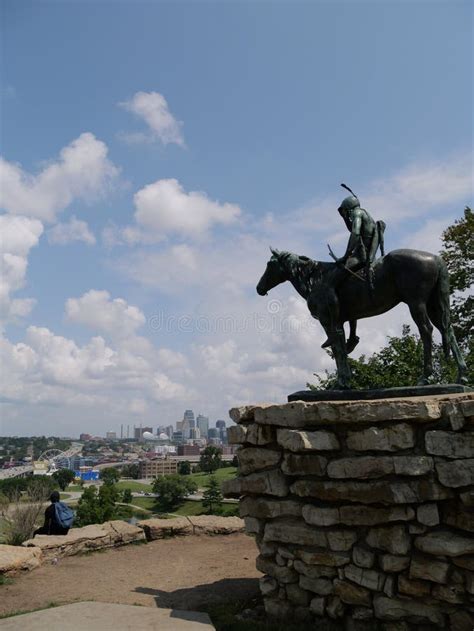
The Scout statue in Kansas City’s Penn Valley Park. Photo by Benjamin White via Wiki Commons.
The NHL Expansion of 1974
In 1974, the NHL was in a fierce competition with the World Hockey Association (WHA). To maintain its dominance, the NHL decided to expand by adding two new teams. Franchises were awarded to Kansas City and Washington, D.C., marking the last expansion until the NHL absorbed four WHA teams in 1979.
The Kansas City Scouts were established as part of the league’s 1974 expansion. They began play in 1974 at the newly built Kemper Arena in Kansas City, Missouri. The Scouts shared Kemper Arena with the Kansas City Kings (the Kings were officially the Kansas City-Omaha Kings from 1972 to 1975) of the National Basketball Association (NBA).
This NHL expansion led to the biggest change in the league since 1967-68. The league was split into four divisions named after NHL icons Lester Patrick, Conn Smythe, Jim Norris, and Jack Adams. The league expanded to 18 teams.
Read also: Hockey in Kansas City
Choosing a Name
The owners of the new Kansas City franchise[5] originally wanted to call their team the "Kansas City Mohawks", since the Kansas City metropolitan area includes portions of Missouri and Kansas. The name would have combined Missouri's postal abbreviation (MO) and the Kansas nickname of "Jayhawkers". The Chicago Black Hawks, however, objected, citing the obvious similarity to their nickname.
A name-the-team contest produced “Scouts,” inspired by a local statue that overlooks downtown from its location in Penn Valley Park. The statue, dedicated in 1922, honors the area’s Native American tribes. The iconic statue was featured on the team's logo.
Hitting the Ice: The Inaugural Season
After two years of planning, the Scouts played their first game on October 9, 1974, against the Toronto Maple Leafs. The contest was part of an eight-game road trip scheduled, in part, due to construction delays at Kemper Arena. The Scouts lost 6-2 to the Leafs and dropped the next four games before managing a 4-4 tie against the California Golden Seals, followed by two more losses.
On November 2, 1974, the Scouts finally played their home opener in Kemper Arena against the Chicago Black Hawks in front of 14,758 fans. The home side fell 4-3. The team finally notched its first win the next night in Washington, D.C., beating the Capitals, the league’s other expansion team, 5-4.
The Scouts finished their first season with a record of 15-54-11, good for last in the Smythe Division. Only the Capitals fared worse, finishing 8-67-5.
Read also: Convenient Ski Services in Park City
The 1975-76 Season and Subsequent Relocation
After a promising start to the 1975-76 season, the ice gave way. A second-half slump erased any hope of a post-season appearance, and the Scouts finished with an even worse record than the one they had posted in their first season, 12-56-12. They did manage one more win than the Capitals, but the future for the Scouts was much bleaker than that of the team in D.C.
As the season dwindled away, the team was rumored to be moving. Due to poor teams, management, and attendance, the Scouts fled to Denver. They became the Colorado Rockies and played under that moniker until 1982.
On July 26, 1976, the Scouts were sold to Denver-based oilman Jack A. Vickers. They were renamed the Colorado Rockies.
After just two seasons in Kansas City, the club became the Colorado Rockies. For the 2022-23 season, the New Jersey Devils unveiled a new Scouts-themed "Reverse Retro" jersey. The white sweater had red, yellow and blue piping, similar to the uniforms worn in Kansas City, albeit the Scouts logo was replaced with the Devils logo.
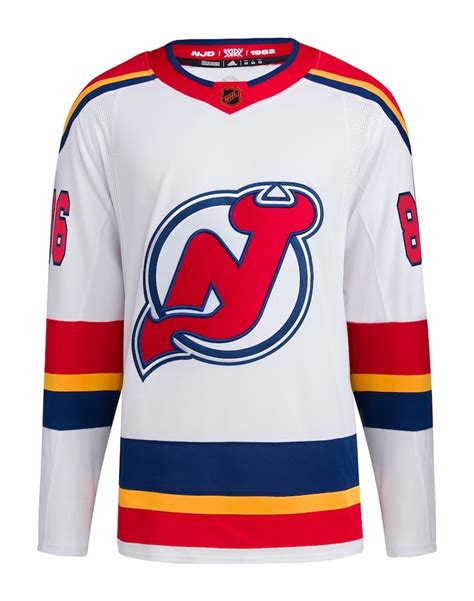
New Jersey Devils Reverse Retro jersey
Read also: Granite City Lumberjacks: A Legacy of Hockey
It was the first time since 1934-35 a franchise changed towns. The movement signaled a change in the league’s demographic and need for stronger ownership. Another NHL franchise moved that year, the California Seals moved to Cleveland and became the Barons.
The Rockies didn’t have much luck in the Mile High City. The franchise changed hands and moved East, becoming the New Jersey Devils.
Financial and Competitive Challenges
The Scouts suffered from inflated player costs, undercapitalized ownership, an economic downturn in the Midwest, poor performances on the ice and weak attendance. The Scouts averaged just 8,218 per game during their two years in the 17,000-seat Kemper Arena (at a time when the league average was approximately 13,000).
The team's group of 37 owners, buried in debt, mounted a season-ticket drive to raise more revenue. The Scouts were put up for sale with a Denver-based group led by oilman Jack A. Vickers looking to buy the club.
Key Players of the Kansas City Scouts
Despite their struggles, the Scouts showcased several talented players. Here are some of the most notable:
- Wilf Paiement: With 47 goals and 222 penalty minutes in a Scouts uniform, Paiement holds the team records in both categories.
- Guy Charron: Charron is the Scouts' all-time leader in assists (73) and points (113).
- Denis Herron: Herron led the NHL in shots faced and saves made during the 1975-76 season.
- Simon Nolet: Nolet, the team's inaugural captain, led the team in scoring during the 1974-75 season.
- Gary Bergman: Bergman led all Scouts defenders in scoring during the 1975-76 season.
Here is a table summarizing the top performers in the history of the Kansas City Scouts:
| Player | Key Achievement |
|---|---|
| Wilf Paiement | Team record for goals (47) and penalty minutes (222) |
| Guy Charron | All-time leader in assists (73) and points (113) |
| Denis Herron | Led NHL in shots faced and saves (1975-76) |
| Simon Nolet | Inaugural team captain, led team in scoring (1974-75) |
| Gary Bergman | Led Scouts defenders in scoring (1975-76) |
Legacy of the Scouts
Despite their challenges, the Kansas City Scouts hockey team helped pave the way for NHL growth in non-traditional markets. Although the Kansas City Scouts hockey team never reached the playoffs, their brief time in Kansas City built a foundation for future hockey ventures in the region.
The Kansas City Scouts history reflects one of the shortest yet most memorable chapters in the NHL.