Ice hockey tournaments have been a part of the Olympic Games since 1920. The men's tournament was first introduced at the 1920 Summer Olympics in Antwerp, Belgium, and it transitioned permanently to the Winter Olympic Games program in 1924, held in Chamonix, France.
The International Ice Hockey Federation (IIHF), the sport's governing body, was created on 15 May 1908, and was known as the Ligue Internationale de Hockey sur Glace (LIHG) until 1947. Several occurrences led to the sport's inclusion in the programme. Five European nations had committed to participating in the tournament and the managers of Antwerp's Palais de Glace stadium refused to allow the building to be used for figure skating unless ice hockey was included.
The first Winter Olympic Games were held in 1924 in Chamonix, France. Ice hockey and figure skating were permanently integrated into the Winter Olympics programme. The IOC made the Winter Games a permanent fixture, and they were held in the same year as the Summer Games until 1992. Following that, further Winter Games have been held on the third year.
Let's delve into the history, evolution, and key moments of this exciting Olympic sport.
Early Years: Amateurism and Canadian Dominance (1920-1952)
The Olympic Games were originally intended for amateur athletes. However, the advent of the state-sponsored "full-time amateur athlete" of the Eastern Bloc countries further eroded the ideology of the pure amateur, as it put the self-financed amateurs of the Western countries at a disadvantage.
Read also: Features of Custom Hockey Gloves
In the men's tournament, Canada was the most successful team of the first three decades, winning six of seven gold medals from 1920 to 1952. Czechoslovakia, Sweden, and the United States were also competitive during this period and won multiple medals.
The first Olympic ice hockey tournament took place at the 1920 Summer Olympics in Antwerp, Belgium. At the time, organized international ice hockey was still relatively new. At the 1914 Olympic Congress in Paris, ice hockey was added to the list of optional sports that Olympics organizers could include. The decision to include ice hockey for the 1920 Summer Olympics was made in January, three months before the start of the Games.
The IIHF considers the 1920 tournament to be the first Ice Hockey World Championship. Between 1920 and 1968, the Olympic hockey tournament was also counted as the Ice Hockey World Championship for that year.
The men's tournament held at the 1920 Summer Olympics was organized by a committee that included future LIHG president Paul Loicq. The tournament used the Bergvall System, in which three rounds were played. The first round was an elimination tournament that determined the gold medal winner. The second round consisted of the teams that were defeated by the gold medal winner; the winner of that round was awarded the silver medal.
The tournament was played from 23 to 29 April and seven teams participated: Canada, Czechoslovakia, the United States, Switzerland, Sweden, France and Belgium. Canada chose to send the Allan Cup-winning Winnipeg Falcons. The Swedish team consisted of mostly bandy players, many of whom had only started playing hockey in preparation for the tournament.
Read also: The story of Craig Needham
Canada won all three of the team's games in the first round and won the gold medal, defeating Sweden in the final and outscoring opponents 27-1. In the two subsequent rounds, the United States and Czechoslovakia won the silver and bronze medals respectively. The Bergvall System was criticized, especially in Sweden, because the Swedish team had to play six games (winning three) while the bronze medal-winning Czech team only had to play three (winning one).
In 1924, the tournament was played in a round-robin format, consisting of a preliminary round and a medal round. The medals were awarded based on win-loss records during the medal round. This format was used until 1988, although the number of teams and games played varied slightly.
The Toronto Granites, representing Canada, became one of the dominant hockey teams in Olympic history, outscoring opponents 110-3, led by Harry Watson, who scored 36 goals. The United States won silver and Great Britain won bronze. Watson's 36 goals remains the tournament record for career goals.
Eleven teams participated in the 1928 Winter Olympics in St. Moritz, Switzerland.
Two days before the 1936 Winter Olympics in Garmisch-Partenkirchen, Germany, Canadian officials protested that two players on the British team-James Foster and Alex Archer-had played in Canada but transferred without permission to play for clubs in the English National League. The IIHF agreed with Canada, but Great Britain threatened to withdraw the team if the two were barred from competing. To avoid a conflict, Canada withdrew the protest shortly before the Games began. The tournament consisted of four groups and fifteen teams.
Read also: Inside Aaron Ness's Career
The Canadian Amateur Hockey Association (CAHA) revised its definition of amateur and broke away from the Amateur Athletic Union of Canada in 1936, despite the possibility that its players may no longer be eligible for Olympic hockey. Tommy Lockhart founded the Amateur Hockey Association of the United States (AHAUS) in 1937, after disagreements with the Amateur Athletic Union of the United States over international amateurs.
The CAHA and the AHAUS joined to form the International Ice Hockey Association in 1940. Its president W. G. Hardy sought for acceptance by the IOC on terms acceptable to the CAHA. CAHA president George Dudley subsequently threatened to withdraw Canada from the Olympics over the definition of amateur.
Discussions began in 1950, whether or not ice hockey would be included in the 1952 Winter Olympics hosted in Oslo. The IOC sought assurance that participating teams would adhere to its amateur code rather than what was accepted by the IIHF, and also wanted to exclude IIHF president Fritz Kraatz from negotiations. George Dudley and W. G. Hardy agreed there would be no negotiations on those terms, nor would they repudiate Kraatz. Dudley referred to the IOC as dictatorial and undemocratic, and expected the IIHF to discuss having its own 1952 Ice Hockey World Championships instead. He further stated that the Olympics would be a financial failure without the inclusion of hockey.
Hockey was ultimately included in the Olympics, and the gold medal was won by Canada's team for the second consecutive Games. It would be the last time that a Canadian team would win a gold medal in hockey for 50 years. The United States won silver and Sweden won bronze.
The Soviet Era and the "Miracle on Ice" (1956-1988)
The Soviet Union first participated in 1956 and overtook Canada as the dominant international team, winning seven of the nine tournaments in which they participated. The United States won gold medals in 1960 and 1980, which included the "Miracle on Ice" upset of the Soviet Union.
The Soviet Union competed in its first World Championship in 1954, defeating Canada and winning the gold medal. At the 1956 Winter Olympics in Cortina d'Ampezzo, Italy, the Soviet team went undefeated and won its first gold medal. Canada's team lost to the Soviets and the United States in the medal round, winning the bronze.
The 1960 Winter Olympics, in Squaw Valley, United States, saw the first, and to date only, team from Australia compete in the tournament. Canada, the Soviet Union, Czechoslovakia and Sweden were the top four teams heading into the Games, but were all defeated by the American team, which won all seven games en route to its first Olympic gold medal.
At the 1964 Winter Olympics in Innsbruck, Austria, the Soviet team won all seven of its games, earning the gold medal. Canada finished the tournament with five wins and two losses, putting the team in a three-way tie for second place with Sweden and Czechoslovakia. Before 1964, the tie-breaking procedure was based on goal difference in games against teams in the medal round; under that system, Canada would have placed third ahead of the Czechoslovakian team.
The Soviet Union won its third gold medal with a 7-1 record in the 1968 Grenoble Olympics. Czechoslovakia and Canada won the silver and bronze medals. It was the last time that the Olympics were counted as the World Championships.
In 1970, Canada withdrew from international ice hockey competition protesting the use of full-time "amateurs" by the Soviet Union and Czechoslovakia, and the team did not participate in the 1972 and 1976 Winter Olympics.
Led by goaltender Vladislav Tretiak and forwards Valeri Kharlamov, Alexander Yakushev, Vladimir Petrov and Boris Mikhailov, the Soviet team won gold at both the 1972 Games in Sapporo, Japan and 1976 Winter Olympics in Innsbruck, Austria.
In 1971, the United States finished last at the World Championships and was relegated to Pool B. The Winter Olympics returned to Lake Placid, New York in 1980. Twelve teams participated in the tournament, including Canada for the first time since 1968. The Soviet Union had won the gold medal in five of the six previous Winter Olympic Games, and were the favorites to win once more in Lake Placid. The team consisted of full-time players with significant experience in international play.

For the first game in the medal round, the United States played the Soviets. The first period finished tied at 2-2, and the Soviets led 3-2 following the second. team scored two more goals to take their first lead during the third and final period, winning the game 4-3. went on to clinch the gold medal by beating Finland in the final.
Equally well-known was the television call of the final seconds of the game by Al Michaels for ABC, in which he declared: "Do you believe in miracles?! Yes!".
At the 1984 Winter Olympics in Sarajevo, Yugoslavia, the Soviet Union won its sixth gold medal. Czechoslovakia and Sweden won the silver and bronze medals.
The 1988 Winter Olympics were held in Calgary, Alberta, Canada, where the Soviet team captured its seventh and final gold medal. The Soviets' last Olympic game was a loss to Finland. The Finnish team was not considered a serious medal contender-it had competed in the World Championships since 1939 and had not won a single medal. However, Finland upset the Soviets 2-1 and won silver.
The Introduction of Playoffs and NHL Players (1992-Present)
The IIHF decided to change the tournament format because in several cases, the gold medal winner had been decided before the final day of play. During a congress in 1990, the IIHF introduced a playoff system. The new system was used at the 1992 Winter Olympics in Albertville, France.
Before 1989, players who lived in the Soviet Union, Czechoslovakia, and other nations behind the Iron Curtain were not allowed to leave and play in the NHL. Soviet officials agreed to allow players to leave following the 1989 World Championships.
The Soviet Union dissolved in December 1991. Czechoslovakia split into the Czech Republic and Slovakia in January 1993. The IIHF recognized the Czech Republic as the successor to Czechoslovakia, allowing the team to retain its position in the top World Championship division, while Slovakia started in the lowest division (Pool C) in 1994 and was forced to work its way up.
Both nations competed in the tournament at the 1994 Winter Olympics, as did Russia. Slovakia and Finland both finished the preliminary round undefeated. Slovakia lost their medal round quarter-final game to Russia 2-3 OT, who later lost to Sweden 3-4 in the semi-final and Finland (who was defeated by Canada in another semi-final) 0-4 in the bronze medal game. In the gold medal game between Sweden and Canada, both teams finished regulation and overtime play with a 2-2 tie. In the resulting shootout, the first in Olympic competition, both nations scored two goals, which resulted in a sudden death shootout.
In 1995, an agreement to allow NHL players to participate in Olympics was reached between the IOC, IIHF, NHL, and National Hockey League Players' Association (NHLPA). The format of the 1998 tournament was adjusted to accommodate the NHL's schedule.
The next tournament format was hosted in Salt Lake City, United States. The tournament format was adjusted for 2006. In the semi-finals, Sweden defeated the Czech Republic 7-3, and Finland beat Russia 4-0. Sweden won the gold medal defeating Finland 3-2 and the Czech Republic won the bronze medal. Three months later, Sweden won the 2006 World Championships and became the first team to win the Olympic and World Championship gold in the same year.
Allegations have surfaced of Sweden throwing a game against Slovakia so the Swedes would face Switzerland in the quarterfinals instead of Canada or the Czech Republic.
The 2010 Winter Olympics were held in Vancouver, British Columbia, Canada. After a victory against Germany, Canada was matched in the quarterfinals against Russia, who boasted an incredible forward quartet of Alex Ovechkin, Evgeni Malkin, Ilya Kovalchuk and Pavel Datsyuk. Unlike in 2006 when the Russians kept Canada off the score sheet and eliminated them in the quarterfinals, the Canadians exploded with four goals in the first period en route to a 7-3 final.
In their semifinal game, Canada faced an impressive Slovakian club that had earlier beaten the Russians and eliminated Sweden, the defending Olympic champions. The gold-medal final was a revisit to 2002. It was Canadian centre Jonathan Toews who opened the scoring halfway through the first period. Corey Perry extended Canada's lead to two in the second before US forward Ryan Kessler deflected a shot past Luongo to make it a one-goal game.
Overtime would be 20 minutes of four-on-four hockey with a shootout to follow if needed. Rather than playing it safe after the emotional goal against, the Canadian coaching staff elected to press for the win. After the game, Miller was named the tournament's top player. The biggest surprise on Canada was the play of their two youngest players, 21 year-old Jonathan Toews and defenseman Drew Doughty who turned 20 just two months prior to the Games. Toews led Canada in nearly every category including assists (7), points (8), plus/minus (+9) and faceoff percentage (64.76) .
NHL players were not available for the ice hockey tournament at the 2018 or 2022 Winter Olympics. In 2022, it was because of COVID-19 pandemic's disruption to the regular NHL season. NHL players will be competing for the first time since 2014 at the 2026 Milano Cortina Winter Olympics.
Women's Ice Hockey at the Olympics
In July 1992, the IOC voted to approve women's hockey as an Olympic event; it was first held at the 1998 Winter Olympics in Nagano. The Nagano Organizing Committee was hesitant to include the event because of the additional costs of staging the tournament, but an agreement was reached that limited the field to six teams, and ensured that no additional facilities would be built.
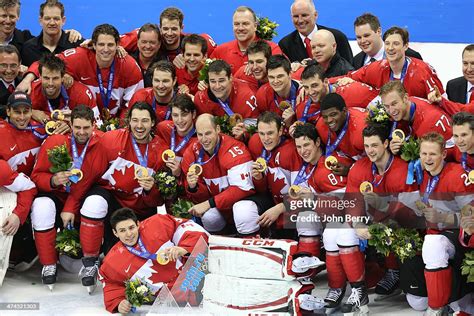
The Canadian teams have dominated the event. The United States won the first tournament in 1998 and another in 2018.
Key Moments and Interesting Facts
- 1920 Antwerp: Ice hockey made its Olympic debut at the Summer Games, played with seven to a side and games consisting of two 20-minute periods.
- 1924 Chamonix: Canada displayed extraordinary superiority, outscoring opponents 110-3 en route to the gold medal.
- 1936 Garmisch-Partenkirchen: Great Britain's first-place finish marked the first time Canada did not take home the ice hockey gold medal.
- 1960 Squaw Valley: The American team won all seven games en route to its first Olympic gold medal.
- 1980 Lake Placid: The "Miracle on Ice" saw the underdog USA team defeat the heavily favored Soviet Union team in a stunning upset.
1980 Winter Olympics | USA Vs USSR Hockey | “The Miracle On Ice” | Highlights
Top Medalists
In women's hockey, Hayley Wickenheiser is one of two athletes to win five medals - four gold and one silver. In men's hockey, Vladislav Tretiak (three gold, one silver) and Igor Kravchuk (two gold, one silver, one bronze) are among the top medalists.
Eight male athletes have won four medals: Russians Vladislav Tretiak (three gold, one silver) and Igor Kravchuk (two gold, one silver, one bronze), Czech Jiří Holík (two silver, two bronze) and five players from Finland, each with one silver and three bronze: Teemu Selänne, Kimmo Timonen, Saku Koivu, Jere Lehtinen and Ville Peltonen. In women's hockey, Canadians Jayna Hefford and Hayley Wickenheiser hold the record for total medals (five), having won four gold and one silver. Their teammate Caroline Ouellette also won four gold medals.
Future of Olympic Ice Hockey
NHL players will be competing at the 2026 Milano Cortina Winter Olympics for the first time since 2014. The men's tournament at the 2026 Milano Cortina will take place from 11 to 22 February 2026. Each team released a preliminary team roster on 16th of June 2025. The complete rosters for each team will be released in 2026.
The 2026 Milano Cortina Winter Olympics will feature 12 men's teams competing for the gold medal, divided into three groups of four teams each.
Olympic ice hockey features international rules which differ slightly from NHL rules, including larger ice surfaces in European venues and different penalty structures.
Medal Table (Men's Tournament)
Here's a table summarizing the medal count for the men's ice hockey tournament:
| Nation | Gold | Silver | Bronze | Total |
|---|---|---|---|---|
| Canada | 9 | 4 | 3 | 16 |
| Soviet Union | 7 | 1 | 1 | 9 |
| United States | 2 | 8 | 1 | 11 |
| Sweden | 2 | 3 | 5 | 10 |
| Great Britain | 1 | 0 | 0 | 1 |
| Unified Team | 1 | 0 | 0 | 1 |
| Czech Republic | 1 | 0 | 1 | 2 |
| Russia (as OAR) | 1 | 0 | 0 | 1 |
| Finland | 1 | 2 | 3 | 6 |
| Czechoslovakia | 0 | 4 | 4 | 8 |
| Bohemia | 0 | 0 | 1 | 1 |
| Germany | 0 | 0 | 1 | 1 |
| Switzerland | 0 | 0 | 1 | 1 |
| Slovakia | 0 | 0 | 1 | 1 |