The Ice Hockey World Championships represent the pinnacle of international ice hockey, an annual tournament organized by the International Ice Hockey Federation (IIHF). Officially inaugurated at the 1920 Summer Olympics, it stands as the sport's most prominent annual international event.
IIHF Logo
The IIHF's origins trace back to 1908, while the European Championships, the precursor to the World Championships, were first contested in 1910. The tournament held at the 1920 Summer Olympics is recognized as the first Ice Hockey World Championship. Between 1920 and 1968, the Olympic hockey tournament was also considered the World Championship for that year.
The first World Championship that was held as an individual event was in 1930 in which 12 nations participated. In 1931, ten teams played a series of round-robin format qualifying rounds to determine which nations participated in the medal round. Medals were awarded based on the final standings of the teams in the medal round. This basic format would be used until 1992 (although small variations were made).
In 1951, 13 nations took part and were split into two groups. The top seven teams (Pool A) played for the World Championship. The other six (Pool B) played for ranking purposes. During a congress in 1990, the IIHF introduced a playoff system. The modern format for the World Championship features 16 teams in the championship group, 12 teams in Division I and 12 teams in Division II. If there are more than 52 teams, the rest compete in Division IV. The teams in the championship play a preliminary round, then the top eight teams play in the playoff medal round and the winning team is crowned World Champion.
Read also: Ski Season in Switzerland
Over the years, the tournament has gone through several rule changes. In 1969 body-checking in all three zones in a rink was allowed, helmets and goaltender masks became mandatory in the early 1970s and in 1992 the IIHF began using the shootout. The current IIHF rules differ slightly from the rules used in the NHL.
From the 1920 Olympics until the 1976 World Championships, only athletes designated as "amateur" were allowed to compete in the tournament. Because of this, players from the National Hockey League (NHL) and its senior minor-league teams were not allowed to compete, while the Soviet Union was allowed to use permanent full-time players who were positioned as regular workers of an aircraft industry or tractor industry employer that sponsored what would be presented as an after-hours amateur social sports society team for their workers.
Switzerland's Early Competitiveness
Canada was the tournament's first dominant team, winning the tournament 12 times from 1930 to 1952. The United States, Czechoslovakia, Sweden, Great Britain and Switzerland were also competitive during this period.
The Soviet Union first participated in 1954 and soon became rivals with Canada. From 1963 until the nation's breakup in 1991, the Soviet Union was the dominant team, winning 20 championships out of 26. During that period, only three other nations won medals: Canada, Czechoslovakia and Sweden.
Rule Changes and Evolution
Over the years, the tournament has gone through several rule changes. In 1969 body-checking in all three zones in a rink was allowed, helmets and goaltender masks became mandatory in the early 1970s and in 1992 the IIHF began using the shootout. The current IIHF rules differ slightly from the rules used in the NHL.
Read also: Features of Custom Hockey Gloves
Switzerland as Host Nation
The 74th World Championship was held in Zurich and Lausanne, Switzerland.
Switzerland has hosted the Ice Hockey World Championships multiple times:
- 1928 St. Moritz
- 1939 Zürich and Basel
- 1948 St. Moritz
- 1998 Zürich and Basel
- 2009 Bern and Kloten
- 2020 Lausanne and Zürich (cancelled)
The Swiss National Championship was first contested in 1909, and continued until 1937, when it was replaced by the Nationalliga A. Between 1916 and 1933, alongside the Swiss National Championship, the Swiss International Championship was contested.
Since the 1937-38 season, the Nationalliga A, now called the National League A, is established as the highest level league in Switzerland. The women's national championship has been contested annually since 1987. The league is known as the Leistungsklasse A.
Notable Swiss Figures
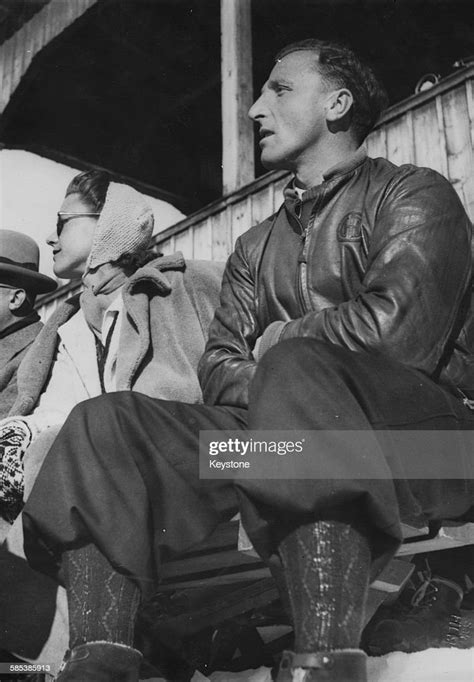
Bibi Torriani served as the Switzerland national team captain from 1933 to 1939. He played on a forward line known as "The ni-storm" (German: Der ni-sturm), with brothers Hans Cattini and Ferdinand Cattini. The line was named for the last syllable (-ni) of players' surnames.
Read also: The story of Craig Needham
Bibi Torriani
Historic Upsets and Moments
Before the 2013 IIHF World Championship, the Swiss national hockey team scored two historic upsets at the 2006 Winter Olympics in Turin, defeating the Czech Republic 3-2 and shutting out Canada 2-0 two days later. They finally fell to Sweden in the quarterfinals.
Switzerland's journey through the Ice Hockey World Championships is marked by periods of competitiveness, hosting prestigious tournaments, and achieving memorable upsets. Their contribution to the sport continues to evolve, with ongoing participation and development at both national and league levels.
Swiss National Championship Winners (Selection):
| Year | Champion |
|---|---|
| 1922 | EHC St. Moritz |
| 1923 | EHC St. Moritz |
| 1928 | EHC St. Moritz |
| 2000 | HC Lugano |
| 2001 | ZSC Lions |
USA vs SWITZERLAND HIGHLIGHTS | 2026 World Juniors
tags: #switzerland #hockey #world #championship