Icing is a fundamental rule in ice hockey, crucial for maintaining the flow and fairness of the game. Despite its simplicity, the rule can be somewhat confusing for newcomers or even seasoned fans who might not be familiar with its nuances. Let's define icing in hockey and explain it in more detail.
In essence, icing occurs when a player shoots the puck across both the center red line and the opposing team's goal line without the puck being touched by another player, leading to a stoppage in play. When these conditions are met, a linesman calls icing and orders a stoppage of play. The team that iced the puck is mildly penalized by having to take a faceoff in their own defensive zone.
Even when these conditions are met, icing is occasionally not called, leading to it being considered one of the most confusing rules in hockey. The concept of icing in hockey is both straightforward and complex, influencing the game's flow, strategy, and safety. By understanding its intricacies, fans and players alike can appreciate the sport's depth and the tactical decisions that make hockey so compelling.
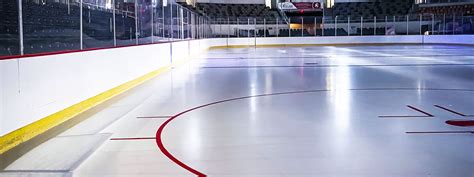
Image of an ice hockey rink, highlighting the center red line and goal lines.
The Basics of Icing
Definition
Icing is called when the puck is propelled from behind the center red line past the opposing team's goal line. This rule prevents teams from simply clearing the puck the length of the ice to relieve pressure, promoting more strategic play.
Read also: Short-handed goals: A deep dive
Exceptions
Certain situations exempt a play from being called for icing:
- Penalty Killing: When a team is shorthanded due to a penalty, they are allowed to ice the puck without being penalized.
- Touched Puck: If the puck touches any player, including the goaltender, before crossing the goal line.
- Goaltender Involvement: If a goaltender leaves the crease and touches the puck, icing is negated, leading some to mistakenly believe goaltenders can always prevent icing calls.
- Faceoff Wins: If a team wins a faceoff and the puck is immediately sent down the ice, it is not considered icing.
Icing is also allowed when the puck is iced by a shorthanded team, which is when one of their players is in the penalty box.
Types of Icing
The icing rule has three variations: touch icing, no-touch (also called automatic icing,) and hybrid icing.
- Touch Icing: In "touch icing," the play is stopped only if a defending player reaches the puck first after it crosses the goal line. This type of icing can lead to high-speed chases and potential collisions, posing a risk of injury. Touch icing requires an opposing player other than the goalie to make contact with the puck to trigger a stoppage of play. If a player from the team that iced the puck touches the puck first, play continues.
- No-Touch Icing: "No-touch icing" automatically stops the play as soon as the puck crosses the goal line. This reduces the risk of dangerous collisions but can sometimes halt the game prematurely. No-touch icing, also known as automatic icing, does not require any player to touch the puck. Once it crosses the goal line, icing is called and play stops.
- Hybrid Icing: "Hybrid icing" is a blend of the previous two types. The linesman makes a judgment call based on which player would reach the puck first. If it appears a defending player will win the race, icing is called; if the attacking player is likely to reach it first, play continues. With hybrid icing, an opposing team’s player must reach the faceoff dot first instead of past the goal line for hybrid icing to be called. Sometimes the puck passes the goal line and comes around the other end before the players reach the faceoff dot. The linesman calls icing if it’s touched by a defender.
Currently, most leagues (IIHF, National Hockey League, American Hockey League, Kontinental Hockey League, NCAA college hockey, European professional leagues, and several minor North American leagues ECHL, Central Hockey League and SPHL) use hybrid icing.
Hybrid icing explained - it’s a race to where?
Historical Evolution
The icing rule has evolved over time to balance safety and gameplay:
Read also: Features of Custom Hockey Gloves
- 1937: The NHL introduced icing to prevent teams from endlessly sending the puck down the ice.
- 1951: The rule was modified to allow penalty-killing teams to ice the puck.
- 2013: The NHL adopted hybrid icing to reduce injuries while maintaining the competitive aspect of the game.
The National Hockey League (NHL) introduced the icing rule in September 1937 to eliminate a common delaying tactic used by teams to protect a winning margin. The rule was amended in June 1951 to state the icing infraction was nullified if the goaltender touched the puck. After some teams in need of a line change (player substitution) began deliberately icing the puck to stop play, and as part of a group of important rule changes following the 2004-05 NHL lockout, the NHL supplemented the icing rule prior to the 2005-06 season by not allowing the offending team to substitute players before the next faceoff, except to replace an injured player, when the goaltender must return to the net following an icing call. Starting with the 2017-18 NHL season, offending teams are not allowed to take a timeout after an icing.
Impact on Game Strategy
Icing significantly influences how teams approach both offense and defense:
- Defensive Strategy: Teams under pressure in their defensive zone might consider icing the puck to reset the play, but they risk a faceoff in their own zone.
- Offensive Strategy: Coaches may instruct players to avoid icing, especially in close games, to maintain offensive pressure and prevent stoppages.
Icing often happens when the opposing team is under pressure from attack and wants to simply dump the puck out of their zone. Teams used icing to protect a lead or run the clock out to head into overtime/shootout.
Consequences of Icing
When icing is called, several consequences follow:
- Faceoff Location: The ensuing faceoff occurs in the offending team's defensive zone, often leading to scoring chances for the opponent. The linesman will stop the play for an icing penalty. The result is a faceoff in the defensive zone (the opposing team’s offensive zone).
- Line Change Restrictions: The offending team is not allowed to make a line change, forcing tired players to remain on the ice. The icing team cannot change their players, which can be a significant advantage to the offensive side, who can make a line change.
The offensive team has a better opportunity to score and take advantage of the faceoff, while the defensive team can lose momentum and defensive shape. If repeated icings continue, a team may be penalized for delay of game.
Read also: The story of Craig Needham
Rules and Enforcement
Linesmen's Role
Linesmen are responsible for calling icing infractions. They must quickly judge the puck's trajectory, player positions, and whether any exceptions apply. While an icing call is pending, the linesman raises an arm to indicate that a potential icing call may be made. When icing occurs, a linesman stops play.
Video Review
In some leagues, video review can be used to verify icing calls, ensuring accuracy and fairness, though it is less common compared to other reviewable plays like goals or offside.
Common Misconceptions
Several misconceptions about icing persist among fans:
- Icing and Offside: Icing is often confused with offside, but the two rules govern different aspects of play. Offside occurs when an attacking player enters the offensive zone before the puck.
- Automatic Penalty: Icing is not a penalty but a violation that results in a faceoff and line change restrictions. No. Though icing is an infraction of the rules of ice hockey, it is not technically considered a penalty in the way that actions like slashing, tripping and boarding are.
- Goaltender Involvement: If a goaltender leaves the crease and touches the puck, icing is negated, leading some to mistakenly believe goaltenders can always prevent icing calls.
Icing in International Play
International hockey, governed by the International Ice Hockey Federation (IIHF), has its own nuances regarding icing:
- Automatic Icing: Most international leagues use automatic icing, stopping play immediately when the puck crosses the goal line.
- Hybrid Icing Adoption: Some international tournaments have adopted hybrid icing to align more closely with NHL rules.
Here is a table summarizing the different types of icing and their characteristics:
| Type of Icing | Description | Risk of Collisions | Leagues Commonly Used |
|---|---|---|---|
| Touch Icing | Play stops when a defending player touches the puck first. | High | Fewer leagues today |
| No-Touch Icing (Automatic) | Play stops automatically when the puck crosses the goal line. | Low | Most amateur leagues |
| Hybrid Icing | Linesman judges which player would reach the puck first. | Medium | NHL, AHL, IIHF (some tournaments) |
Training and Coaching Perspectives
Coaches at all levels teach players to understand and avoid icing:
- Youth Hockey: Young players learn the importance of puck control and strategic dumping to minimize icing calls.
- Professional Levels: Advanced strategies include using bank passes off the boards and precise dump-ins to avoid icing while maintaining offensive pressure.
Don’t ice your chances of catching your favorite team’s next matchup. Icing in hockey is an essential rule of the game that a player must understand as it has many different types and factors.