The base of a snowboard is a crucial component that significantly impacts its performance on the snow. It's typically made of a type of plastic called polyethylene, but the way this material is processed can greatly affect the base's properties. Let's delve into the different types of snowboard bases available.
Extruded Base
A snowboard with an extruded base is manufactured from melted polyethylene, which is then formed into a sheet. This sheet is cut into the desired shape and glued to the bottom of the snowboard. Since this production method is more cost-effective, snowboards with extruded bases are generally less expensive compared to their sintered counterparts. You'll often find extruded bases in snowboards designed for beginners to intermediate riders.
Advantages of Extruded Bases:
- Easy Maintenance: Requires less maintenance compared to a sintered base.
- Durability: Generally more durable and resistant to scratches and damage.
- Cost-Effective: Snowboards with extruded bases are often more affordable.
Disadvantages of Extruded Bases:
- Less Glide Performance: Generally have less glide ability compared to sintered bases.
- Less Responsiveness: Offer less responsiveness than sintered bases.
- Harder to Wax: Can be more difficult to wax, although they require less frequent waxing.
- Limited Performance in Powder Snow: Have more friction, which can result in less floatation in deep powder snow.
Despite these disadvantages, snowboards with extruded bases remain a suitable option for many snowboarders, especially those who are just starting out or prefer a more durable and low-maintenance board.
How to Choose the Right Snowboard with Mark Sollors | Burton: Take It From A Pro
Sintered Base
Higher-end sintered formulations utilize a slightly different resin and a more advanced process, resulting in a higher molecular weight. This increased molecular weight enhances durability and improves porosity, allowing for better wax absorption. Some formulations even incorporate additives like Gallium and Carbon to further enhance hydrophobic properties and reduce static and friction on the snow.
At Action Sports/SnowboardMaterials.com, you can find a variety of sintered base materials from top suppliers such as Isosport and Crown Plastics. These materials are available by the meter, allowing you to customize your snowboard project.
Read also: Is the Gnu Antigravity Snowboard Worth It?
Available Sintered Base Materials:
- Black Sintered base 4000 grade - 325mm wide, 1.4mm thick, sanded one side
- Red Sintered base - 340mm wide, 1.4mm thick, Pantone 186c (red) sanded one side
- Gray Sintered base - 4000 grade - 333mm wide, 1.4mm thick, Pantone 430 gray sanded one side
- Bright yellow sintered base - 4000 grade - 333mm wide, 1.4mm thick, Light Blue, sanded one side
- Light Blue Sintered base - 4000 grade - 333mm wide, 1.4mm thick, Light Blue, sanded one side
HD and 4400 grade materials are HMW grades that feature mid to high molecular weight and good wax absorption for excellent hydrophobic properties on the snow.
Other Materials and Construction Techniques
Beyond the base material, other components and construction techniques contribute to a snowboard's overall performance and durability.
Triaxial Fiberglass
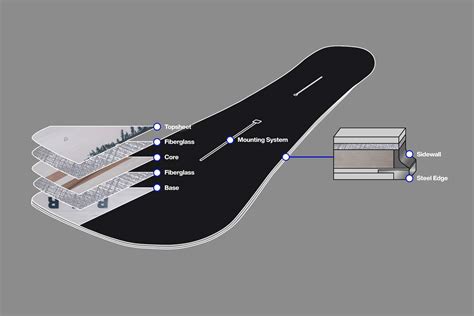
Triaxial fiberglass has fibers running in three different directions. Unlike biaxial glass, triaxial glass enables manufacturers to build more torsional stiffness into boards, which is crucial for edge hold on ice and clean carving.
Metal Constructions
Metal constructions always incorporate 2 layers of full width rubber to aid in durability and provide the silky smooth rider that is associated with metal boards. Some fiberglass race boards incorporate 2 full layers as well to keep the chatter to a minimum.
Die Cut Graphics
Die cut graphics produce a more simple and elegant graphic while improving a board’s durability. Silk screened graphics rely on the ink as a bond layer - this weakened bond layer often results in delamination and sometimes cracking of the ink near the board’s edge.
Read also: Battle Bindings: Performance and Value
Sintered DuraSurf 2001 is one of the most abrasion resistant base materials on the planet. IMS 4000 Elektra is one of the fastest.
Warning Regarding Chemicals
It's important to be aware that some snowboard products may contain chemicals that are known to the State of California to cause cancer or birth defects. Always check product labels and safety information before use.
Here's a summary of the key differences between extruded and sintered snowboard bases:
| Feature | Extruded Base | Sintered Base |
|---|---|---|
| Cost | Lower | Higher |
| Glide Performance | Lower | Higher |
| Durability | Higher | Lower (can be more prone to damage if not maintained) |
| Maintenance | Lower | Higher |
| Wax Absorption | Lower | Higher |
Read also: Renting Snowboards in Whistler Blackcomb: What You Need to Know