Dry ski mats are synthetic training surfaces designed to simulate snow skiing conditions indoors or outdoors without water or refrigeration. Constructed primarily from high-density polyethylene (HDPE) or polyvinyl chloride (PVC), these rolls or tiles create controlled friction environments for practicing turns, edging, and balance.
Unlike wet ski slopes requiring complex cooling systems, dry mats operate at ambient temperatures, making them suitable for garages, basements, driveways, or dedicated training facilities. Typical users include competitive racers maintaining off-season skills, rehabilitation patients rebuilding knee stability, and recreational skiers refining technique before resort trips.
Rising demand stems from three converging trends: increased focus on off-season athletic development, growing accessibility of home fitness solutions, and technological improvements in surface materials. Sports medicine research confirms that consistent neuromuscular training prevents seasonal performance regression, driving athletes toward accessible tools. Simultaneously, post-pandemic consumer behavior shows 68% of winter sports enthusiasts now invest in home training gear compared to 41% pre-2020.
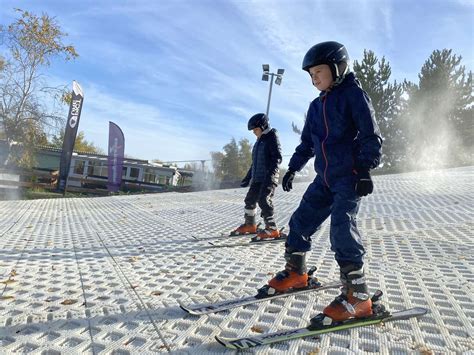
BUILD YOUR DRY SKI SLOPE WITH OUR DRY SKI MATS
Types of Dry Ski Mats
When selecting a dry ski mat, you'll encounter two primary types:
- Roll-Out Mats: Continuous sheets (typically 3-5mm thick, 3-6 ft wide) unrolled on flat surfaces.
- Pros: Seamless surface prevents tripping, easy storage when rolled.
- Cons: Requires perfectly smooth subfloor; edges may curl without anchoring.
- Interlocking Tiles: Modular squares (usually 2x2 ft) with puzzle-piece connectors.
- Pros: Accommodates uneven floors, replace individual damaged tiles.
- Cons: Joints create minor resistance variations; requires precise alignment.
Key Considerations for Choosing a Dry Ski Mat
Selecting the optimal dry ski mat requires matching material properties to your specific training goals and environment.
Read also: Is the Gnu Antigravity Snowboard Worth It?
Surface Texture
- Textured vs. Smooth Surfaces: Textured variants mimic granular snow with micro-grooves (coefficient of friction 0.35-0.45), while smooth versions offer faster glide (0.25-0.35) for advanced speed drills.
Thickness
- Thickness: Minimum 3mm recommended for shock absorption. Below 2.5mm increases joint impact risk during repetitive edging.
Friction Coefficient
- Friction Coefficient: Verify third-party lab reports showing kinetic friction between 0.3-0.4 for alpine skiing simulation. Values below 0.25 feel unnaturally slippery; above 0.45 strains knees.
UV Resistance: For outdoor use, confirm ≥5 years UV stability rating. Unprotected PVC degrades within 12-18 months, becoming brittle and hazardous.
Fire Rating: Essential for indoor installations.
Advantages and Limitations
Dry ski mats offer several benefits, but also have limitations to consider:
Advantages: Enables daily technique refinement regardless of weather; reduces seasonal injury risks through maintained muscle memory; costs 80% less than seasonal access to indoor ski domes.
Limitations: Cannot replicate snow’s variable texture or cold-temperature effects; requires significant floor space (minimum 10x4 ft for basic drills); improper installation causes trip hazards. Not suitable for beginners learning fundamental stance-master snow-based basics first.
Read also: Battle Bindings: Performance and Value
Installation and Safety
Measure available area minus 2 ft for safety margins. Test subfloor flatness with a 6-ft level-deviations >1/8 inch require self-leveling compound.
Validate Safety Certifications Confirm ASTM F1292 (impact attenuation) and EN 1177 compliance.
Check Installation Requirements Avoid products needing permanent adhesives if renting. Opt for double-sided tape systems over nails for easier relocation.
Cost and Maintenance
Entry-level PVC mats start at $1.50/sq ft but rarely last beyond one season. Mid-range HDPE options ($2.75-$3.50/sq ft) represent optimal value for serious users, balancing durability and realistic glide. Premium commercial-grade mats reach $5.00/sq ft with industrial stitching and extended warranties. Expect to pay $300-$600 for a functional 10x4 ft home setup.
Beware of "bargain" imports-the average replacement cost after 6 months due to warping exceeds initial savings by 200%*.
Read also: Renting Snowboards in Whistler Blackcomb: What You Need to Know
*Inconsistent across temperature ranges per user testing.
Maintenance Tips:
- Clean weekly with pH-neutral detergent and soft brush to prevent grit buildup altering friction.
- Rinse thoroughly-residue attracts dirt.
- Store rolled with foam core to prevent permanent creasing.
- Never use abrasive cleaners or power washers.
Safety protocols: Wear ski boots only (no street shoes), maintain 3-ft clearance on all sides, and use fall mats for jump drills. Consult physical therapist before post-injury use-knee strain risks increase with improper progression.
Specific Products and Systems
Proslope: Proslope offers ‘the best of all worlds’. Using tried and tested brush technology, it’s secret lies in its Variable Height Filament. This allows skis or snowboards to glide with less surface contact and therefore less friction build up, thus increasing speed. The Proslope answer is to turn “Dry Slopes” into “Wet Slopes” with their unique integrated Atomising Water Mist System. The misting system is designed to work seamlessly with Proslope matting. The nozzle atomises water into a mist that clings to every filament of the mats.
The Butter-IT Mattress: The Butter-IT Mattress isn’t just another training surface - it’s a purpose-built weapon for snowboarders obsessed with precision, creativity, and progression.
✅ Train All Year, Anywhere - Indoor, outdoor, backyard, carpet. No slope needed. ✅ Feedback Built-In - If your technique is off, it won’t work. ✅ Looks Clean. Feels Clean. This mat is your lab.
While the mat is built to last, it can tear due to incorrect or overly aggressive technique - especially during Drive Spins. 👉 Always perform Drive Spins with controlled power and proper form. Start slow. Focus on accuracy, not force.
Choosing the Right Mat for Your Skill Level
- Beginners: Choose textured HDPE (3.5mm thickness).
- Intermediates: Smooth HDPE for varied drills.
FAQ
Can beginners use dry ski mats effectively?
Yes, but only after mastering basic stance and wedge turns on snow.
How do I prevent dust buildup affecting glide?
Vacuum regularly with brush attachment, then wipe with damp microfiber cloth. Avoid silicone-based sprays-they degrade surfaces.
Do dry ski mats work for snowboarders?
Limited effectiveness.
What’s the minimum ceiling height required?
Allow 8 ft clearance for safe pole use.
MASTER ONE TRICK.
In most countries, no additional taxes or duties apply - however, in some cases, local customs authorities may charge import fees such as VAT or duties. These costs, if applicable, are the responsibility of the buyer.