One of the most underrated and overlooked parts of a snowboarding setup is a good pair of goggles.
The best ski goggles are the ones you don’t notice, like a clear windshield between you and the world. Whether it’s a stormy powder day or a warm spring morning, the last thing you want to be doing is worrying if you picked the right lenses for the conditions or fidgeting with the fit of your goggles on your face.
Fortunately, this review includes options for the casual skier and the 100-day-a-year veteran, across various price points.
Yes, it’s true - good goggles really do make a difference.
Here is a list of our favorites from over the years, with a collection of tried-and-true classics as well as some brand-new innovations.
Read also: Is the Gnu Antigravity Snowboard Worth It?
This article is the result of putting more than 20 pairs of goggles through their paces over the past two winter seasons.
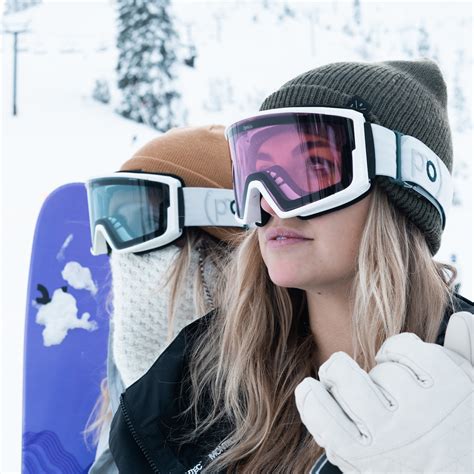
Key Features to Consider
With a dizzying array of new goggles to choose from, we've narrowed it down to the essential characteristics that you should take into account when making your eyewear choice. These include lens quality, ventilation, breathability, comfort, ease of changing lenses, durability, and style.
How important each metric is to you depends on your preferences and the intended use.
Lens Quality and Optical Accuracy
Lens quality and optical accuracy are the most important performance-based aspects for most skiers and riders.
The quality of your goggle lens directly impacts your safety and ability to enjoy riding in marginal lighting conditions. Companies have recognized this as one of the most important aspects of goggles, and they now offer high-quality lenses across many price points.
Read also: Battle Bindings: Performance and Value
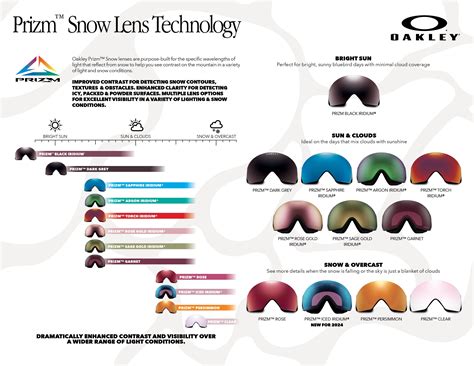
Premium goggles feature proprietary optical enhancement technology to improve the visual experience. These lens technologies are all intended to do roughly the same thing: increase contrast, enhance definition, and generally make you see the world around you more clearly, especially in challenging light conditions.
When it comes to lenses, you generally get what you pay for.
Some lenses even adapt to your current light conditions by adjusting tint for varying environments, whether you're skiing in the midday sun or pre-sunset dusk. These photochromic lenses are convenient, as you rarely have to change the lens.
The Julbo Cyrius and Glade Adapt 2 have wide photochromatic ranges and are offered in many lens types. Both models can be one lens for any condition with the right preliminary lens selection.
Comfort and Fit
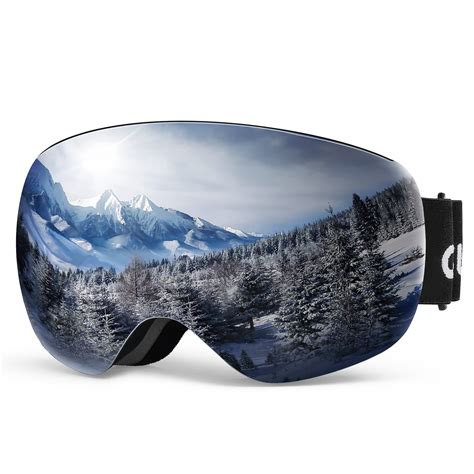
The comfort of your goggles greatly influences the quality of your day, they can either seamlessly blend into your experience or contribute to headaches. Several factors come into play here: goggle shape and size in relation to the wearer's facial size, structure, and nose shape.
Read also: Renting Snowboards in Whistler Blackcomb: What You Need to Know
A goggle's frame material and flexibility, padding material, and strap comfort are also important considerations when making your goggle selection.
In terms of frame size, if you have a larger or rounder face, you’ll want more oversized goggles. If you’ve got a slight or narrow face, opt for goggles that run small. Some goggles come in a small version.
Ventilation and Breathability
Newer goggle models have extensive ventilation and an inner lens coating to prevent fogging. When backcountry skiing, it is best to keep goggles in your backpack and get them out for the descent to avoid fogging issues.
Don’t hike with them on your hat, helmet, or worse yet, around your neck.
A trick for tram or gondola riders is to take them off and hang them from a window or tip of your skis to help keep them dry and shed some moisture.
If you just put the goggles up on your helmet, they will not air out sufficiently, and the vents on your helmet could also pump additional moisture inside the goggle.
Ease of Changing Lenses
Here’s the deal with magnetic lenses on goggles: They’re super convenient and easy to change out.
The M4 has the most effortless lens-swapping capabilities, featuring secure magnetic attachments that allow the lenses to be interchanged in seconds.
Our interchangeable magnetic goggle system is built to provide the ultimate solution for weather and style versatility.
As great as the magnetic lens systems are, they are always a bit of a concern when wiping out. The Dragon Swiftlock system addresses this once and for all.
The magnetic lenses are easy to change, but also have a secure locking mechanism at the temple to ensure you don’t lose that fancy lens in the powder.
I think the IO Mag missed the point of magnetic lens change.
As a goggle that is advertised with a magnetic lens change system, you would expect a really simple transition.
Durability
We slashed, we crashed, the Anon M4 goggles are no worse for the wear and appear to be highly durable.
Lens Shape
Three lens shapes dominate the goggle market these days: spherical, cylindrical, and the newer arrival, toric.
Spherical lenses have a rounded, bubble-like effect, with wide peripheral vision that curves away from your eyes on both axes.
Cylindrical lenses curve across your face but are flatter up and down. They have a more low-profile, smaller volume and they’re easy to keep scratch-free since they’re flatter against your face.
Basically a hybrid between a cylindrical and spherical shape, a toric-shaped lens is apparently the most similar to our field of vision.
Top Snowboard Goggles with Magnetic Lenses
These days, most ski goggles come with shockingly good lens quality-fog-free optic clarity and generous field of view is practically a guarantee-so finding the right ones for you is more a matter of preference. Do you want lenses that swap out based on the light or one lens that does it all? Do you like an oversized frame or more of a petite fit? Do you want a bubble-shaped lens with wide peripheral vision or a flatter, more low-profile look?
Best Ski & Snowboard Goggles 2026
Smith I/O Mag
Smith really does have the entire field of snow goggles on lock, from the top-tier options to the dirt-cheap budget variety.
Smith has been the leading brand in snowsports goggles for a while now, and with good reason.
The magnetic lenses are easy to change, but also have a secure locking mechanism at the temple to ensure you don’t lose that fancy lens in the powder.
Smith’s I/O Mag has seen a number of updates over the years, and this year it’s available in three different sizes (Regular, S, and XL), as well as a Low Bridge Fit, S Low Bridge, and XL Low Bridge.
However, some users have experienced fit issues with the design, so for those who want the best of the best in lens quality and comfort, the I/O Mag still reigns supreme.
These goggles come with an extra lens and a soft goggle sock to keep your goggles protected while not in use.
Thanks to the top-tier quality you’re getting here, along with the relatively competitive price point compared to other high-end goggles like the Smith 4D Mag, Anon M5, and Dragon NFX Mag, we awarded these goggles the Best All-Around Snowboard Goggles for 2025.
Smith 4D Mag
The Smith 4D Mag is a standout pair of goggles that delivers top-notch performance across the board.
If you’ve got the dollar to shell out for it, the 4D Mag is the best of the best when it comes to field of view and lens clarity. For the best vision on the mountain, look no further.
The shape of the goggles fits seamlessly with Smith’s helmets for better airflow, reducing fog.
The magnetic lens-changing system is quick and easy, and we found it’s even possible with gloves on.
Where these goggles really shine, though, is the field of view. The 4D lens design curves sharply inwards at the bottom, giving the wearer an increased downward field of view, all the better to see what’s going on under your skis or board in front of you.
Smith’s 4D Mag is a top pick for skiers and riders looking for an extra-wide field of view. The lens is designed slightly curved over the bottom of the frame, which Smith says increases peripheral vision by 25 percent.
What pushed the 4D Mag into the “Runner Up” position rather than “Best All-Around” was two things - first of all, the price, as they’re a full $40 more expensive than other top-of-the-line options.
Second of all, the modified frame design at the bottom of the goggles is a bit hit-or-miss for our testers - some found these goggles to be extremely comfortable, while others weren’t fans.
With that in mind, Smith now offers custom-fit goggles, guaranteeing an incredible fit, for those who can shell out for it.
Furthermore, this season, Smith launched the 4D XL for larger faces. The goggles are also available in a low-bridge fit, and new this year, they’re available in a photochromic lens as well, which adapts to the light and costs $30 extra at $378.