For American hockey fans, a Team USA jersey is more than just fabric and thread; it’s a tapestry woven with dreams, grit, and unforgettable moments. From underdog victories to Olympic glory, these jerseys have witnessed history, becoming symbols of national pride and enduring passion for the game.
The evolution of USA Hockey jerseys tells a fascinating story, reflecting changes in design, technology, and the very identity of American hockey on the international stage. Whether you’re a seasoned collector or a burgeoning fan, the allure of both vintage throwbacks and sleek modern classics is undeniable.
So before the new jerseys joins the ranks to be judged against the rest, here’s a look at what it will be compared to for the rest of time.
Every stripe, every star, and every shade of red, white, and blue on a USA Hockey jersey tells a story. These aren’t just uniforms; they are artifacts of athletic prowess, national spirit, and cultural milestones.
What makes a jersey truly “iconic”?
Read also: Features of Custom Hockey Gloves
- Historical Significance: Jerseys worn during pivotal games, gold medal victories, or by legendary players often transcend mere design. They become synonymous with moments of greatness.
- Aesthetic Appeal: A timeless design that balances patriotism with visual appeal can capture the imagination of fans for generations.
- Cultural Impact: Some jerseys become so ingrained in the national consciousness that they are recognized even by those outside of hockey, symbolizing resilience, determination, and unity.
From the simplicity of early Olympic sweaters to the intricate details of modern performance wear, USA Hockey jerseys have captivated audiences and inspired countless young athletes.
Early Olympic Jerseys
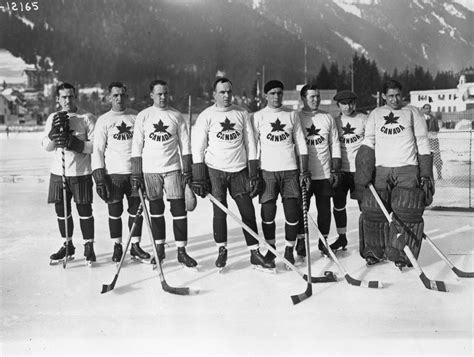
Hockey made its Olympic debut in the 1920 Summer Games. Yes, ice hockey used to be part of the summer Olympics. Team USA took silver that year. There’s that crest. It’s a pretty plain sweater, but look at those bright breezers and tiny goalie pads.
The jerseys didn’t deviate much in 1924 from 1920, though this was the first winter Olympics. Team USA once again took silver. Love the hats.
1928 Olympics - St. Moritz was back in action on home turf and once again claimed silver. This uni is one of my favorites of all time, actually (Photo via stateofhockeymn.webs.com). They are so incredibly simple and unfortunately this black and white photo doesn’t really do them justice. These jerseys were eventually worn as throwbacks in the 2004 World Cup of Hockey, with a slight alteration. was on the medal stand again, this time winning the bronze.
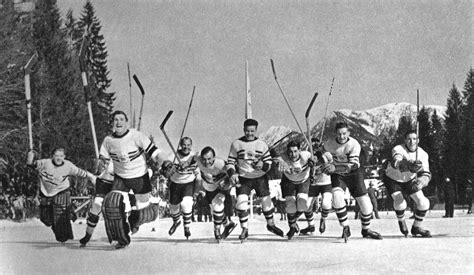
As you may have noticed by the year and location, this was also an event under a cloud in Nazi Germany. Here is Team USA, looking awfully happy to be sitting so close together. Again, there’s the crest, though this jersey featured some shoulder stripping and more pronounced stripes on the arms.
Read also: The story of Craig Needham
1948 Olympics - St. Moritz. So this one is really complicated and actually it’s something I had never heard about until researching this post. was actually disqualified from the 1948 Winter Games, because two different organizations sent national teams. The AHA team had some professionals on the roster, which didn’t sit well with the IOC. Here’s a link to the jerseys the AHA team wore. Very similar to the standard Olympic jerseys of years past, but a chunkier shield and less colorful striping on the arms.
took the silver at the Olympics. This team came awfully close to gold, but tied Canada 3-3 in the final game to fall just two points short of the top prize. This was the first time the USA word mark appeared prominently on the jersey. Though small and off-center it shared the jersey with the AHAUS crest. You can see the beginnings of those iconic 1960 Olympic jerseys starting to form here.
This was perhaps one of the most important Olympic Games in history for this was the dawning of the Soviet hockey super power. Though underdogs then, the USSR took the gold for the first time at this Olympics. lost to the Soviets in the final round to finish second.
Here, AHAUS figured it out. The big USA diagonally across the jersey makes no mistake of who is playing. The AHAUS patch is small, but still an important part of the jersey in the upper left shoulder. Great unis.
The Miracle On Ice And Beyond

The Miracle before the Miracle. This was simply one of the most significant events in American hockey history. The team was led by head coach Jack Riley and had a host of American-born stars, many from the previous team. Also part of the team was John Mayasich, Bill and Roger Christian, Bill and Bob Cleary, Jack Kirrane and Dick Meredith. Here’s a good look at both the white and the blue jerseys. Also, you might note the fellow second from the left in the front row. That’s Herb Brooks. Team USA wore replica throwbacks of these during the 2010 Winter Olympics and even beat Canada in the prelims while wearing them.
Read also: Inside Aaron Ness's Career
And if you’ve never seen the documentary about this team…. you should. It’s called Forgotten Miracle.
Olympic team finished a disappointing and shocking seventh. Among those on the roster, a 22-year-old Chris Chelios, if you can believe he was ever that young. The team also had the famed “Diaper Line” of Dave Jensen, Eddie Olczyk and the great Pat LaFontaine. Also part of the squad, Al Iafrate.
The 1984 jerseys brought about the return of the diagonal USA, and the home whites brought in a lot more red. The blue jerseys are a little bit better I think.
got the same result in 1988 as it did in 1984 with a seventh-place finish as the Soviet Union once again claimed gold. This was the debut of the Waving S logo at the Olympics. It would be used until 2006 as the primary logo.
This was a pretty darn good hockey team. After going through the preliminary round 4-0-1, Team USA made it all the way to the semis. There they met the Unified Team, made up of the countries from the now-defunct Soviet Union. Tied 2-2 heading into the third, some questionable officiating put the Unified Team on consecutive power plays. They scored three times to take a 5-2 win. The team featured many future NHLers including the likes of Keith Tkachuk, Scott Young, Scott Gordon, Sean McEachern, Sean Hill, Bret Hedican and plenty more. However, one of the biggest bright spots for Team USA was its starting goalie, Ray LeBlanc.
There was only a two-year break as the IOC decided to hold the Winter and Summer Olympics in alternating cycles so that they were not held in the same year. Among the Americans on this roster, Brian Rolston, Garth Snow, Todd Marchant, Mike Dunham.
Nagano marked the first time NHL players were allowed to participate in the Olympics. The men had an utterly forgettable and embarrassing tournament, finishing sixth just two years after winning the World Cup of Hockey. This was also a pretty forgettable year as far as jerseys go as well. Well, the USA crest inside the circle is just unnecessary. You can’t see it in the picture, but the grey under the arms is very holey mesh. The grey is just a weird fit at all. I actually did like the numbers on this one, though.
men had a much, much better showing than in Nagano. It’s been somewhat forgotten, but the 2002 Olympic tournament was extremely exciting. These jerseys weren’t the best either, since I prefer the more traditional horizontal striping as opposed to what’s going on here, but I do like the big USA crest and the dark blues were pretty solid. The whites were even better, for my money. Again, the lack of horizontal stripes kind of hurts, but that USA logo really pops on this jersey.
This was another rather forgettable Olympics for the men and was as well for the women, who were stunned by Sweden to get relegated to playing for bronze, which they won.
The previous Olympics was the signalling of the end of an era, while 2006 was trying desperately to cling to the past. logo a prominent feature and the blue jerseys are far better than the whites, but there’s not a lot else to like. The vertical striping on the arms and the sides of the jersey were certainly unique and on the cutting edge, but hockey is a more traditional sport.
That brings us back to the most recent Olympics. teams, but again, both achieved silver, falling just short on Canadian ice. That said, I don’t know if any Olympic games did more for hockey in the country as these with the exception of 1960 and 1980.
These Olympics marked the end of the Waving S on Team USA jerseys. Photo via USATSI. The blue jerseys I thought were the best of the two. They have the simple USA across the front with the stars on the shoulders. For what they did with these jerseys on relatively short notice, you have to give credit to all parties. These are also the jerseys I seem to see fans wearing the most from these Olympics.
So where will USA’s 2014 jersey rank among these?
Ranking My ENTIRE Hockey Jersey Collection… (45+ NHL/IIHF Jerseys Ranked & NHL News Today 2023)
Top 10 USA Hockey Jerseys of All Time
Compiling a definitive list is always subjective, but these top 10 hockey jerseys consistently rank among the most beloved and historically significant in USA Hockey history, blending vintage charm with modern innovation.
- 1980 Olympic “Miracle on Ice” Jersey
This jersey is arguably the most famous in American sports history, forever associated with the “Miracle on Ice” - the stunning victory of the amateur US Men’s Hockey Team over the seemingly invincible Soviet Union, followed by their gold medal win. Its simplicity belies its monumental impact, representing courage, teamwork, and an improbable triumph. It’s a symbol of American resilience. - 1960 Olympic Jersey
This jersey represents the very first Olympic ice hockey gold for the United States. Its vintage charm and association with this foundational victory make it a truly special piece of history, showcasing the evolution of USA Hockey’s early visual identity. It’s a testament to the fact that greatness sometimes comes quietly before it roars. - 1996 World Cup of Hockey
This jersey was worn by the first unified US team (featuring NHL stars) to win a major international best-on-best tournament, defeating Canada in a thrilling final. It signaled America’s emergence as a true hockey power. The majestic eagle design perfectly encapsulated the team’s fierce determination and success. It’s a symbol of a new era of American hockey. - 2002 Winter Olympics (Salt Lake City)
Worn on home ice in the emotional aftermath of 9/11, this jersey became a powerful symbol of American unity and resilience. While the Men’s team won silver (losing to Canada in the gold medal game), the Women’s team captured gold, making this a significant jersey for both programs. Its modern design spoke to a nation looking forward with hope and strength. - 2010 Olympic Jersey
Worn by both the men’s and women’s teams, this jersey was part of memorable Olympic runs. The men’s team, again underdogs, pushed Canada to overtime in a thrilling gold medal game. The jersey is often praised for its balanced blend of classic patriotism and contemporary athletic design. It felt fresh yet familiar. - 1976 Canada Cup (Eagle Shoulder Crest) Jersey
This jersey is a cult classic. While some might deem it “ugly-but-good,” its unique, audacious design with the prominent eagle shoulders makes it instantly recognizable and a favorite among collectors of quirky vintage designs. It represents a specific aesthetic of the era and stands out from the more minimalist designs. A true testament to 70s boldness. - 1998 Olympic Jersey
While the men’s performance was less memorable, this jersey is forever tied to that groundbreaking achievement and the pioneering spirit of women’s hockey. - 1932 Olympic “Sweater”
Representing the very early days of US Olympic hockey, this jersey captures the essence of a simpler time in the sport. It’s a piece of pure history from the second Winter Olympics held in the United States, reminding us of the sport’s deep roots. Its straightforward design speaks to the purity of early competition. - 2014 Olympic Jersey
While not resulting in a medal for the men’s team, the 2014 jerseys were praised for their contemporary design that subtly honored American symbols without being overly busy. They represented the continued evolution of USA Hockey’s visual brand in the modern era, balancing tradition with sleekness. - 2018 Olympic Jersey
Worn in the first Olympics since 1994 without NHL participation, these jerseys became symbols for a new generation of American Olympians, including college and European-based pros. They represented the depth of US hockey talent and the pursuit of Olympic dreams regardless of professional status. A fresh, clean look for a new chapter.
Summary Table: Iconic USA Hockey Jersey Eras
| Era/Event | Key Design Trait | Notable Characteristic |
|---|---|---|
| 1932 Olympics | Simple “sweater” feel, minimalist crest | Represents early US Olympic hockey; historical purity. |
| 1960 Olympics | Classic wordmark, clean stripes | First US Olympic gold medal in ice hockey; understated elegance. |
| 1976 Canada Cup | Bold eagle shoulders, busy stripes | Cult classic; distinctive 70s aesthetic. |
| 1980 Olympics | Iconic “Miracle on Ice” block “USA”, shoulder stars | Most famous in US sports history; symbol of underdog victory. |
| 1996 World Cup | Dynamic eagle crest, aggressive modern design | First major international title for unified US team; heralded new era of US hockey power. |
| 1998 Olympics | “USA” in blue circle, grey elements, unique stripes | Worn by gold-medal-winning US Women’s team (first ever); historical significance for women’s hockey. |
| 2002 Olympics | Sleek “USA” wordmark, subtle stars/stripes | Symbol of unity post-9/11; home ice; both men’s silver and women’s gold. |
| 2010 Olympics | Classic “USA,” prominent shoulder yokes | Blended classic and modern; part of thrilling Olympic runs for both men’s and women’s teams. |
| 2014 Olympics | Textured “USA” crest, integrated stars/stripes | Contemporary design; reflected evolving modern aesthetics. |
| 2018 Olympics | Bold, geometric “USA,” abstract patterns | Represented a new generation of Olympians in the post-NHL era; fresh, modern look. |
The Enduring Allure of Vintage & Retro Designs
The fascination with vintage and retro jerseys goes beyond mere nostalgia. It’s about connecting with the roots of the game, appreciating the simplicity and boldness of earlier designs, and sometimes, even celebrating the “ugly-but-lovable” quirks of bygone eras.
- Timeless Appeal: Classic designs often have a simplicity that prevents them from becoming dated.
- Storytelling: Each vintage jersey carries the weight of its era, invoking memories of players, games, and cultural moments.
- Unique Aesthetics: Retro jerseys offer a refreshing contrast to the often sleek, standardized designs of modern sportswear, standing out in a crowd.
- Collector’s Passion: For many, collecting vintage jerseys is a way to preserve history and own a tangible piece of sporting heritage.
The Evolution of USA Hockey Jersey Design: A Brief History
The journey of the USA Hockey jersey has been one of continuous evolution, reflecting broader trends in sports apparel and patriotism:
- Early Days (Pre-1970s): Characterized by simplicity. Jerseys were often thick wool “sweaters” with basic block lettering (like the 1960 and 1932 designs) and minimal striping. Functionality was paramount, aesthetics secondary.
- The “Bold” 70s & 80s: A period of experimentation. While the 1980 “Miracle” jersey remained simple, others like the 1976 Canada Cup jersey introduced more elaborate graphics and bolder color applications. The onset of synthetic fabrics began to change the “sweater” feel.
- The “Extreme” 90s: A decade of wild designs across all sports, and hockey was no exception. Jerseys became canvases for intricate graphics, sublimated patterns, and often aggressive, animal-themed logos (like the 1996 eagle). Nike and other major sportswear brands began to heavily influence design.
- The 2000s and Beyond (Modern Era): A move towards sleekness, performance, and subtle patriotism. Designs balanced traditional elements with cutting-edge materials and construction. Logos became sharper, and the emphasis shifted to athletic fit and moisture management. Recent designs often incorporate subtle star-and-stripe motifs, sometimes with a more abstract or textured feel.
This rich history provides a treasure trove of inspiration for your next custom jersey.
Key Elements That Define a Classic Jersey
When considering a USA Hockey jersey (whether vintage or modern) as “classic,” several elements often come into play:
tags: #usa #hockey #jersey #sweatshirt