Ski boot customization is essential for achieving optimal performance and comfort on the slopes. Every skier's body is unique, so generic boot designs can't possibly be optimized for everyone's physique. Small tweaks to your boot set up can dramatically affect how you and your skis interact with the snow.
When to Tinker with Your Ski Boots
If a diagnostics assessment indicates that some sort of fit or alignment issue could be contributing to your symptoms, it's probably at least worth a little self experimentation. There is a lot you can do to enhance the performance of your ski boots without fancy equipment or even much knowledge, but the fact that us skiers absolutely love the idea it of blaming our equipment has spawned a healthy economy for specialist ski boot fitters.
If you can find a boot fitter who will do video analysis of your skiing before and after to verify how the changes affect the ski’s interaction with the snow… that is gold. Stick with them:)
THIS IS HOW SKI BOOTS SHOULD FIT
When to See a Boot Fitter
If you've exhausted every technique fix and still have equipment related symptoms (like sewing machine leg), or of course, if your feet or lower legs are in pain... then it's probably time to seek out a professional. The first prerequisite is having money (I don't know why they don't work for free). Secondly, if your self boot hacking got some results but permanent shell alterations are needed to go all the way.
Just be wary of wordy salesmen and proceed cautiously when making any permanent alterations to expensive boots. I tend stick with folks who are also high level instructors or coaches. At least this way you know they have a relatively good understanding of technique. Even if you hire a professional, you'll still need to do some on snow testing to verify whether or not a particular fix actually solves your symptoms.
Read also: Types of Ski Boots Explained
Fit and Comfort
Rule #1: If your foot is in pain then it's not going to perform, or at the very least it's not going to be fun (which I'm pretty sure is the reason you do it). Make sure your boot is long enough and wide enough in all the right places for your foot to sit comfortably flat. On the other hand if the fit is sloppy and your foot shifts around inside the boot, it's probably too big and your skis won't move when you do.
Getting the right fit is probably what a professional ski boot fitter is best at! They know which model has a last that will fit your specific foot shape the best. They will size you properly and if needed stretch the shell in all the right spots. If you require more fine tuning, there are a variety of custom liners on the market such as 'Intuition' or foam filled liners that can be custom molded to the shape of your foot and lower leg.
Forward Lean / Shaft Alignment
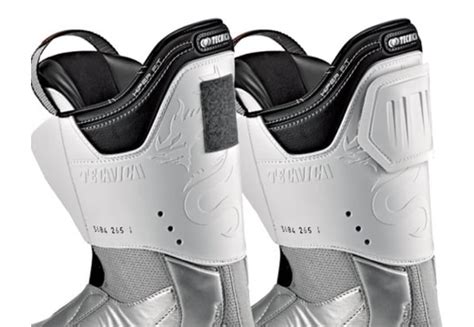
Forward lean (or the angle of the boot cuff in the fore/aft plane) has a huge affect on how the skier moves and balances on the skis. As a ski instructor, an inappropriate cuff angle is the single most common equipment related issue I come across. Or at least it's the easiest for me to detect. Fortunately it's also the easiest fix!
The amount of forward lean depends on the individual. Because some of us have big calves, skinny calves, long femurs, short tibias, big hips, boobs, biceps, heads or whatever other body part comes to mind... the optimal cuff angle will be different for each of us. Ideally we are looking for the biggest vertical range of motion we can have without losing balance. We also want to maintain strength and efficiency.
You see, the boot cuff limits the amount of flexion and extension available in your ankles. If the cuffs are either too straight or too flexed the skier will have to compensate by moving excessively in other joints (such as the knees and hips) and have a difficult time maintaining balance.
Read also: Guide to Snowboard Boot Inserts
Testing Forward Lean
The litmus test for forward lean is to simply stand on a firm flat surface (no skis on) with your boots done up all the way. Now bend down and try to touch your butt to the ground. Hopefully you have a good range of flexion and extension before you fall over. If you have reasonable dexterity then you should be able to get your femurs parallel with the floor. If not, you may need more forward lean. In this case you can just stuff a spoiler, some stiff foam, or a couple trail maps in the back of your boots between the shell and the liner. This will add more forward lean effectively allowing for more flexion in your ankles.
Now try extending as much as you can. If you feel your calves pressing on the back of the boots but your legs still have a lot of bend, then you may want to get rid of any spoilers or padding in the back to straighten things up. If you feel like you're legs are always tired and you have to ski in a really crouched stance this could be something to look out for.
| Condition | Effect |
|---|---|
| Upright Cuff | Limited knee bend, compensation with hip bend. |
| Ideal Forward Lean | Good range of motion for flexion and extension. |
| Excessive Forward Lean | Super low flexion, difficulty resisting force without getting too far forward. |
Other Fore/Aft Alignment Considerations
Enter a hardcore ski boot fitting establishment and you'll also hear terms like 'Ramp Angle' and 'Delta' thrown around. Ramp angle refers to the amount the heel is lifted in relation to the forefoot. It seems to have a small effect on fore/aft balance but I can't say any adjustments I've tried with ramp angle have had a major effect on my performance. For folks with limited range of motion in their ankle joints, increasing the ramp angle may (or may not) have a more positive effect.
Delta has to do with the binding height. Typically the rear binding platform is higher than the toe piece essentially tipping the entire boot forward. In essence this increases both ramp angle and the shaft angle in one fell swoop (out of laziness this is what we're doing forward lean in the simulations above). I can't say I've done much experimenting with Delta (at least not intentionally). I just take the heel height built into the binding and adjust the forward lean if needed. Of course that doesn't mean it doesn't matter so if your trusty boot fitter says it will save your skiing, it's probably at least worth a shot!
Ski Boot Flex
Flex has a fairly significant effect on how the boot performs. By nature the cuff of the boot restricts ankle movement. If the boot is stiffer it restricts it that much more. Why would we want to do that? Well there are some advantages and disadvantages. In a softer boot the increased range of motion in the ankle can make balance easier (at least when you're going slow)... and when balance is slightly off a considerable amount of the energy will be absorbed by flex in the boot before it is transferred to the ski. This essentially makes a softer flex more forgiving of your errors.
Read also: Acceptable Boot Overhang Explained
The disadvantage is that a considerable amount of energy will be absorbed by the flex of the boot before it is transferred to the ski... when you actually want that energy transferred to the ski. This of course makes a stiffer boot more responsive so the ski will react quickly to small shifts in balance. A stiff boot can actually help you recover when you're off balance as they can be used as a lever to prop yourself back into balance.
Choosing the Right Flex
If you feel like your boots are locking up your joints and you're constantly getting thrown off balance, a softer might be the way to go. If I was a novice or intermediate skier, I would want a more forgiving flex. If my preferred skiing discipline required more absorption and range of motion (like freestyle) I'd also probably go softer.
On the other hand, if I was an expert skier and wanted support, along with quick and precise reaction (say if I was racing slalom), then I'd go stiffer. If you need to change the flex of your boot and don't want to splash out on a brand new pair, a good boot fitter will have a few tricks up their sleeve to address stiffness.
Lateral Alignment
There is a fair bit of consensus around the idea that the bases of both skis should lie flat on the snow surface when you're simply gliding down a planar slope without making any attempt to tip the skis on edge. If you've ever tried to straight run and one or both skis starts wobbling like crazy then they're probably not sitting flat on the snow and you might want to address this issue. You may have also experienced symptoms such as, knees knocking together, chronic skidding or an inability to release your edges.
Cuff Adjustment
Many higher end boots come with a lateral cuff adjustment (that thing on either side of your ankles that you can stick an Alan key into... but have no idea what it does). The mechanism will allow the cuff to move a degree or so in either direction and is meant to allow the cuff to line up better with your lower leg.
I must admit, I totally ignore these guidelines because I find it impossible to grip with my boots set up in this manner. Clearly many other folks have success with this kind of set up though so instead of following my protocol I would do some testing of your own to find out what works for you.
A good rule of thumb... if you slip a lot, or your knees knock together, then move the cuffs out more. If you grip too much and have difficulty pivoting, or you experience other symptoms of being over edged then try moving the cuffs in.
If your ski boots don't have a cuff adjustment (or don't have enough, which is often the case) then you can easily improvise with some padding on either side between the cuff and the liner. Keep in mind that more often than not you'll have symptoms on one side more than the other... so adjust each boot accordingly.
Foot Beds/Orthotics
From my perspective, the main function of a custom foot bed is to add comfort and because it mimics the shape of the bottom of your foot, it prevents your foot from sliding around inside the boot. The added comfort helps with foot circulation and depending on the material it can also help insulate and keep your foot warm.
Many boot fitters will also use a custom foot bed to 'align' your foot... but this begins to enter the realm of podiatry and is way beyond my scope of expertise!
Experimenting with Foot Beds
Assuming the cuff angle remains the same, if the foot bed is tilted inwards so the foot is 'everted' slightly inside the boot, it makes it very easy to roll the outside ski onto edge and it seems to provide better gripping abilities. You are effectively tipping your ankle joint closer to the working edge. We all love grip... but keep in mind that too much grip makes it difficult to twist or pivot the ski.
If the footbed is supported on the arch side to the point where the foot sits slightly inverted, it allows me to move my inside leg out of the way easier but the outside leg becomes more difficult to tip over and adds a slightly difficult to resist torque on my outside foot. Going to extremes in either direction usually just causes my knees to hurt after a run or two.