The Southgate Roller Rink, now known as the Southgate Event Center, is located in the heart of White Center (at 9646 17th Ave SW), a neighborhood of South Seattle. This iconic building has a rich and diverse history, evolving from a boxing arena to a beloved roller rink and finally to a versatile event center.
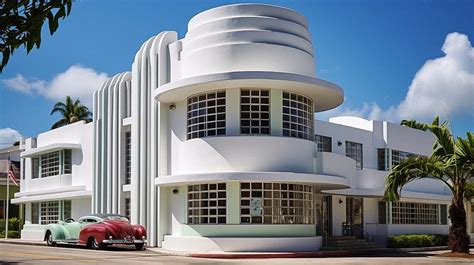
Streamline Moderne style architecture, which influenced the design and feel of buildings like the Southgate Roller Rink.
The Early Years: Hiram Green's Boxing Arena
The story begins in 1920 when Hiram Green (1863-1932), a pioneer developer in White Center, built the White Center Boxing Arena. Green’s five acres straddled both sides of 16th Avenue SW, going south from SW Roxbury Street to SW 98th Street. Green’s projects included a theater, drugstore, bakery, feed store, fuel store, dry goods stores, the Rozella Building, and the Triangle Building. The White Center Arena quickly became one of the most important boxing venues in the Northwest.
Boxing cards provided a payday for young men during the Roaring Twenties and into the early Depression years. Morey Skaret (b. 1913) recalled earning 15 cents a round as a sparing partner for the pros. Weekly boxing cards packed the arena, with ringside seats costing a dollar fifty and general admission 50 cents. Among the fighters of the day were Swede Hanson, Red Hawk, Spark Plug Boyd (1906-1961), and Doc Snell. The most ballyhooed fight of the era was in February 1933. There was occasionally a pro wrestling card at the Arena sponsored by the White Center Athletic Club.
Green and his arena established a connection between boxing and White Center. A regular fighter at the arena was young Al Hostak (1916-2006) from Georgetown. Over the years Hostak trained, boxed, and tended bar in White Center. In 1939 Hostak won the middleweight championship of the world against Tacoma’s Freddy Steele in front of 30,000 at Seattle’s Civic Field.
Read also: Winter Fun at Hamilton Ice Arena
White Center resident Harry "The Kid" Matthews (1922-2003) kept White Center on the boxing map into the 1950s. Harry turned pro at the age of 15, hence the nickname "The Kid." He fought former middle weight champion Al Hostak in two memorable fights, winning one and drawing the second. Later in his career Matthews defeated Ezzard Charles (1921-1975), former world heavyweight champion After 20 years of boxing Matthews record was 87 wins, 7 draws and 7 losses out of 101 fights. His biggest fight was at Yankee stadium in 1952. Matthews was knocked out by Rocky Marciano (1923-1969), future heavyweight champion of the world.
Hiram Green died in 1932. The Depression took down many an enterprise and boxing in White Center was no exception. The building passed into the hands of Green’s daughter, Ethel Green (b. 1909). Ethel married William "Pop" Brown (d.1969). William Brown had come from England to the United States during World War I.
From Dance Hall to Rollerdrome: A New Era Begins
According to the White Center News, August 17, 1934, Ethyl and William Brown “brought in the snappy music of a wonderful five piece orchestra to perform on weekends.” For three years folks danced to the "snappy music," but the dance hall struggled to make a dime. In 1937 Ethel and ‘Pop’ Brown made a crucial and profitable decision and reopened the large hanger like building, calling it the Southgate Rollerdrome. The name reflected a local attitude in that they considered White Center as the south gate to Seattle. As it turned out, a large skating rink was the right idea at the right time and in the right place.
Generations of people recall the good times, friendships, skating instructions, and competitions. Ethel and Pop formed a skate team called the "old smoothies." According to the West Side Story, "Pop" Brown went on to international acclaim as the father of competitive indoor skating in the United States.
Over the years the managers of the rink held skaters to a code of good conduct. In the West Side Story the Brown’s daughter, Dorothy Tamaccio, recalled that the rink was like a USO for service men during the war years. “My father every night opened the rink with a flag salute, every single night”.
Read also: Ice Skating in Great Neck
The Browns were determined to make their rink a welcoming place for adults and kids alike, and over the decades “Seattle’s Friendly Rink” became a White Center institution. During the WWII years it was a well-known gathering place for enlisted men, and “Pop” Brown opened the rink every night with a flag salute. The rink hosted competitive skating, skating clubs, skating drill teams, and innumerable birthday parties across the decades.
Out on 16th Avenue SW the rough and tumble action of the street continued. In an interview with Ron Richardson, Albert Skaret described the scene. He never started a fight, but didn’t back down when challenged. He also recalled that there was a code among the young toughs of the day. When someone was knocked to the ground, the opponent stepped back to see if the decked fighter wanted to continue. If not, the fight was over. One did not attack another until he was up and ready to continue. An opponent was not beaten into submission.
Bonnie Liebel recalls the place as an exciting but safe haven for kids in the 1940s. Her only unpleasant episode happened right after a new segment of skating surface was installed along the south side of the rink. It had a slightly different grain and finish. As a result Bonnie tumbled head first to the floor carving a divot with her two front teeth. David Crabtree (b. 1955) recalls that the Southgate Roller Rink was a place to go on weekends.
For years there was a pistol and rifle range in the basement. Upstairs there were eight apartments. Fronting on 16th Ave SW one could find an ice cream parlor, a t-shirt shop, and Mr. Tamaccio’s barber shop. For years the Brown’s son, also named William, ran a successful sporting goods store fronting on 16th Ave SW. A popular feature was a fish ‘bragging board’ where local sports fishermen listed the size of their catch, when and where the fish was caught, and the fishing tackle used. In the basement was a ceramics shop run by Frank Evans, which distributed products around the United States. It has been rumored there was once a sweat shop making garments in a part of the basement.
Today the large grey building still includes storefront businesses that face 16th Avenue SW. Bob Houk (b. 1938) and Joanne Houk (b. 1939) met at the Southgate Roller Rink.
Read also: Ice Skating at AZ Ice Gilbert
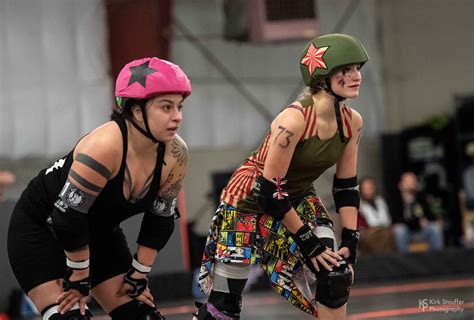
The Rat City Rollergirls, who brought a new wave of excitement to the Southgate Roller Rink.
The Rat City Rollergirls and a New Wave of Popularity
Francine Tamaccio, a descendent the pioneer builder Hiram Green, developed an idea based upon the roller derby days of the 1950s. The Southgate Roller Rink was the original home of the Rat City Rollergirls. The Rollerlgirls have played for national titles and won the championship in 2004.
In 2003 the Southgate Roller Rink became the home turf of the Rat City Rollergirls, an all-womens’ roller derby team founded here in White Center as part of the national revival of the competitive contact sport of roller derby. The Rollergirls became wildly popular. Their roots in White Center and at the Southgate Rink remain a fundamental part of their team character.
In 2005, as the Roller Derby was on the verge of outgrowing Southgate, a fire damaged the south side of the building. Today the Rat City Rollergirls practice in Lynnwood and play their matches at Magnuson Park.
In an interview Terri Lidow, a local who refereed matches and coached teams, described the explosive growth of the sport.
Southgate Event Center: A Modern Transformation
After the Rollergirls moved on to bigger venues, it looked like the Southgate Roller Rink might finally be ending its nearly eight-decade run. For several years, the antique hardwood skating floor was covered up, and the rink served as an event center.
Today (2009) it is owned by Tom Brown, his son Andrew Brown, and Dean Burgess. They have renamed the historic building the Southgate Event Center and it hosts the White Center Swap Meet and Flea Market among other events.
As it turns out though, the Southgate Roller Rink was destined to live on. Enter Josh Rhoads, who purchased and undertook the renovation of the rink in 2011. In a few short weeks of hard work, Rhoads oversaw the restoration of the skaterink’s wooden floor, hung a disco ball, and let the community know that the “Friendly Rink” was back.
Rhoads has more than a passing interest in rollerskating; this friendly and unassuming young man has been called the greatest roller skater in the United States. Rhoads, who has competed in artistic roller skating all over the world, can do everything an ice-skater can do on a blade and an ice-rink, except he pulls off those graceful and athletic spins and leaps on eight wheels. He hopes someday his sport will gain the respect and notoriety it deserves; in the meantime, he’s the perfect person to oversee the reopening of the Southgate Roller Rink.
There’s talk of a speed team, as well as rumors of a men’s roller derby team sponsored by White Center’s own Full Tilt Ice Cream. New generations of White Centerites will host their birthday parties here, and those with fond memories of the old days at Southate Roller Rink are dusting off their skates.
Timeline of Southgate Roller Rink
| Year | Event |
|---|---|
| 1920 | Hiram Green builds the White Center Boxing Arena. |
| 1937 | Ethel and ‘Pop’ Brown reopen the building as the Southgate Rollerdrome. |
| 2003 | The Southgate Roller Rink becomes the home of the Rat City Rollergirls. |
| 2005 | A fire damages the south side of the building. |
| 2009 | Tom Brown, Andrew Brown, and Dean Burgess rename the building the Southgate Event Center. |
| 2011 | Josh Rhoads purchases and renovates the rink, restoring the skating floor. |